Sleep Science · Mr Wulf Men
12 reasons you wake at 3am.
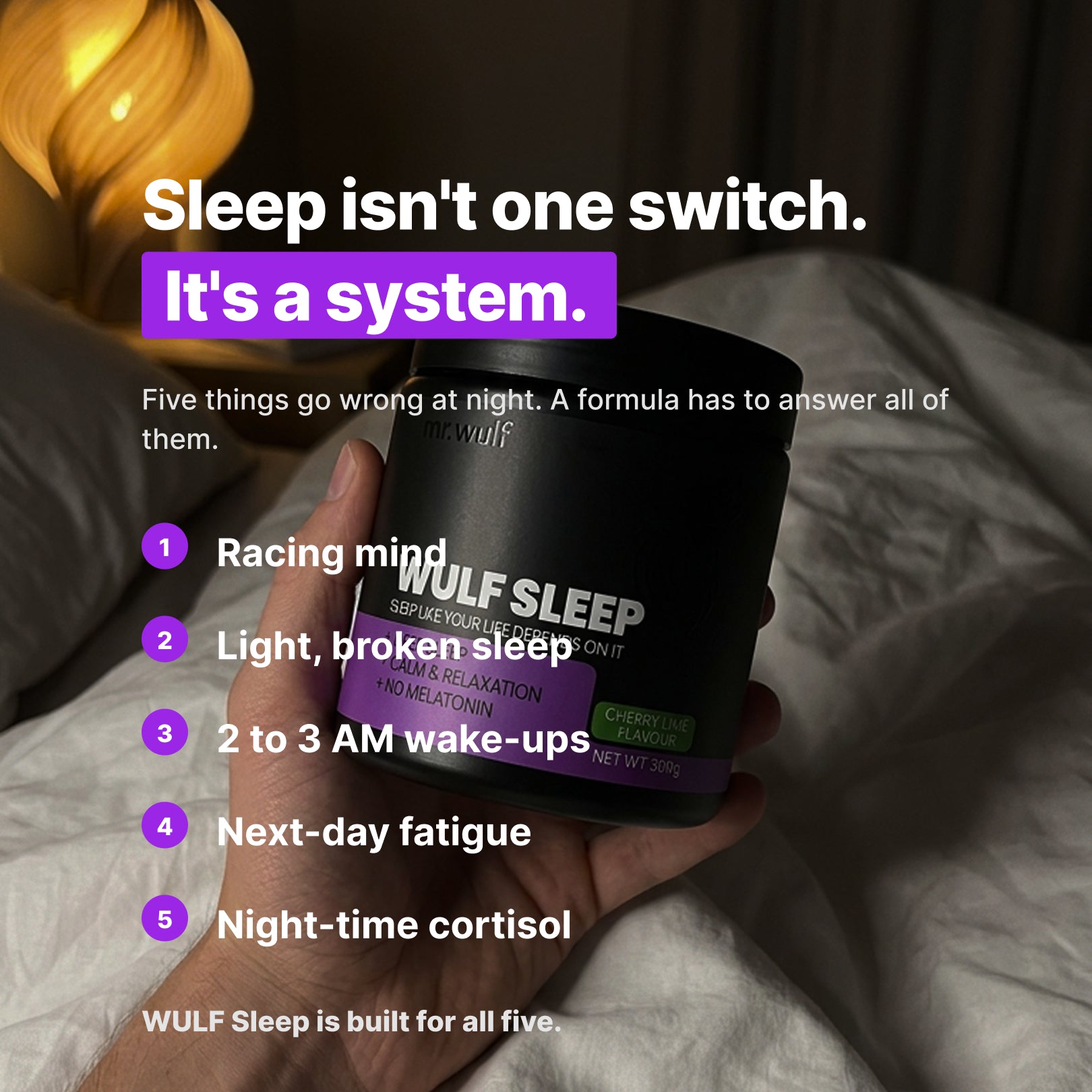
Falling asleep was never the problem. You go out fine. Then you are awake at three, wide alert for no reason you can name, doing arithmetic about how wrecked tomorrow is going to be. Here is what is actually going on, including the ones no supplement can help with.

1. You are supposed to surface. Getting back down is the real problem.
Sleep runs in cycles of roughly ninety minutes, and at the end of each one you come close to waking. Most of the time you shift position and never remember it.
By three in the morning you have already been through several cycles, and the back half of the night is lighter by design. So the waking itself is normal and it is not a fault.
Lying there for the next hour is the part worth fixing.
2. Cortisol starts climbing before you need it.
Cortisol is meant to bottom out around midnight and begin rising in the small hours so you can get up. It is your wake-up system, and it starts before your alarm does.
If your baseline is already high after a long stretch of pressure, that rise crosses the threshold that wakes you well ahead of schedule.
This is the version people describe as feeling different. You are not groggy and half-asleep. You are instantly, uselessly alert.
3. Your blood sugar dipped.
Glucose falls overnight, which is normal. If it falls far enough, your body releases adrenaline and cortisol to bring it back up, and that release is a wake-up signal.
A very light dinner, a big spike before bed, or alcohol on top of either all make it more likely.
4. You had a drink.
Alcohol puts you under quickly and then charges you for it. As it clears, usually four or five hours after the last glass, you get a rebound in alertness.
Have a drink with dinner and that rebound lands at about three in the morning. It is the most predictable item on this list.
5. The coffee was still in you.
Caffeine has a half-life of roughly five to six hours, so a three o'clock coffee is still a quarter on board at eleven at night.
It may not stop you falling asleep at all, which is why people rule it out. It reliably makes the second half of the night lighter, and the second half of the night is where the problem is.

6. The room was too warm.
Your core temperature has to fall for sleep to start, and stay down for it to hold. A warm room, a heavy doona, or a hot shower too close to bed all pull against that.
Overheating in the early hours is one of the most common wake-ups on this list, and one of the easiest to test. Drop the room a couple of degrees for a week and see.
7. You have less deep sleep than you used to.
Slow-wave sleep, the deepest stage, starts declining from your thirties onward. That is ordinary ageing, not damage.
Less deep sleep means more of your night is spent in the lighter stages, and light sleep is easy to wake from. The noise that never used to bother you has not got louder. You have got easier to wake.
8. Your magnesium is lower than you think.
Magnesium sits underneath the calming side of the nervous system. Stress, hard training, alcohol and a heavily processed diet all use it up faster.
When it runs low, the system responsible for keeping you settled has less to work with. It is not dramatic and you would not notice it happening. You would notice the nights.
9. You trained late.
A hard session lifts cortisol and core temperature, and both stay up for hours afterwards.
That is exactly what you want during the session. It is less useful if you finish at eight and you are trying to be asleep by ten.
10. Your hormones are changing.
For women in their forties and fifties, waking between two and four in the morning, often too hot, is one of the most commonly reported changes of that decade.
It is not in your head, and it is not a discipline problem. It is also the point at which this becomes a conversation with your GP rather than something to solve off a supplement shelf.
11. Your breathing is interrupting your sleep.
If you snore heavily, wake up gasping, or feel wrecked after a full eight hours, take this one seriously.
Sleep apnoea wakes you over and over through the night, usually without you remembering any of it. You are not short on sleep hours. You are short on uninterrupted ones.
12. You looked at the clock.
The moment you know it is 3:14, the sums start. Four hours and forty-six minutes until the alarm, assuming you get back down now, which you now will not.
At that point you are not simply awake. You are running a small stress response about being awake, which is the one thing guaranteed to keep you there.
Turning the clock to face the wall costs nothing and is the highest-return item on this page.

Which of these a formula can actually touch
Most of this list is not a supplement problem, and we would rather say so than sell you something for it.
Nothing in a tub will help with interrupted breathing, hormonal change, or the clock on your bedside table. Those are a doctor, a doctor, and a thirty-second fix respectively.
You fix these yourself, for free: the last drink, the afternoon coffee, the room temperature, the timing of a late session.
What a formula can support is the physiology underneath the rest of it. The temperature drop that starts sleep. The evening stress response that should be winding down. The calming signalling that keeps you under instead of surfacing. The magnesium that pathway runs on. Your own melatonin production, rather than dosing melatonin at you.
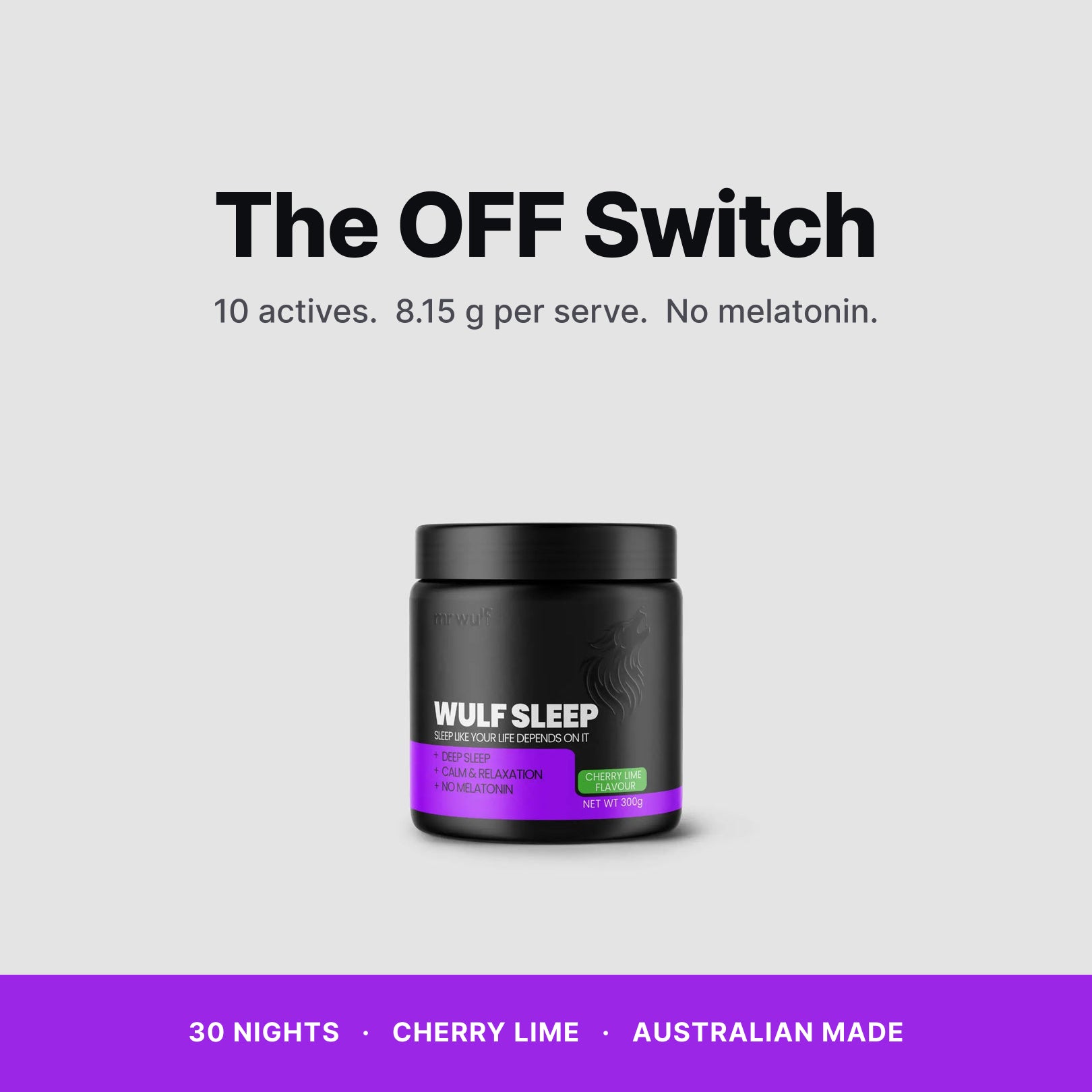
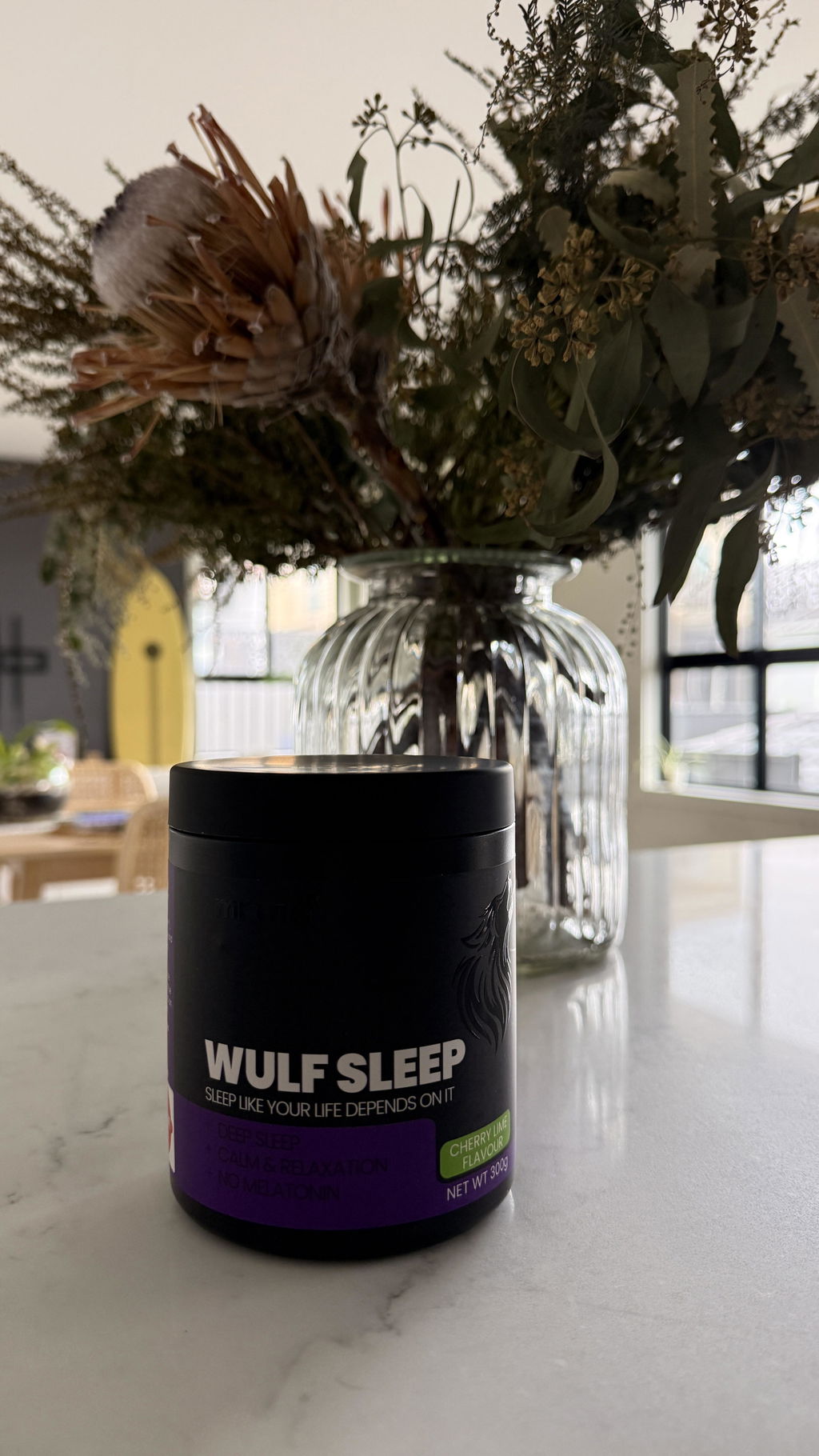
That is what WULF Sleep was built around, and here is every number in it.

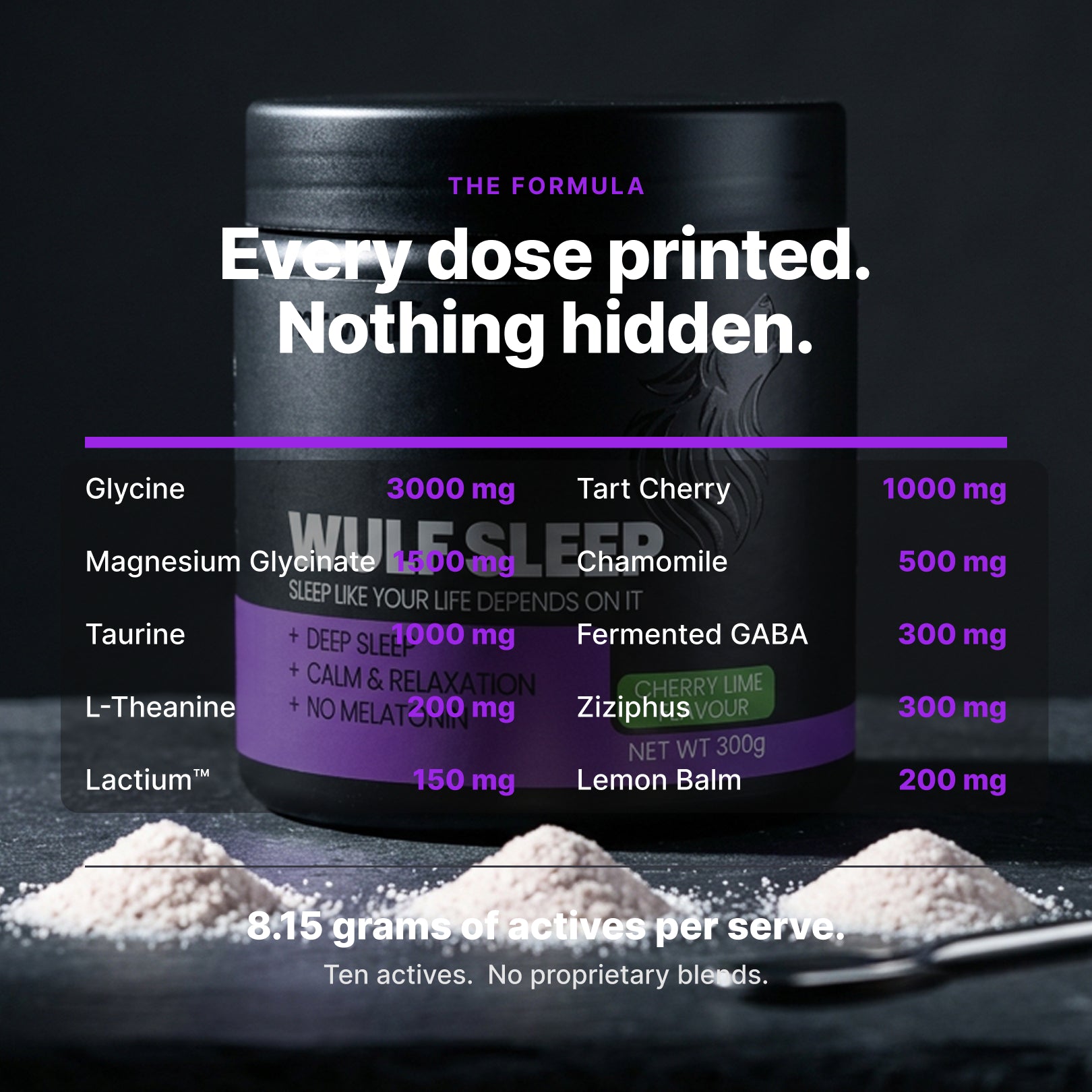
WULF Sleep Recovery Blend
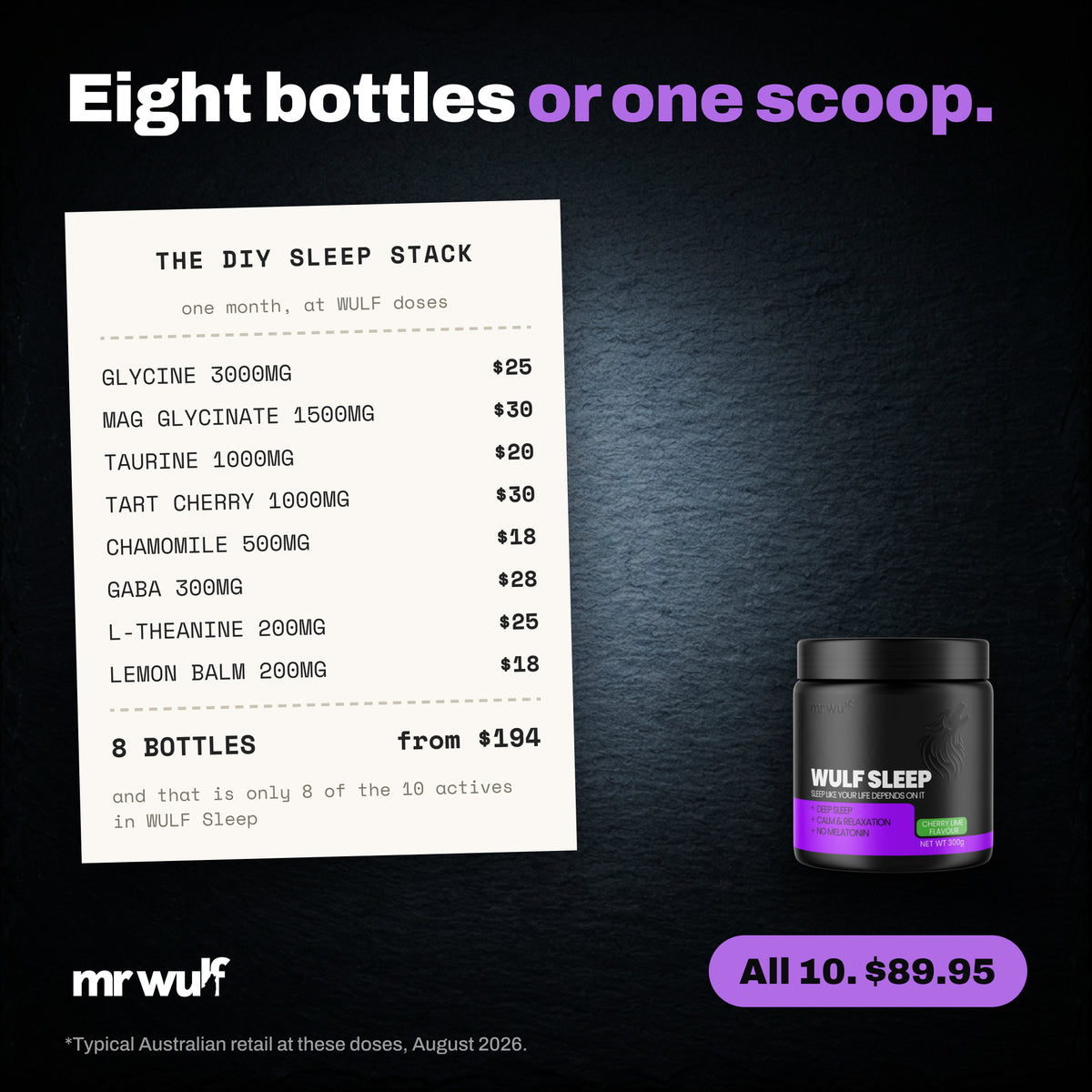
- Glycine 3000mg — helps your core temperature drop, the physical signal that starts sleep
- Magnesium Glycinate 1500mg ~ 300mg elemental Magnesium — supports the calming pathways and GABA activity underneath deep sleep
- Taurine 1000mg — supports the inhibitory signalling that keeps you under rather than surfacing
- L-theanine 200mg — eases mental tension and quiets the chatter
- Lactium 150mg (from dairy) — the studied dose, supports the body's evening stress response
Calm Mind & Sleep Synergy Blend
- Tart cherry 1000mg — supports your body's own melatonin pathway, instead of dosing melatonin at you
- Chamomile 500mg — standardised to 3.2% apigenin, the compound the research points to
- Fermented GABA 300mg — supports the inhibitory tone that settles an alert nervous system, at the clinically studied dose
- Ziziphus spinosa 300mg — standardised to 2%, a traditional calming botanical
- Lemon balm 200mg — standardised to 5%, supports a settled mind in the evening
Ten actives. 8.15 grams. Every dose printed.
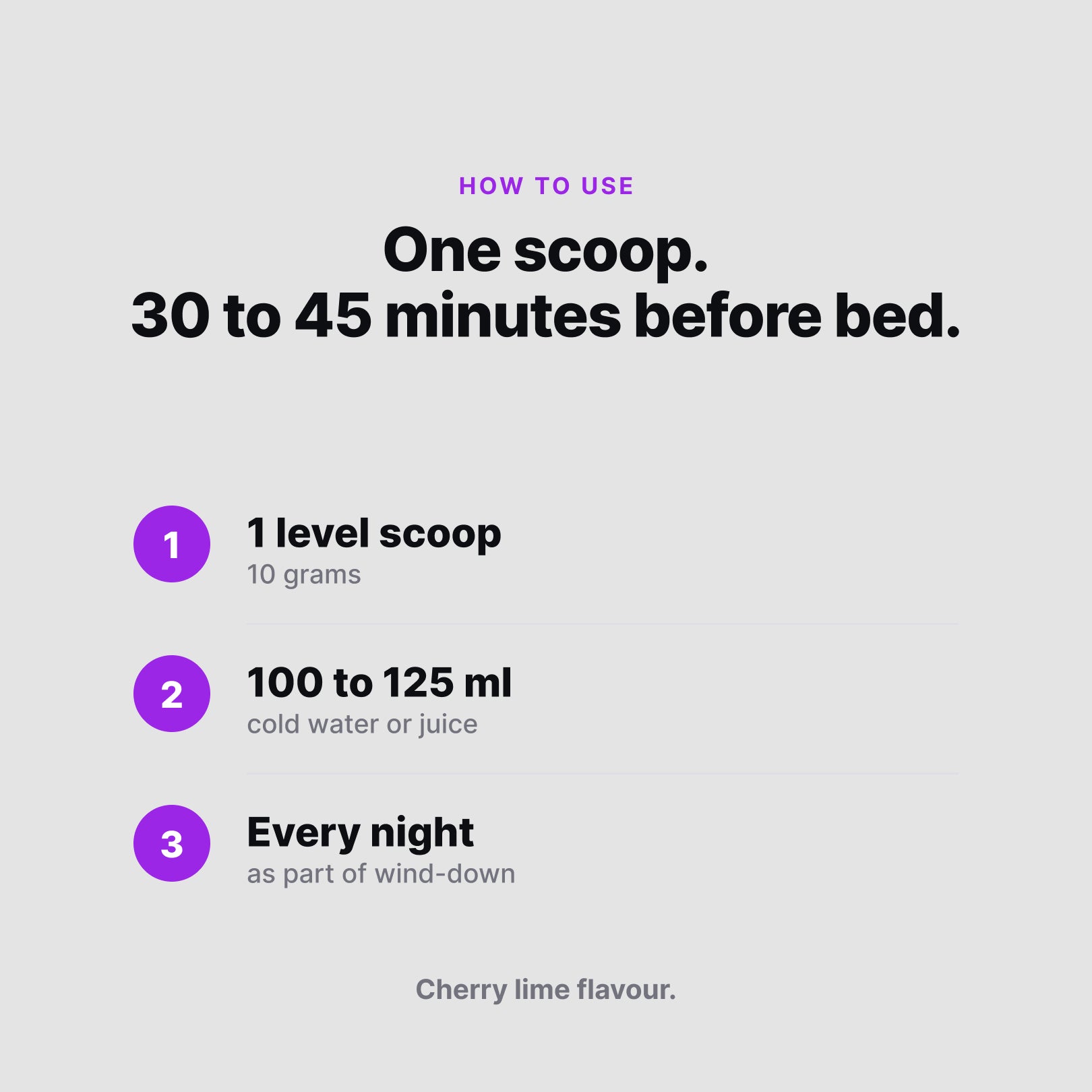
No proprietary blend. No melatonin, so you wake up clear rather than heavy. One scoop, 30 to 60 minutes before bed.
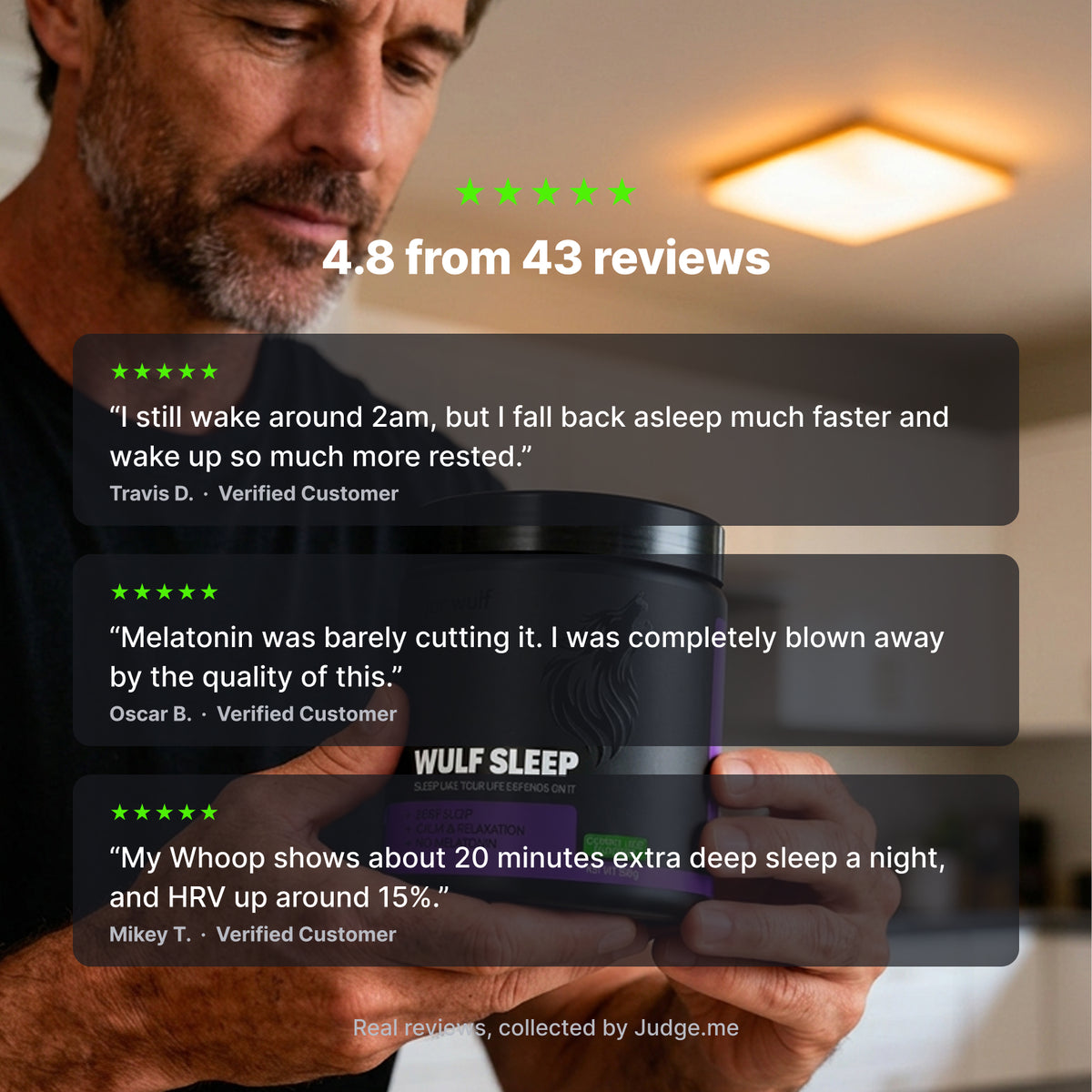
From people who wake at three
"Using Wulf Sleep, I still might wake at 3am but I go back to sleep almost straight away rather than stare at the ceiling for the next hour."Rod H.
"I've previously taken magnesium religiously, which always helps me fall asleep but I still regularly wake during the night."Verified review
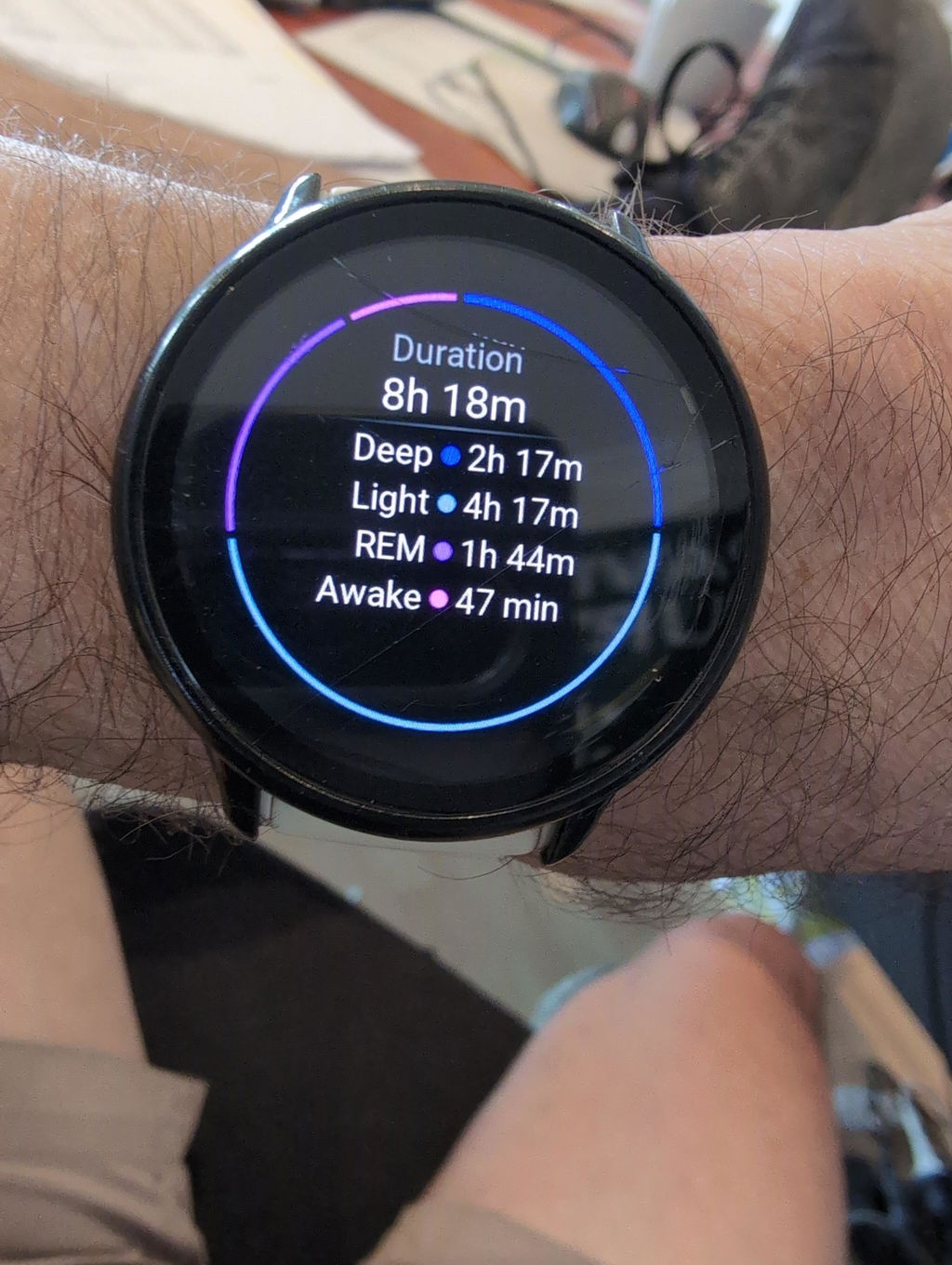
"I fell asleep quickly, stayed asleep, and for the first time in a long time, I slept deeply. No grogginess, no fog."Cameron

The subscribe option, if you want it
It is built for nightly use, so subscribing usually makes sense: 15% off the 30 serve, 20% off the 60, 25% off the 90. Skip a delivery or cancel any time.
Buying once works the same. The doses do not change either way.
Thirty nights to decide for yourself
Go back through the list first. Sort out the drink, the coffee and the room temperature, because those are free. If it is the breathing, see a doctor.
If what is left is the physiology, you will know inside a few weeks. If it is not, the first order is covered by a 30-night money-back guarantee.