

Sleep Science · Wulf Sleep
GABA Supplement for Sleep: Why Form Matters More Than You Think
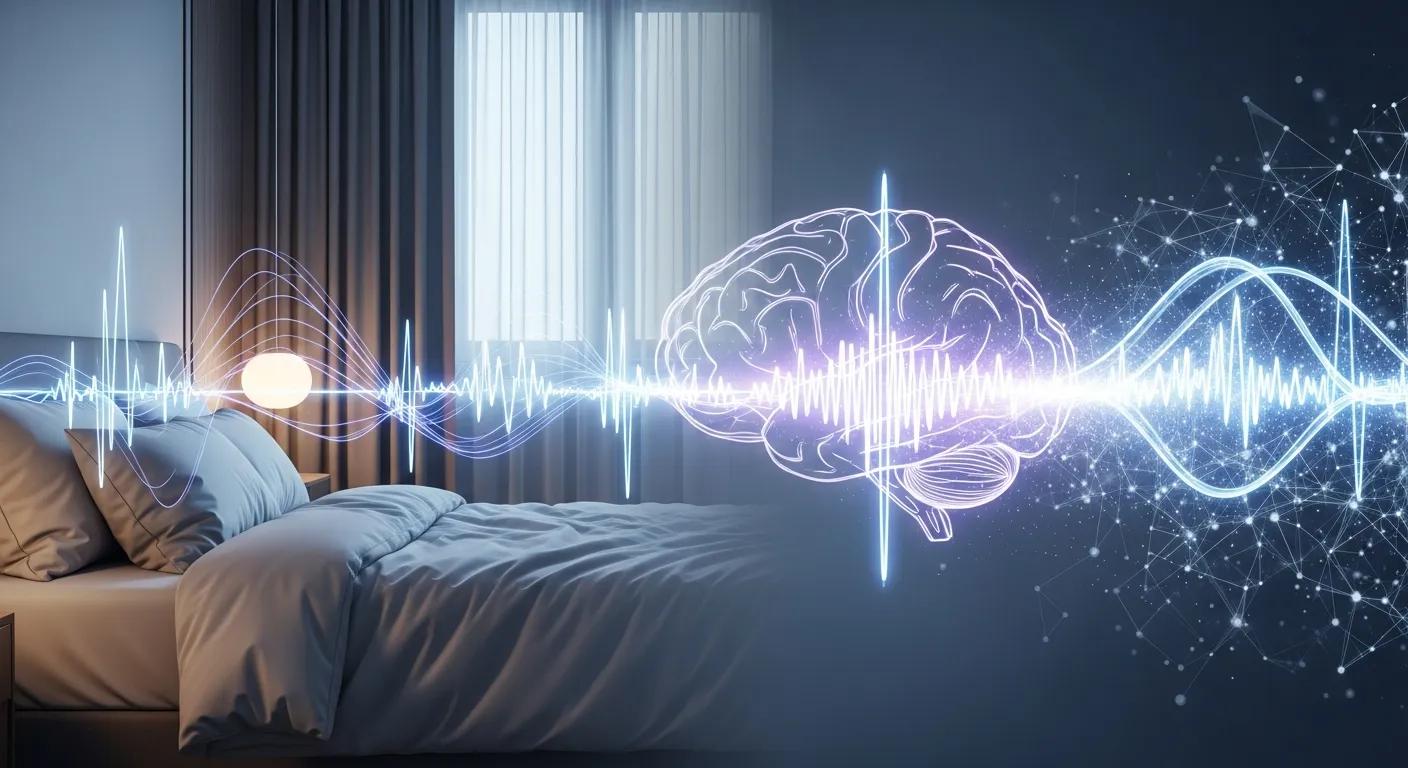
If you have looked into sleep supplements for longer than five minutes, you have probably come across GABA. It is everywhere — capsules, powders, gummies, stacked alongside magnesium and melatonin. The marketing is confident. The science is more complicated. And the difference between a GABA supplement that works and one that does not has almost nothing to do with the dose on the label.
This is worth understanding properly, because GABA is genuinely one of the most important molecules in sleep physiology. Getting it wrong means choosing a product that gives you a false sense of coverage. Getting it right means adding a real lever to your sleep architecture.
What GABA Actually Does in Your Brain
Gamma-aminobutyric acid is the central nervous system's primary inhibitory neurotransmitter. Its job is to reduce neuronal excitability — to quiet the electrical activity that keeps you in a state of alertness, vigilance, and stress response. Without adequate GABA signalling, your brain cannot effectively transition from its wired, beta-wave-dominant waking state into the relaxed, alpha-wave state that precedes sleep onset.
GABA does not knock you out. It turns down the volume. The drugs that are famous for forcing sleep — benzodiazepines, sleeping pills, alcohol — all work by enhancing GABA receptor activity, often in blunt, non-selective ways that come with dependency, tolerance, and next-day cognitive impairment. A well-formulated GABA supplement works through the same pathway but far more selectively and without those costs.
Dr Michael Murray, N.D. — Faculty, Bastyr University. Author, Encyclopedia of Natural Medicine (6 million copies in print)
"GABA is one of the brain's most important regulators of proper function. It appears that many people with anxiety, insomnia, and other brain disorders do not manufacture sufficient levels of GABA."
The decline in GABA production and function accelerates with age, chronic stress, poor diet, and alcohol use. For men over 30, this is not a theoretical concern. It is the physiology behind why sleep gets harder.
The Problem Every GABA Supplement Has to Solve
Here is the part most brands skip: GABA has significant difficulty crossing the blood-brain barrier (BBB).
The BBB is a selective, semipermeable membrane that protects the brain from toxins, pathogens, and most large molecules. GABA is largely excluded under normal conditions. This is why early synthetic GABA supplements showed inconsistent results — the molecule reached the bloodstream but struggled to act directly on the brain's GABA receptors.
A 2020 systematic review published in Frontiers in Neuroscience examined all placebo-controlled human trials on oral GABA supplementation and confirmed that while GABA clearly has stress-reducing and sleep-enhancing effects, the mechanisms are more nuanced than simple direct receptor binding. A 2025 review in Foods (MDPI) confirmed that fermented GABA operates through multiple pathways: the gut-brain axis, blood-brain barrier transport, and metabolic conversion — a multi-pathway mechanism that produces more consistent outcomes than synthetic GABA alone.
The practical implication: the form and production process of your GABA supplement matters enormously.
Why Wulf Sleep Uses PharmaGABA™ — Not Synthetic GABA
PharmaGABA™ is a naturally fermented form of gamma-aminobutyric acid, produced via Lactobacillus hilgardii — the same probiotic bacterium used to ferment kimchi. This fermentation process produces GABA that is structurally identical to the GABA synthesised in the human gut and brain, and clinical evidence shows it has measurably different physiological activity compared to synthetically produced GABA.
In a head-to-head, double-blind trial comparing natural PharmaGABA™ to synthetic GABA, the synthetic form failed to produce the same autonomic nervous system responses — including the beneficial shift in brain wave patterns — that PharmaGABA™ achieved. Synthetic GABA is produced from pyrrolidinone, a compound Japan classifies as a dangerous substance and prohibits in food products.
What the EEG Data Shows
In a University of Shizuoka study using electroencephalography (EEG), 13 healthy volunteers received either water (control), 100mg of PharmaGABA™, or 200mg of L-theanine. Brain wave activity was recorded at 0, 30, and 60 minutes. PharmaGABA™ significantly increased alpha wave activity (relaxed, focused) within 5 minutes and simultaneously decreased beta wave activity (anxious, alert). The resulting increase in the alpha-to-beta ratio was highly significant at p < 0.05.
Chart 1 — Brainwave response
Alpha and beta wave changes after 60 minutes (% shift from baseline)
Alpha waves — relaxationBeta waves — stress/alert
Source: Abdou AM et al. Biofactors. 2006;26(3):201–8. University of Shizuoka EEG crossover trial, n=13.
This shift — increasing alpha, reducing beta — is the same neurological state produced by meditation and deep breathing. PharmaGABA™ does not force sedation. It facilitates the transition into the calm, pre-sleep state where sleep onset can proceed naturally.
PharmaGABA™ and Sleep Architecture: The Clinical Evidence
A randomised, crossover, single-blind, placebo-controlled trial published in Sleep Review monitored 10 participants with confirmed sleep disturbances over three weeks using polysomnography. Subjects received 112mg of PharmaGABA™ (equivalent to 100mg pure GABA) on alternating weeks with a washout period in between.
Sleep latency was significantly reduced. Deep non-REM sleep duration was notably and consistently lengthened. GABA was absorbed within 30 minutes with trace levels falling sharply thereafter — a clean metabolic profile with no accumulation.
A separate randomised, double-blind, placebo-controlled trial published in the Journal of Clinical Neurology (Byun et al., 2018) examined 300mg of fermented GABA daily for 4 weeks in 40 patients with insomnia. After 4 weeks, sleep latency decreased from 13.4 minutes to 5.7 minutes (p = 0.001) and sleep efficiency increased from 79.4% to 86.1% (p = 0.018) — in the GABA group only. The placebo group showed no comparable improvement.
Chart 2 — Clinical trial outcomes
Sleep latency and efficiency — fermented GABA vs placebo, baseline vs 4 weeks
PharmaGABA groupPlacebo group
Source: Byun JI et al. J Clin Neurol. 2018;14(3):291–295. Randomised, double-blind, placebo-controlled, n=40 insomnia patients, 4-week intervention.
Dr Michael Murray, N.D. — Author, Stress, Anxiety, and Insomnia: What the Drug Companies Won't Tell You
"PharmaGABA is a special form of GABA naturally manufactured with the help of a probiotic that has been shown to improve sleep quality. There are a lot of reasons to try to get a good night's sleep without resorting to prescription sleeping pills. These pills are habit-forming, have significant side effects, and are associated with increasing the risk of dementia and earlier death."
GABA and the Five Stages of Sleep: Where It Actually Intervenes
Sleep is not a single state. It cycles through five stages — Stage 1 (light), Stage 2 (sleep spindles), Stage 3 and Stage 4 (slow wave deep sleep), and Stage 5 (REM). Each serves a distinct physiological function.
GABA's primary contribution is at the transition points: Stage 1 to Stage 2 (reducing sleep onset latency) and the deepening into Stages 3 and 4 slow wave sleep, where physical recovery, growth hormone release, and immune function are most concentrated. The polysomnographic evidence from PharmaGABA™ trials directly confirms longer non-REM duration — the clinical signature of improved slow wave access.
This is also where the GABAergic synergy in Wulf Sleep becomes relevant. Chamomile extract (standardised to 3.2% apigenin) binds directly to GABA-A receptors. Lemon balm extract works via inhibition of GABA transaminase — the enzyme that breaks GABA down — effectively extending the duration of GABA's inhibitory signalling. These are complementary mechanisms targeting the same inhibitory system from different angles.
The Gut-Brain Axis: GABA's Second Mechanism
Recent research has opened a genuinely interesting secondary mechanism for orally ingested GABA. The gut contains its own GABAergic system, and GABA-producing bacteria communicate with the brain via the vagus nerve. The 2025 MDPI review on GABA and sleep mechanisms identifies three distinct pathways through which fermented GABA modulates sleep: gut-brain axis signalling, potential BBB transport via active mechanisms, and metabolic conversion into gamma-hydroxybutyrate (GHB) — an endogenous sleep-promoting compound.
What this means practically: fermented GABA like PharmaGABA™ does not need to cross the BBB entirely intact to have a measurable neurological effect. The gut-brain axis provides a viable secondary route, and this likely explains why fermented forms consistently outperform synthetic GABA in clinical trials.
Comparing GABA Supplement Forms: What to Look For
Not all GABA supplements are equivalent and the market does not make it easy to tell them apart at a glance.
| Form | Production | BBB Access | Clinical Evidence |
|---|---|---|---|
| Synthetic GABA | Chemical (pyrrolidinone) | Limited | Mixed — failed head-to-head vs PharmaGABA™ |
| PharmaGABA™ | Fermentation (L. hilgardii) | Multi-pathway | Strong — EEG + polysomnographic RCT evidence |
| Food-source GABA | Fermented foods (tea, rice) | Limited; low dose | Insufficient therapeutic dose from diet alone |
What the Research Says About Safety and Dependency
Unlike benzodiazepines, PharmaGABA™ does not produce the receptor downregulation or tolerance associated with pharmaceutical GABA enhancers. The crossover trial noted complete metabolic clearance within hours of ingestion. Participants did not report morning grogginess, cognitive impairment, or rebound insomnia on washout days.
PharmaGABA™ produces a relaxation response, not sedation. For men who need to function at a high level the day after taking it, this distinction matters.
GABA Does Not Work Alone — And Neither Should Your Supplement
The reason most single-ingredient GABA supplements underperform is not that GABA is ineffective. It is that sleep architecture is not a single-pathway problem.
GABA addresses inhibitory tone and sleep onset. But if your cortisol is elevated from stress, you need an HPA axis modulator (Lactium®). If your core body temperature is not dropping on schedule, you need glycine. If your brain cannot quiet the cognitive chatter of a high-performing day, you need L-theanine. If your magnesium levels are suboptimal, the GABA-A receptor system itself is compromised.
A formulation that addresses all of these mechanisms simultaneously is not a marketing exercise. It is basic sleep physiology. Wulf Sleep was built around that understanding. PharmaGABA™ is one pillar of a coordinated system — not a standalone solution dressed up with a proprietary blend name.
The Bottom Line on GABA Supplements for Sleep
GABA is real sleep science. The evidence for fermented GABA — specifically PharmaGABA™ — on sleep latency, non-REM depth, and brainwave state is clinically documented across randomised, placebo-controlled trials with EEG confirmation. The mechanism is well described. The safety profile is clean.
What matters is choosing a form that actually works — fermented, not synthetic — at a dose within the effective range, stacked with the other ingredients your sleep architecture also needs.
Find Out Which Sleep Pattern Is Holding You Back
Not all sleep problems start in the same place. The Wulf Sleep Quiz identifies where your cycle is breaking down and whether Wulf Sleep is the right fit for your pattern.
Key Studies Referenced
- Hepsomali P et al. Effects of Oral GABA Administration on Stress and Sleep: A Systematic Review. Frontiers in Neuroscience. 2020;14:923. PubMed
- Byun JI et al. Safety and Efficacy of GABA from Fermented Rice Germ in Patients with Insomnia. Journal of Clinical Neurology. 2018;14(3):291–295. PubMed
- Abdou AM et al. Relaxation and immunity enhancement effects of GABA administration in humans. Biofactors. 2006;26(3):201–8. PubMed
- Progress in Research on the Mechanism of GABA in Improving Sleep. Foods (MDPI). 2025;14(22):3856. Full text
- PharmaGABA™ sleep latency and non-REM extension trial. Sleep Review. 2020. Report
This article is for informational purposes and does not constitute medical advice. Consult a qualified health professional before starting any supplement regimen.
Frequently Asked Questions
1. How does GABA supplementation differ from traditional sleep medications?
GABA supplements, particularly fermented forms like PharmaGABA™, work by enhancing the brain's natural inhibitory processes without the dependency risks associated with traditional sleep medications. Unlike benzodiazepines or sleeping pills that can lead to tolerance and cognitive impairment, GABA supplements promote relaxation and facilitate the transition to sleep without forcing sedation. This makes them a safer alternative for those seeking to improve sleep quality without the side effects of pharmaceuticals.
2. Can GABA supplements help with anxiety as well as sleep issues?
Yes, GABA supplements can be beneficial for both anxiety and sleep disturbances. GABA is known to reduce neuronal excitability, which can help alleviate feelings of anxiety and promote a sense of calm. By enhancing GABA signaling, these supplements may help individuals manage stress and anxiety levels, making it easier to relax and fall asleep. However, individual responses may vary, and it's advisable to consult a healthcare professional for personalized advice.
3. What should I look for when choosing a GABA supplement?
When selecting a GABA supplement, prioritize forms that are clinically supported, such as PharmaGABA™, which is fermented and has demonstrated superior efficacy in studies. Check for evidence of BBB access and clinical trials backing the product's claims. Additionally, consider supplements that combine GABA with other synergistic ingredients, like L-theanine or magnesium, to address multiple aspects of sleep architecture for a more comprehensive approach to sleep health.
4. Are there any side effects associated with GABA supplementation?
Generally, GABA supplements like PharmaGABA™ are well-tolerated and have a favorable safety profile. Unlike synthetic GABA, they do not lead to receptor downregulation or tolerance. Most users report no significant side effects, such as morning grogginess or cognitive impairment. However, individual reactions can vary, and it's essential to start with a lower dose to assess tolerance. Always consult a healthcare provider before beginning any new supplement regimen.
5. How long does it take for GABA supplements to work?
The onset of effects from GABA supplements can vary based on the individual and the specific formulation. In clinical studies, PharmaGABA™ has shown to be absorbed within 30 minutes, with noticeable effects on relaxation and sleep onset latency. However, for optimal results, consistent use over several days or weeks may be necessary, as the body adjusts to the supplementation. It's important to follow the recommended dosage and consult a healthcare professional for guidance.
6. Can I get enough GABA from my diet alone?
While certain foods, such as fermented products, contain GABA, the amounts are typically insufficient to achieve therapeutic effects. Dietary sources may not provide the necessary concentrations needed to impact sleep or anxiety significantly. For those seeking to enhance their GABA levels effectively, supplementation with clinically validated forms like PharmaGABA™ is recommended, as it offers a more concentrated and reliable source of this important neurotransmitter.
7. Is it safe to take GABA supplements long-term?
Current research indicates that GABA supplements, particularly fermented forms like PharmaGABA™, are safe for long-term use. They do not produce the dependency or tolerance issues associated with many pharmaceutical sleep aids. However, it's always wise to periodically reassess your supplement regimen with a healthcare professional to ensure it continues to meet your health needs and to adjust dosages as necessary.


Here Is Why 95% of Sleep Products Don't Work.
Why Wulf Sleep Contains No Melatonin