


Most men understand that hydration matters. Fewer understand that hydration is not simply about how much water you drink. Water is the vehicle. Electrolytes — sodium above all — are what determine whether that water actually stays in your system, reaches your tissues, and does the work your body needs it to do.
This matters because men over 30 have been told for decades that salt is dangerous. That it raises blood pressure, damages arteries, and contributes to heart disease. That message is significantly more complicated than the headline suggests. The emerging evidence points to an optimal sodium range — not a ceiling — and both extremes carry real risk. For active men losing sodium through sweat, the risk of under-consuming salt is more relevant than most mainstream guidance acknowledges.
This article covers true hydration: water and electrolytes together, the sodium science that most men never hear, and what the evidence actually recommends for men who train, work hard, and need their body to perform.
Table of Contents
True Hydration: Water and Electrolytes Together
Water is essential. It is also not a complete hydration strategy on its own.
Hydration at the cellular level is governed by osmolality — the concentration of dissolved particles in your blood and tissues. Sodium is the primary extracellular electrolyte responsible for maintaining that balance and driving fluid retention where it is needed. When sodium levels drop, your kidneys respond by excreting more water to restore osmotic balance. The result: you drink water, and much of it passes straight through.
This is why people who drink large volumes of plain water during exercise can still become dehydrated — or worse, develop hyponatremia, a dangerous condition caused by sodium dilution in the blood. Athletes who drink excessive plain water during endurance events without replacing sodium have collapsed and in some cases died from this mechanism. It is not common, but it is real and entirely preventable.
The co-equal electrolytes for genuine hydration are:
| Electrolyte | Primary role in hydration |
|---|---|
| Sodium | Extracellular fluid retention, nerve signalling, plasma volume |
| Potassium | Intracellular fluid balance, muscle contraction |
| Chloride | Fluid distribution, acid-base balance |
| Magnesium | Enzyme function, muscle and nerve activity, ATP production |
A 2025 randomised study published in Nutrients by researchers at the University of Pittsburgh found that electrolyte-containing beverages produced superior hydration outcomes compared to plain water in active men and women aged 18 to 45, even at matched fluid volumes. The mechanism is not complicated: sodium drives fluid retention and maintains plasma volume in ways that plain water does not.
The American College of Sports Medicine position stand is unambiguous: sodium-containing fluids should be ingested leading up to activity to help retain fluids, during exercise to replace sweat losses, and during recovery to re-establish electrolyte balance. Plain water alone does not meet this standard for active men.
The Sodium Story: What the Evidence Actually Shows
Here is what most men over 30 have been told: salt raises blood pressure, blood pressure causes heart disease, therefore eat less salt. The guidelines recommend keeping sodium below 2,000mg per day. This message has been repeated by health authorities for four decades with considerable confidence.
The actual evidence is more complicated, and some of it is directly relevant to the choices active men make every day.
The J-curve finding. Multiple large population studies have found that the relationship between sodium intake and health outcomes is not a straight line. It describes a J-shaped curve, where both very high and very low sodium intake are associated with adverse cardiovascular and all-cause mortality outcomes. The lowest mortality sits in the middle.
A 2025 review by Gao published in Journal of Cardiovascular Medicine and Pharmacology examined large-scale studies using validated 24-hour urinary sodium collection — the most accurate method for measuring actual sodium intake. The finding: the optimal sodium intake range for overall health appears to be approximately 3 to 5 grams per day, with all-cause mortality at its lowest at approximately 3.5 grams per day. The current WHO recommendation of 2 grams per day sits below the range associated with lowest mortality in these studies.
What the original sodium-cardiovascular research actually measured. The foundational studies linking salt to cardiovascular disease were based on populations eating large amounts of ultra-processed foods — foods that are simultaneously high in sodium and also high in refined carbohydrates, industrial seed oils, additives, and preservatives. Attributing the cardiovascular harm to sodium alone, without accounting for everything else those foods contained, is a significant methodological problem. The sodium in whole foods and intentional electrolyte supplementation is a functionally different consumption pattern from the sodium in a fast food diet.
The risks of too little sodium are real. This is what the mainstream guidelines consistently underplay. Very low sodium intake activates the renin-angiotensin-aldosterone system, increases insulin resistance, raises LDL cholesterol, and elevates sympathetic nervous system activity. These are not benign effects. The argument that eating less sodium is always safer ignores the compensatory mechanisms the body uses when sodium availability drops below physiological need.
The practical position for active men over 30. None of this means sodium is without risk. Very high chronic sodium intake — particularly from ultra-processed foods — is genuinely associated with elevated blood pressure, especially in sodium-sensitive individuals. The evidence supports:
-
An optimal sodium range of approximately 3 to 5 grams per day from whole food and intentional sources — not a simple “less is better” ceiling
-
Active men who sweat regularly may sit at the higher end of that range or above it during heavy training periods, simply to replace what is lost
-
The source matters: sodium from ultra-processed food arrives with other harmful co-factors; sodium from mineral-rich water, quality salt, and electrolyte supplementation is a different clinical picture
-
Men with hypertension, kidney disease, or heart failure should follow their GP’s specific guidance, as individual sodium sensitivity varies meaningfully
The blanket message that active men should aggressively restrict salt is not supported by the current evidence base and may be actively counterproductive for men training hard in a warm climate.
How Dehydration Affects Physical Performance and Muscle Health
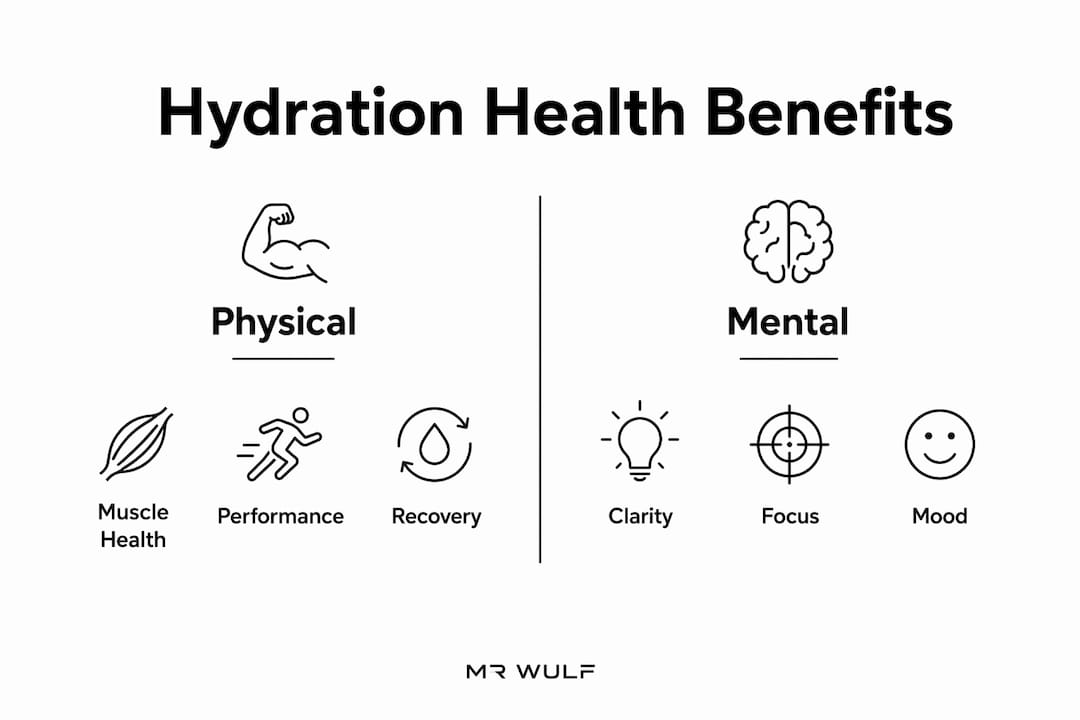
Dehydration is a foundational performance variable in sports science. For men over 30, it carries additional significance because muscle mass naturally declines with age and dehydration accelerates both muscle protein breakdown and recovery impairment. Even a deficit of 1 to 2% of body weight — roughly 800 millilitres to 1.6 litres for an 80-kilogram man — reduces training intensity, impairs muscle protein synthesis, and extends recovery times. That is an amount easily lost through a single moderate training session without electrolyte replacement.
Men following high-protein diets face a compounding challenge. Protein metabolism produces nitrogen-based byproducts the kidneys must excrete, which increases renal water demand significantly above standard guidelines. Eating 180 to 200 grams of protein daily requires meaningfully more than the standard 3-litre fluid target to support kidney clearance. Most men at this intake level are chronically under-hydrated without realising it.
Practical hydration around exercise, incorporating electrolytes as the ACSM recommends:
-
Drink 500 millilitres of sodium-containing fluid two hours before training
-
Consume 150 to 250 millilitres every 15 to 20 minutes during exercise, with electrolytes for sessions over 60 minutes
-
Rehydrate with 1.5 times the fluid lost through sweat after training, replacing both water and sodium
-
For outdoor training in Australian heat, sodium replacement is non-negotiable — plain water alone does not restore plasma volume adequately
-
Monitor urine colour within two hours of finishing as a hydration recovery check
The thirst mechanism activates at approximately 1 to 2% dehydration — the same threshold at which physical performance starts to decline. Waiting to drink until thirsty means training at a deficit by definition. Schedule fluid and electrolyte intake, not demand.
For men focused on physical performance optimisation, treating electrolyte balance with the same rigour as nutrition and training programming is the correct standard.
Mild dehydration at 1 to 2% body water loss measurably impairs memory, reaction time, and sustained concentration. The brain is approximately 75% water by volume, and even minor fluid deficits alter neurotransmitter function and cerebral blood flow. The degradation is subtle and cumulative — men most commonly attribute the symptoms to poor sleep, work stress, or ageing rather than to what is happening in their water balance.
The cognitive symptoms to recognise:
-
Persistent low-grade afternoon headaches
-
Difficulty sustaining focus during complex tasks or prolonged meetings
-
Irritability and mood instability without a clear cause
-
Mental fatigue that caffeine does not resolve
-
Slower verbal recall and decision-making speed
By the time most men reach for a glass of water, their cognitive output has been compromised for several hours. The decline is gradual enough that the connection is rarely made.
Sodium’s role in cognitive hydration is direct: adequate sodium maintains the plasma volume and blood flow to the brain that cognitive performance depends on. Drinking plain water in volume without electrolytes can actually dilute circulating sodium, impairing the very functions you are trying to restore. This is why men who drink a lot of water but not enough electrolytes sometimes still experience brain fog and fatigue — the volume is there, but the osmotic balance is not.
Drink 500 millilitres of mineral-containing water within 30 minutes of waking to offset the overnight fluid and electrolyte deficit. Keep a litre bottle visible throughout the working day. Habits that remove friction outperform willpower every time.
How Hydration Supports Hormonal Balance and Sexual Health
Dehydration triggers a cortisol stress response. Cortisol and testosterone operate on an inverse axis — when cortisol rises, testosterone production is suppressed. For men navigating the gradual hormonal decline that begins in the late 30s, persistently inadequate hydration elevates cortisol through a physiological mechanism and compounds testosterone suppression. This is not speculative. It is a documented endocrine pathway.
The sexual health implications are equally direct. Dehydration reduces blood plasma volume, which restricts circulation and limits nitric oxide bioavailability. Nitric oxide is the signalling molecule that governs vasodilation and is mechanistically essential to erectile function. Chronic mild dehydration contributes to erectile insufficiency through this pathway, and men report improvements in function within days of correcting it — an outcome that rarely gets attributed to hydration because no one is selling dehydration correction.
| Health marker | Well-hydrated with adequate electrolytes | Chronically dehydrated or sodium-deficient |
|---|---|---|
| Testosterone | Supported through controlled cortisol | Suppressed by elevated cortisol |
| Erectile function | Adequate plasma volume and nitric oxide | Reduced vasodilation and circulation |
| Seminal volume | Normal viscosity and sperm motility | Reduced volume and impaired motility |
| Energy and mood | Stable hormonal environment | Fatigue, irritability, reduced drive |
Hydration also affects seminal volume and viscosity. Sodium helps maintain the extracellular fluid volume that seminal fluid depends on. For men concerned about fertility, correcting both water and electrolyte intake is a zero-cost intervention worth prioritising.
One practical note for men over 40: avoid drinking large volumes of fluid within two hours of bedtime. Prostate changes that become more common with age increase nocturnal urination frequency, and front-loading fluid intake earlier in the day reduces sleep disruption without compromising daily totals.
For a deeper look at the hormonal mechanisms involved, the men’s hormonal health guide covers the testosterone and cortisol relationship in detail.
Practical Hydration Strategies for Men Over 30
The 3.7-litre daily fluid target from health authorities includes fluid from all sources, with roughly 20% typically coming from food. That places actual beverage intake closer to 2.9 to 3 litres per day under normal conditions. Activity level, heat exposure, and diet composition all push this figure upward.
| Condition | Additional fluid required |
|---|---|
| Moderate exercise (60 min) | Add 500 to 750ml, with electrolytes |
| Training in heat or humidity | Add 500 to 1,000ml, with electrolytes |
| High-protein diet (greater than 150g daily) | Add 500ml minimum |
| Air-conditioning or long-haul flight | Add 500ml minimum |
On electrolyte sources. The most practical ways to maintain sodium and electrolyte intake for active men:
-
Quality sea salt or mineral salt added to meals — not table salt, which is stripped of the broader mineral profile
-
Mineral water rather than purified reverse-osmosis water, which removes naturally occurring mineral content
-
Coconut water for post-exercise potassium and light sodium replacement
-
Electrolyte powders or tablets for training sessions over 60 minutes — particularly in heat
-
Foods naturally high in potassium (avocado, banana, sweet potato) and magnesium (dark leafy greens, pumpkin seeds, dark chocolate) as dietary foundations
What to avoid: electrolyte products loaded with refined sugar, artificial colours, or synthetic sweeteners. The mineral content is the useful part. The other ingredients are not.
Urine colour as a real-time guide. Pale straw-yellow is optimal. Clear urine signals excess fluid intake and potential electrolyte dilution — not peak health. Dark yellow or amber indicates meaningful dehydration. Aim for consistency at the pale yellow range throughout the day.
Alcohol is a diuretic that also directly suppresses testosterone production. Matching each standard drink with 250 millilitres of water reduces but does not eliminate the combined hydration and hormonal cost of regular drinking.
How Ageing Changes the Hydration Equation
The thirst sensation diminishes with age. Men over 40 are physiologically less likely to notice dehydration until it is already affecting their function — a structural gap in the body’s self-regulation that requires conscious compensation rather than reliance on sensation.
Age also shifts the electrolyte picture. Kidney function changes with age, affecting the efficiency with which the body conserves sodium and regulates fluid balance. Older men may excrete sodium more readily during periods of reduced intake, making deliberate electrolyte replacement increasingly relevant over time.
Several lifestyle factors compound dehydration risk in men over 30:
-
Alcohol intake increases urine output and depletes electrolytes including sodium, potassium, and magnesium
-
Common medications including diuretics, antihistamines, and some blood pressure drugs increase fluid loss and alter electrolyte balance
-
High-protein diets raise renal water demand beyond standard guidelines
-
Air-conditioned offices and long-haul flights cause insidious fluid loss without visible sweating
-
Caffeine in moderate amounts has a mild diuretic effect, though habitual coffee drinkers develop partial tolerance
The cardiovascular and immune benefits of adequate hydration with adequate electrolytes deserve direct mention. Proper fluid balance maintains blood viscosity, supports lymphatic function, and assists the kidneys in clearing metabolic waste. These are not peripheral benefits. They are core physiological functions that deteriorate quietly under chronic mild dehydration and electrolyte imbalance.
Key Takeaways
Adequate hydration with adequate electrolytes is one of the most accessible and most consistently overlooked performance levers available to men over 30.
| Point | Details |
|---|---|
| Electrolytes are co-equal to water | Sodium drives fluid retention and plasma volume maintenance. Water alone does not achieve genuine cellular hydration. |
| The optimal sodium range is 3 to 5g per day | Based on large studies using validated 24-hour urinary sodium collection, all-cause mortality is lowest at approximately 3.5g per day — not at the 2g guideline figure. |
| Active men need to replace sweat sodium | Men training regularly in heat are losing sodium through sweat and cannot simply replace it with plain water. |
| The source of sodium matters | Sodium from ultra-processed food arrives with other harmful co-factors. Sodium from whole food, mineral water, and quality electrolyte sources is a different picture entirely. |
| Hormonal impact is real | Dehydration and electrolyte imbalance elevate cortisol, which suppresses testosterone and compounds the hormonal decline men already face after 30. |
| Urine colour is your real-time guide | Pale straw-yellow is optimal. Clear indicates potential dilution. Dark amber indicates dehydration that needs correcting. |
Observations About Men and Hydration
Men invest in training programs, sleep protocols, and supplement stacks while chronically under-replacing both water and sodium. The return on those investments is capped by the hydration deficit running underneath them.
The salt conversation frustrates me because it has been so poorly communicated. The evidence does not support the message most men have received. Ultra-processed foods are harmful — but conflating the sodium in a daily meal-deal lunch with the sodium in mineral water or quality sea salt and using it to justify blanket salt restriction has left a generation of active men running chronically low on an essential mineral. Low sodium has its own consequences: insulin resistance, activation of stress hormones, elevated LDL, and impaired athletic performance. These are not theoretical. They are documented.
The practical shift for most men over 30 is simpler than it sounds. Drink three litres of fluids daily. Add quality sea salt to food without anxiety. Use electrolytes during and after exercise. Eat mineral-rich whole foods. Stop treating water as the whole hydration story and start treating sodium as a co-essential.
The men who get this right notice the difference faster than they expect.
Hydrate from the outside in with Mrwulfmen skincare
Internal hydration keeps your systems running. External hydration keeps your skin functioning as the barrier it is designed to be. Men over 30 lose skin moisture faster than they realise, and a dehydrated skin barrier accelerates visible ageing, increases sensitivity, and impairs recovery from sun and environmental exposure.

FAQ
How much water should men over 30 drink daily?
Health authorities recommend approximately 3.7 litres of total daily fluids from all sources. Active men, those on high-protein diets, or those training in heat should add 500 millilitres to 1 litre or more. Critically, a portion of that fluid intake should contain electrolytes — particularly sodium — rather than being plain water alone.
Why do electrolytes matter for hydration?
Sodium is the primary electrolyte governing extracellular fluid retention. Without adequate sodium, the kidneys excrete water rapidly rather than retaining it in circulation. Electrolyte-containing fluids produce meaningfully better hydration outcomes than matched volumes of plain water, confirmed by a 2025 University of Pittsburgh study in active men and women.
Is salt actually bad for your heart?
The evidence is more nuanced than the public health messaging suggests. The relationship between sodium intake and cardiovascular outcomes follows a J-curve in large population studies — both very high and very low sodium are associated with adverse outcomes. A 2025 analysis of large urinary sodium studies found all-cause mortality is lowest at approximately 3.5 grams of sodium per day, above the current WHO guideline of 2 grams. Men with hypertension, kidney disease, or heart failure should follow specific clinical guidance, as sodium sensitivity varies individually.
Can dehydration cause low testosterone in men?
Dehydration elevates cortisol, which directly suppresses testosterone production via the HPA axis. For men over 30 already experiencing gradual hormonal decline, chronic mild dehydration compounds this process measurably. Correcting both water and electrolyte intake is part of the hormonal support picture.
What is the best source of electrolytes for men?
Quality sea salt or mineral salt added to whole foods, mineral water, foods naturally high in potassium and magnesium, and electrolyte supplements for training sessions over 60 minutes. Avoid electrolyte products with high refined sugar content, artificial colours, or synthetic sweeteners — the mineral content is the useful part.
What colour should urine be to indicate good hydration?
Pale straw-yellow is the target. Clear urine indicates potential overhydration and electrolyte dilution. Dark yellow or amber indicates dehydration. Consistently monitoring urine colour provides real-time feedback that supplements any daily fluid intake target.


Healthy habits for men over 30: practical examples
Shilajit benefits for men over 30: what works