

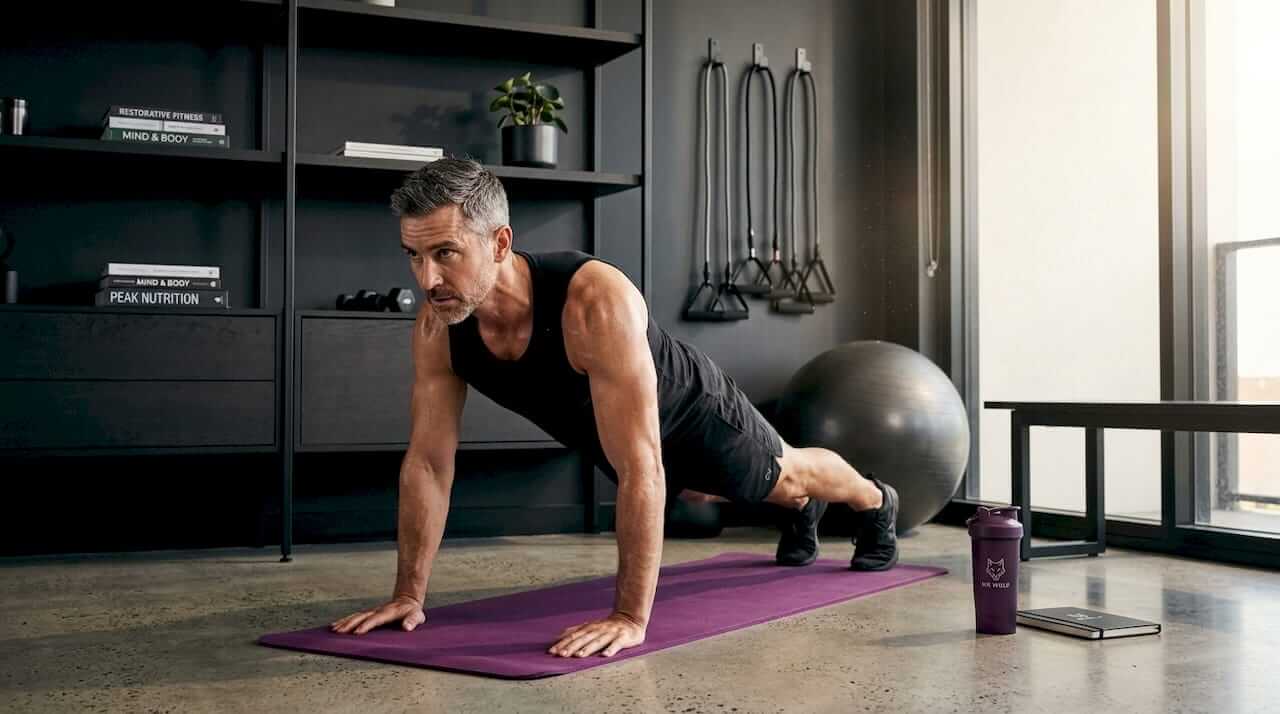
Most men over 30 think physical performance comes down to how much they lift or how hard they push. That framing is too narrow, and it leads to frustrating plateaus.
Physical performance research defines it as a set of measurable capacities spanning muscular strength, anaerobic power, and aerobic fitness — each driven by distinct physiology and each requiring its own training and recovery strategy. Understanding how these systems actually work gives you a precise target to aim at, rather than grinding harder and hoping for different results.
Table of Contents
Key Takeaways
| Point | Details |
|---|---|
| Three pillars determine performance | Muscular strength, anaerobic power, and aerobic capacity each require distinct training. Building one does not automatically build the others. |
| VO2max is the strongest longevity predictor | Men at the 75th percentile and above for their age group show significantly lower all-cause mortality risk than those at average or below. |
| Resistance training outperforms hormonal optimisation alone | Structured progressive training drives the foundational adaptations that improve strength, body composition, and metabolic health regardless of hormonal status. |
| Nutrition and recovery are not optional | Periodised nutrition and quality sleep are primary determinants of training adaptation. Everything else is secondary to getting these right. |
| Test, track, and adjust | Measuring baseline performance across all three pillars removes guesswork and gives you specific, actionable targets. |
Defining Physical Performance: The Three Pillars
Physical performance is not a single dial. It is a cluster of distinct but interdependent capacities, each tied to a different energy system, each telling you something specific about your health and function.
The three primary capacities are muscular strength, anaerobic power and endurance, and aerobic power — also known as cardiorespiratory fitness. Muscular strength is the maximal force your muscles can produce in a single contraction. Anaerobic power covers high-intensity, repetitive bursts that rely on phosphocreatine and glycolytic pathways. Aerobic power, measured as VO2max, underpins sustained effort and cardiovascular health.
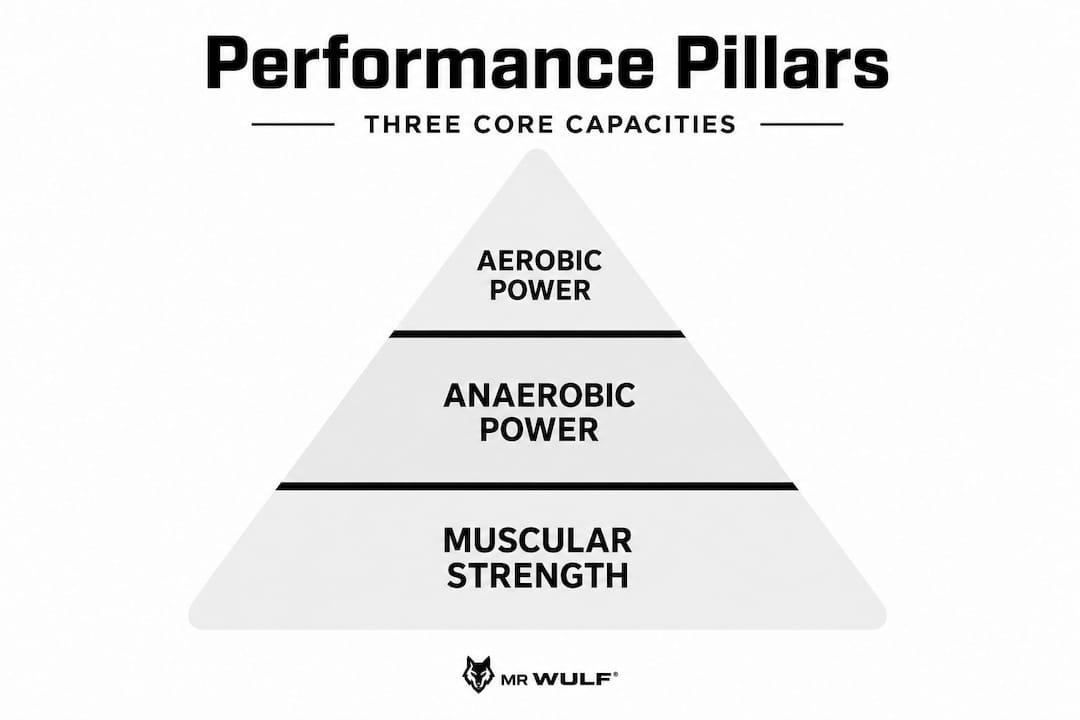
Here is how they compare in terms of daily-life relevance:
| Capacity | Energy system | Real-world relevance | Measurable test |
|---|---|---|---|
| Muscular strength | Phosphocreatine | Lifting, posture, injury prevention | 1RM bench or squat |
| Anaerobic power | Glycolytic | Sprinting, sport, heavy intervals | Wingate or 30s sprint |
| Aerobic power | Oxidative | Stamina, recovery speed, longevity | VO2max or 12-min run |
Each pillar contributes differently to overall wellbeing. Men with strong musculoskeletal capacity recover faster from injury, carry less visceral fat, and maintain metabolic health into their 50s and 60s. High anaerobic capacity means you handle physically demanding situations without crashing. Aerobic fitness is arguably the single strongest predictor of all-cause mortality in men, outperforming blood pressure, cholesterol, and BMI as a standalone risk marker.
The critical practical point is this: training one pillar does not automatically build the others. A man who runs daily but neglects resistance training will score well on VO2max yet lose muscle mass steadily after 35. Conversely, a man who only lifts heavy builds strength but may carry a cardiovascular risk profile that looks worse than his physique suggests.
Test each capacity independently before writing a training programme. Most men are surprised to find their weakest link is not the one they assumed. Specificity in diagnosis leads to specificity in results.
How VO2max Benchmarks Measure Aerobic Performance
VO2max is the gold standard for cardiorespiratory fitness and it is more clinically meaningful than most men realise. At its core, VO2max reflects how efficiently your cardiovascular and muscular systems extract and use oxygen at maximal effort. Higher values mean faster recovery between sets, better metabolic efficiency, and significantly lower cardiovascular risk over time.
Age-specific benchmarks give meaningful context. Here are approximate values for men across age groups:
| Age group | 50th percentile (mL/kg/min) | 75th percentile | 90th percentile |
|---|---|---|---|
| 30 to 39 | 44 | 50 | 55 |
| 40 to 49 | 41 | 47 | 52 |
| 50 to 59 | 37 | 43 | 48 |
| 60 to 69 | 33 | 39 | 44 |
Sitting at the 50th percentile for your age means you are average for your cohort. But average for men in their 40s often means elevated cardiovascular risk compared to active populations. Aiming for the 75th percentile and above is where longevity benefits become meaningful — reduced risk of type 2 diabetes, improved insulin sensitivity, and faster recovery from training stress.
VO2max is not just a fitness metric. For men over 30, it is one of the most powerful predictors of how well and how long they will live. The data on this is consistent across multiple large cohort studies.
To track VO2max without a laboratory:
-
Use the Cooper 12-minute run test on a flat track. Run as far as possible in 12 minutes.
-
Apply the formula: VO2max (mL/kg/min) = (distance covered in metres minus 504.9) divided by 44.73.
-
Compare your score to the age-adjusted table above.
-
Retest every 8 to 12 weeks under identical conditions to track genuine change.
-
Supplement field testing with wearable device estimates for week-to-week trending.
Building VO2max through sustained Zone 2 cardio — roughly 60 to 70% of maximum heart rate for 30 to 60 minutes — three to four times per week produces measurable gains within six to eight weeks. That is not a long wait for a return on investment that pays dividends for decades.
Muscular Strength and Anaerobic Power: Training Principles
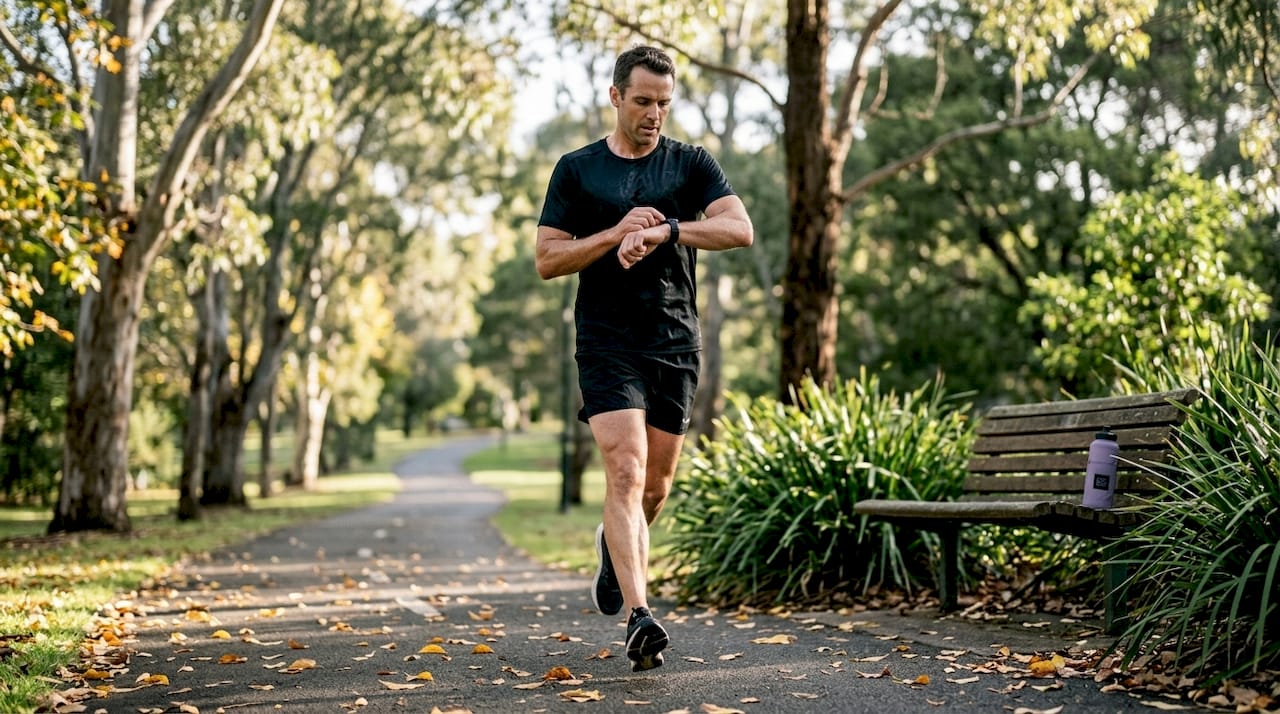
Strength and anaerobic capacity are the pillars most men over 30 think they understand, yet most training programmes still underprioritise them or structure them poorly. If your resistance training lacks progressive overload and specific anaerobic intervals, performance gains will plateau regardless of how consistently you show up.
Research published in Drugs and Aging confirms that resistance exercise improves fitness and body composition more consistently than testosterone effects alone for most older men. This is an important finding because it reframes the common narrative around hormonal optimisation. Testosterone plays a role in muscle protein synthesis and recovery, but resistance training drives the foundational adaptations — strength, blood pressure improvement, insulin sensitivity, body composition — regardless of hormonal status. A man who trains consistently will almost always outperform a sedentary man with optimised testosterone levels.
Key training principles for men over 30:
-
Progressive overload: Increase resistance, volume, or density every one to two weeks to force adaptation. Without this the body adapts to the existing stimulus and stops improving.
-
Compound movement priority: Squats, deadlifts, rows, and presses recruit more motor units and stimulate a greater hormonal response than isolation work. These are the movements to build the programme around.
-
Anaerobic intervals: Short, maximum-effort efforts — 20 to 30 seconds at maximal intensity, repeated four to eight times — build glycolytic capacity without excessive cardiovascular volume.
-
Frequency management: Three to four resistance sessions per week is the effective range for most men, allowing meaningful adaptation without accumulated fatigue undermining recovery.
For anaerobic power specifically, creatine monohydrate at three to five grams daily is one of the most rigorously studied and effective ergogenic aids available. It increases phosphocreatine stores in muscle, directly fuelling short explosive efforts, and produces measurable improvements in sprint performance, recovery between sets, and lean mass over time. No loading phase is required.
Nitric oxide support adds another dimension worth understanding. Peripheral vasodilation improves blood flow to working muscle during training, supporting output and cardiovascular function. For men focused on both training performance and long-term cardiovascular health, vascular support is a complementary mechanism that works alongside the strength and aerobic pillars rather than in isolation.
Testosterone support acts as an adjunct to a structured programme — amplifying the gains from training rather than producing them independently. The sequence matters: structured training first, targeted supplementation second.
Nutrition and recovery: the overlooked performance edge
You can train intelligently, track your VO2max, and take creatine consistently. If your nutrition and recovery are ad hoc, you are building on an unstable foundation.
Performance nutrition must be personalised and periodised around demand windows to support performance, recovery, immune function, and injury risk. The 4Ps framework captures this well: Personalise (match intake to your physiology and goals), Periodise (adjust macronutrients around training load), Prefuel (eat to support the upcoming session), and Prepare (structure recovery nutrition after training). This is a fundamentally different approach from eating clean or counting generic calories.
Practical nutrition strategies for men over 30:
-
Pre-training window (1 to 2 hours before): Prioritise easily digestible carbohydrates (40 to 60g) combined with a moderate protein source (20g). Oats with a scoop of protein, or a banana with Greek yoghurt, fits this profile precisely.
-
Intra-training hydration: For sessions over 60 minutes, target 400 to 800mL of fluid per hour with sodium replacement (500 to 700mg per litre) to maintain neuromuscular function.
-
Post-training recovery (within 30 to 60 minutes): Aim for 0.3 to 0.4g of protein per kilogram of bodyweight alongside a carbohydrate source. A 90kg man should target 27 to 36g of protein plus approximately 40 to 60g of carbohydrates in this window.
-
Daily protein distribution: Rather than front-loading protein at dinner, spread 1.6 to 2.2g per kilogram of bodyweight across four to five meals or feeding occasions.
Sleep is not a bonus recovery tool. It is the primary one. During slow wave sleep, growth hormone secretion peaks, muscle protein synthesis accelerates, and cortisol levels fall. Men averaging fewer than six hours per night show measurably impaired strength output, elevated inflammatory markers, and reduced anabolic hormone profiles compared to those sleeping seven to nine hours.
Hydration operates by a similar principle. Even mild dehydration of around 1.5 to 2% of bodyweight reduces aerobic performance, cognitive function, and muscular endurance. This threshold arrives before most men feel thirsty in standard training conditions.
Your performance checklist should include nutrition timing and hydration targets alongside training variables. Sleep debt compounds over weeks, not days. If training hard and recovering poorly, protecting sleep duration is the highest-leverage intervention available — more so than adding training volume.
What most advice gets wrong about men’s physical performance
The single most persistent flaw in men’s fitness content is generic advice that ignores the fact that physical performance has a specific physiological structure. Most programmes treat the body as a single system that simply needs more stimulus. The evidence does not support that.
Mapping physical capacities to specific energy systems — strength for the phosphocreatine pathway, anaerobic power for glycolysis, aerobic fitness for oxidative metabolism — gives an actionable framework. When a man knows his VO2max sits at the 40th percentile for his age group and his 1RM squat is below average, he has two clear, measurable targets. That is motivating in a way that “train more” is not.
The other persistent error is treating supplementation or hormonal optimisation as primary interventions rather than adjunctive tools. Targeted supplementation and hormonal support have a legitimate role. But they are second-order. The men who see the most sustained improvement are the ones who periodise their training and nutrition, track their benchmarks, protect their sleep, and then layer targeted supplementation on top. The sequence matters and reversing it produces consistently poor outcomes.
Midlife is also when individual variability in response to exercise increases meaningfully. A programme that worked at 28 may produce diminishing returns at 42 because recovery capacity, hormonal environment, and muscle fibre distribution have all shifted. Testing across all three performance pillars and tracking over time removes the guesswork and places the programme on a factual footing rather than an assumed one.
The men who stay ahead of age-related performance decline are those who treat physical performance as a measurable, multidimensional target and update their approach as the evidence and their own data warrant.
Further Support
The Mr Wulf Men blog covers the clinical detail behind physical performance, sleep science, hormonal health, and supplement formulation — with the same standard applied throughout: mechanism first, marketing never.

Explore Mr Wulf Men Performance Supplements
WULF Creatine — Micronised Creatine Monohydrate 3 to 5g daily. No loading phase required. One of the most consistently supported ergogenic aids in the men’s performance literature for strength, power output, and lean mass. View Wulf Creatine
PRIMAL — Postbiotic Nitric Oxide Booster Supports circulation and physical output during training via peripheral vasodilation. A complementary mechanism to strength and aerobic training for men focused on performance and cardiovascular health. View PRIMAL
WULF Test — Daily Men’s Formula for Drive, Output and Resilience The adjunct to a structured training programme. Tongkat Ali at 5% eurycomanone, Shilajit, Rhodiola, Cistanche, Zinc Bisglycinate, Boron, Vitamin D3, L-Selenomethionine, and AstraGin — all at clinical doses. View Wulf Test
Wulf Sleep — Natural Sleep Support Formula The recovery pillar most men underestimate. Ten clinically dosed ingredients addressing sleep onset, cortisol management, and deep sleep architecture. View Wulf Sleep
Frequently Asked Questions
What are the best ways for men to measure physical performance?
Testing strength via a one-repetition maximum, anaerobic capacity through timed sprint efforts, and aerobic fitness via the Cooper 12-minute run test or laboratory VO2max measurement gives the clearest overall picture. Age-adjusted VO2max percentiles provide the most useful context for aerobic testing specifically. Reassess every 8 to 12 weeks under identical conditions to track genuine change.
How much does testosterone affect physical performance for men over 30?
Testosterone supports muscle protein synthesis and recovery but plays an adjunctive rather than primary role compared to structured training. Research confirms resistance exercise drives broader improvements in fitness and body composition than hormonal optimisation alone for most older men. Training first, hormonal support second.
Why is nutrition timing important for men’s performance?
Timing nutrition around training sessions ensures fuel is available for performance and recovery substrates are present immediately after the training stimulus. The 4Ps framework — Personalise, Periodise, Prefuel, Prepare — links structured intake directly to training quality and adaptation outcomes.
How do hydration and sleep affect physical performance?
Even mild dehydration impairs aerobic performance and muscular endurance before the sensation of thirst arrives. Inadequate sleep blunts anabolic hormone output, slows tissue repair, and elevates inflammatory markers. Both are foundational determinants of training adaptation — not optional recovery tools.
Is creatine worth taking for men over 30?
Yes. Creatine monohydrate at 3 to 5g daily is one of the most consistently supported ergogenic aids in the sports science literature. It improves strength output, sprint recovery, and lean mass over time, and has additional emerging evidence for cognitive function. No loading phase is required.


Adaptogens in men's supplements: what science says
The essential men's performance checklist for results