


After 30, the rules shift. Recovery takes longer, hormones begin a slow decline, and the window for meaningful health improvements narrows if you keep deferring action. The good news is that the science is clear on what actually moves the needle — and it is not a complicated biohacking protocol or a cupboard full of supplements.
It is a handful of repeatable, evidence-backed habits done consistently, combined with smart adjuncts like targeted supplementation and quality sleep. This article delivers the men’s health tips that actually compound over time.
Table of Contents
Key Takeaways
| Point | Details |
|---|---|
| Foundation first, always | Exercise, nutrition, sleep, and stress management carry more leverage than any supplement or advanced protocol. Fix these before adding anything else. |
| Hit specific weekly exercise targets | At least 150 minutes of aerobic activity plus two strength sessions per week is the evidence-based minimum — not the ceiling. |
| Choose supplements by evidence, not marketing | Creatine monohydrate has decades of trial data behind it. Most products on the shelf do not. Form, dose, and standardisation determine whether an ingredient actually works. |
| Sleep is a performance variable, not a recovery bonus | Seven to nine hours of quality sleep drives testosterone production, tissue repair, and cognitive function. Compromising it undermines everything else. |
| Generic advice has limits | Men with medical conditions, medications, or specific health diagnoses need personalised clinical guidance, not generic tips. |
Build a Strong Health Foundation
Every conversation about men’s health eventually returns to the same core principles. Not because they are simple, but because they work — and because no supplement, wearable, or advanced protocol meaningfully compensates when they are absent.
The foundation is consistent exercise combining aerobic and strengthening work, a dietary pattern you can genuinely sustain, sufficient sleep, and active stress management. These four variables drive the vast majority of performance and hormonal outcomes for men over 30. Everything else sits on top.
Think of it this way: optimising creatine timing matters very little if you are sleeping five hours a night and eating inconsistently. The foundation carries the leverage. Supplements do not.
The four pillars to establish first:
-
Exercise: Combine aerobic activity with resistance training every week — not occasionally
-
Diet: Choose a sustainable eating pattern and maintain it long enough for adaptation to occur
-
Sleep: Treat it as a performance variable; quantity and quality both matter
-
Stress management: Build actual recovery routines — deliberate downtime, movement in nature, social connection, or breathwork
Before adding any complexity to a routine, audit where you actually stand against these four pillars. If any one of them is below a reasonable standard, fix that first. Supplements cannot compensate for structural deficits in lifestyle. Use the performance checklist to make that assessment objective rather than approximate.
Exercise Benchmarks and Training Routines
Knowing you should “exercise more” is not actionable. Knowing how much, what type, and at what intensity is.
The physical activity guidelines for adults are clear: at least 150 minutes per week of moderate-intensity aerobic activity, or 75 minutes per week of vigorous aerobic activity, plus muscle-strengthening activities on two or more days per week. These are minimums, not ceilings.
Moderate intensity means a brisk walk, a relaxed cycle, or a swim where conversation is still possible. Vigorous means running, fast cycling, or circuit training where conversation becomes difficult. Both count and can be mixed across the week.
A practical weekly structure for men over 30 balancing work, family, and training:
-
Monday: 45-minute strength session — upper body focus, compound lifts
-
Wednesday: 30-minute vigorous run or HIIT session
-
Thursday: 45-minute strength session — lower body focus, deadlifts and squats
-
Saturday: 45-minute moderate-intensity aerobic activity — cycle, swim, or trail walk
-
Sunday: Active recovery, mobility work, or a light walk
That structure satisfies weekly benchmarks and keeps training sustainable without accumulated fatigue undermining recovery. Adjust frequency and volume to match your current capacity and build from there.
What aerobic and strength training each deliver:
| Benefit | Aerobic training | Strength training |
|---|---|---|
| Cardiovascular health | High impact | Moderate impact |
| Muscle mass preservation | Low impact | High impact |
| Resting metabolic rate | Moderate increase | Significant increase |
| Testosterone support | Moderate | High via heavy compound lifts |
| Bone density | Moderate | High |
| Mental health and mood | High impact | High impact |
Both modalities deliver distinct benefits and neither replaces the other. Men who only run tend to lose muscle mass steadily after 35. Men who only lift often miss cardiovascular adaptation that predicts longevity. The combination is non-negotiable.
Where time is genuinely limited, prioritise strength training over pure cardio. Heavy compound lifts — squats, deadlifts, rows — provide cardiovascular stimulus while preserving the muscle mass that becomes increasingly difficult to build and maintain after 35.
Optimise Sleep and Recovery for Peak Performance
Exercise breaks tissue down. Sleep is where it rebuilds. This distinction becomes increasingly important as men move through their 30s and into their 40s.
A sleep target of seven to nine hours per night is consistently supported in the literature, with individual needs varying based on training load, stress, and age. The issue most men over 30 face is not time in bed — it is sleep quality. Lying in bed for eight hours while the nervous system is still processing a demanding day does not produce restorative sleep. Deep sleep stages are where growth hormone secretion peaks, tissue repair accelerates, and cognitive consolidation occurs. Disrupting or shortening those stages has measurable consequences for performance, recovery, and body composition.
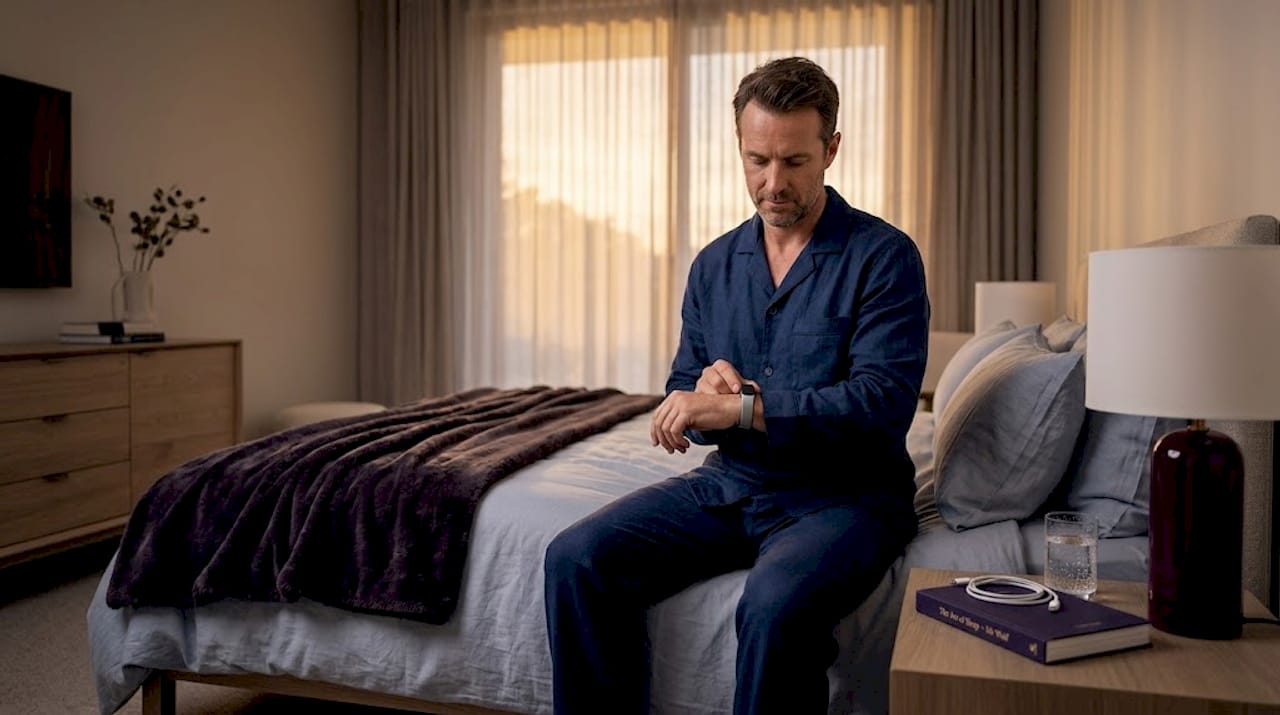
Sleep habits that actually move the dial:
-
Wind-down routine: Begin transitioning away from screens and stimulating content at least 60 minutes before bed
-
Temperature: Keep the bedroom between 16 and 19 degrees Celsius to support the core temperature drop sleep onset requires
-
Light control: Blackout curtains or a sleep mask; even low ambient light disrupts melatonin secretion
-
Consistency: Fixed bedtime and wake time seven days a week — including weekends — anchors the circadian rhythm
-
Alcohol: A standard drink close to bedtime fragments sleep architecture even if sleep onset feels faster
-
Caffeine curfew: Cut caffeine by 2pm to avoid interference with sleep onset and slow wave sleep depth
-
Morning light exposure: Natural sunlight within 30 minutes of waking anchors the circadian rhythm and improves evening sleep quality
| Sleep duration | Effect on testosterone | Effect on recovery | Effect on cognitive function |
|---|---|---|---|
| Under 5 hours | Significant decline | Poor | Impaired significantly |
| 5 to 6 hours | Moderate decline | Below average | Noticeable impairment |
| 7 to 9 hours | Optimal range | Optimal | Sharp and sustained |
| Over 10 hours | Minimal additional gain | Marginal improvement | Slight improvement for debt repayment |
Recovery becomes a genuine limiting factor — not an afterthought — as men move past 35. Younger men can often outrun poor sleep with hormonal output. Men over 35 cannot. This is where sleep quality becomes as important as training quality, and where treating it as a performance variable rather than a luxury produces the most meaningful return.
Track subjective sleep quality for two weeks before adding any sleep supplement. Rate energy, mood, and mental clarity each morning on a simple 1 to 10 scale. The pattern tells you where to focus and whether any intervention is actually working.
For a deeper look at the mechanisms and evidence behind sleep quality improvement, the Mr Wulf Men sleep guide covers this in detail.
Smart Supplementation: Quality and Evidence Matter
The supplement industry is saturated with products making large claims backed by thin evidence. The signal-to-noise ratio is poor. Here is how to cut through it.
Third-party verification and evidence-based rationale are the two non-negotiable filters. Apply them to every product before purchasing.
What to look for when evaluating any supplement:
-
Third-party certification: NSF, Informed Sport, or TGA registration in Australia
-
Clinically relevant doses: Check whether the dose in the product matches the doses used in the trials cited
-
Transparent labelling: No proprietary blends hiding individual ingredient quantities
-
Evidence quality: Randomised controlled trials carry far more weight than observational data or animal studies
-
Manufacturer transparency: Where is it made and what quality standards govern the facility
Creatine monohydrate stands out as one of the most robustly supported performance supplements available, with decades of well-controlled trials confirming its role in strength, power output, muscle mass preservation, and cognitive function. It is also one of the few supplements with consistent third-party certification records. Three to five grams daily, no loading phase required.
Beyond creatine, the supplements with the strongest evidence for men over 30 are largely foundational deficiency corrections rather than performance enhancers — vitamin D3 in deficient individuals, magnesium glycinate for sleep and stress modulation, zinc bisglycinate for immune function and testosterone in zinc-deficient men. Test before supplementing on any of these. Supplementing minerals you are not deficient in produces minimal benefit and in the case of zinc can create new problems at high doses.
Evidence summary for common supplements:
| Supplement | Evidence quality | Primary benefit | Notes |
|---|---|---|---|
| Creatine monohydrate | Very strong | Strength, power, lean mass, cognition | Universally applicable; no loading required |
| Vitamin D3 | Strong — deficient populations | Hormonal support, immune function, bone health | Test first; 3,000 to 5,000 IU meaningful for Australians |
| Magnesium glycinate | Moderate to strong | Sleep quality, recovery, cortisol modulation | Glycinate form essential for absorption |
| Zinc bisglycinate | Moderate — deficient populations | Testosterone support, immune function | Test first; excess at high doses competes with copper |
| Generic test boosters | Weak | Variable and often negligible | Frequently pixie dusted at sub-clinical doses |
A product listing 20 or more ingredients in a single capsule is almost certainly not delivering clinically relevant doses of most of them. The capsule mathematics do not work. Fewer, well-dosed ingredients at clinically validated forms consistently outperform long, underdosed ingredient lists.
The virility supplements guide breaks down which actives are genuinely worth considering and which are being pixie dusted into formulations at doses too low to produce the mechanism they are being credited with.
Know Your Edge Cases: When Personal Advice Matters Most
General health advice is built for the majority. It does not account for individual medical history, current medications, or specific health conditions that change the risk-benefit calculation meaningfully.
Evidence for lifestyle interventions in men can be highly domain-specific. A clear example is active surveillance for prostate cancer, where the evidence for specific dietary and supplement interventions remains insufficiently consolidated to make broad population-level recommendations. In that context, and in others like it, applying generic health tips without clinical guidance can be irrelevant or counterproductive.
Situations where you should consult your clinician before applying broad health advice:
-
Diagnosed hormonal conditions: Including hypogonadism, thyroid disorders, or adrenal insufficiency
-
Cardiovascular history: Specific exercise intensity recommendations differ from general population guidelines
-
Active cancer surveillance or treatment: Dietary and supplement advice requires specialist input
-
Medications with nutrient interactions: Several common medications deplete specific micronutrients or interact with supplement compounds
-
Chronic kidney or liver conditions: Protein intake recommendations and supplement metabolism are affected significantly
Supplements are adjuncts, not primary interventions, in any medical context. For men navigating hormonal health concerns specifically, accurate blood testing and a conversation with a practitioner is the appropriate starting point before adding any hormonal support products.
Repeatable Wins Beat Chasing Every New Trend
The men who make the most consistent progress are not the ones chasing every new protocol. They are the ones who have locked in their exercise habits, figured out their sleep, cleaned up their diet, and chosen two or three supplements with genuine evidence behind them.
The wellness industry profits from dissatisfaction with the basics. Every new trend — red light therapy, peptide stacking, cold plunge regimens — gets positioned as the edge you have been missing. Sometimes there is genuine utility in those approaches. But when layered on top of poor sleep and inconsistent training, they contribute very little. The signal is weak because the foundation is not there to amplify it.
The weekly benchmarks are the real lever. One hundred and fifty minutes of aerobic work and two strength sessions per week, done consistently for 12 months, will outperform any supplement stack built on a foundation of irregular training and inadequate recovery. This is not a philosophical position. It is what the data shows repeatedly.
Products and supplements should be adjuncts that reinforce a working system, not substitutes for one. Once the foundation is solid, targeted additions — creatine, well-formulated sleep support, corrected vitamin and mineral deficiencies — become genuinely additive rather than compensatory.
The most powerful shift a man over 30 can make is deciding that his health is a system to maintain rather than a problem to fix episodically. That mindset, more than any single product or protocol, is what separates men who thrive in their 40s and 50s from those who look back and wish they had started sooner.
Further Support
The Mr Wulf Men blog covers the clinical evidence behind exercise, sleep, hormonal health, and supplementation — all with the same standard applied here: mechanism first, marketing never.
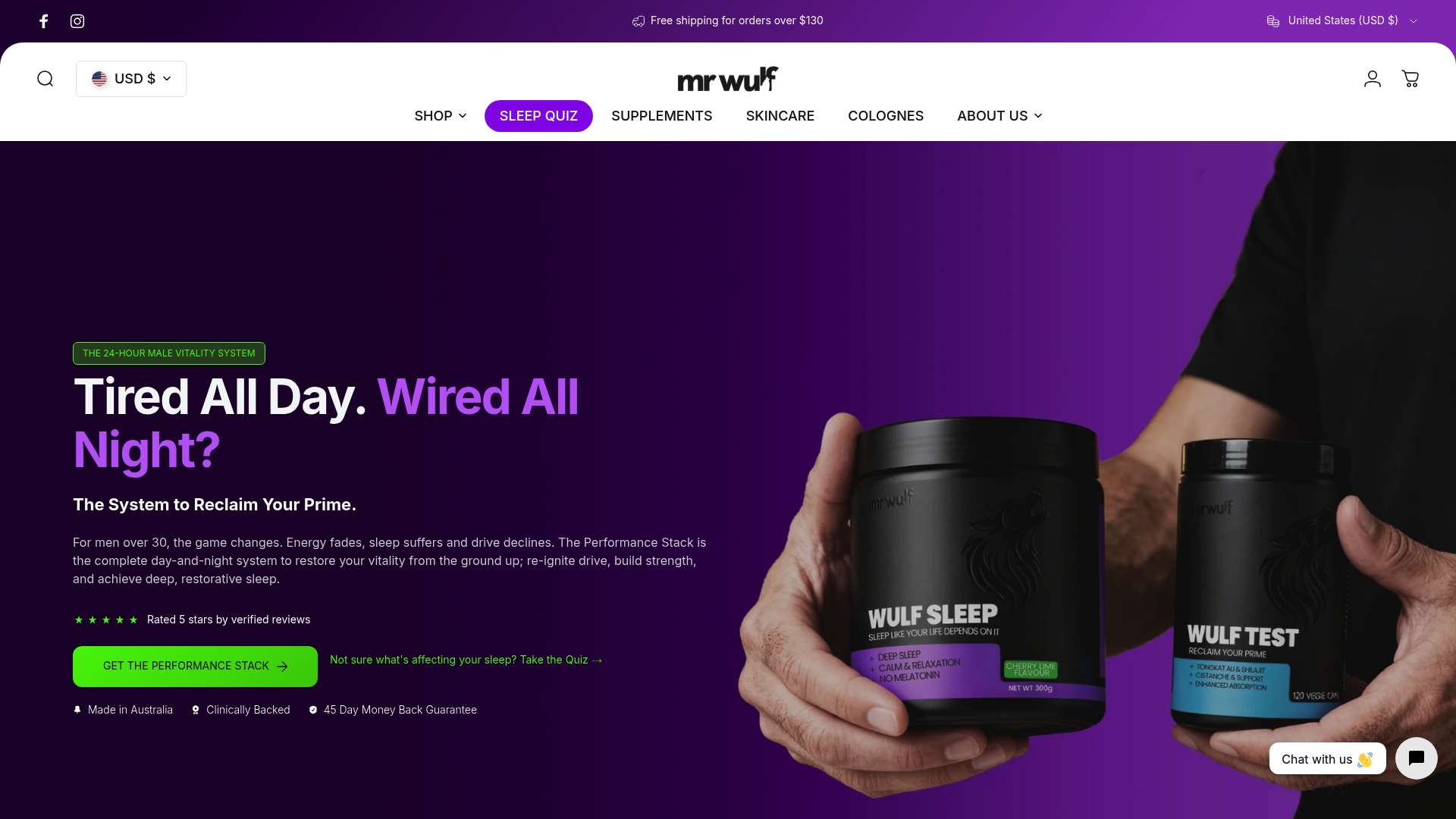
Explore Mr Wulf Men Supplements
WULF Creatine — Micronised Creatine Monohydrate 3 to 5g daily. No loading phase required. One of the most consistently supported performance supplements in the literature for strength, power, lean mass, and cognitive function. View Wulf Creatine
Wulf Sleep — Natural Sleep Support Formula Ten clinically dosed ingredients for men whose sleep quality has declined. Addresses sleep onset, evening cortisol, and deep sleep architecture — the overnight foundation everything else depends on. View Wulf Sleep
WULF Test — Daily Men’s Formula for Drive, Output and Resilience For men who have established their training and sleep foundation and want targeted daily support. Clinically dosed, standardised ingredients. Transparent label. No proprietary blends. View Wulf Test
The Performance Stack — Day and Night Coverage Wulf Test and Wulf Sleep together, for men who want to support both daytime drive and overnight recovery in a coordinated system. View The Performance Stack
Frequently Asked Questions
How much exercise should men over 30 do each week?
At least 150 minutes of moderate aerobic activity or 75 minutes of vigorous exercise per week, plus at least two strength training sessions. These are evidence-based minimums. Men with performance goals above general health maintenance should work above these thresholds with progressive overload built in.
What are the best supplements for men’s health and performance?
Creatine monohydrate has the broadest and strongest evidence base across strength, power, lean mass, and cognitive function. Vitamin D3 and magnesium glycinate are worth addressing if bloodwork confirms deficiency. For men with declining sleep quality or drive, targeted formulations for sleep and testosterone support — built around individually disclosed clinical doses — are worth exploring after the lifestyle foundation is established.
How important is sleep for men over 30?
Extremely. Seven to nine hours of quality sleep supports testosterone production, tissue repair, and cognitive function. Its importance increases with age because hormonal output and recovery capacity both decline and sleep quality becomes the primary determinant of whether training adaptations occur. Treating sleep as optional is one of the most common and costly mistakes men over 30 make.
Should I get medical advice before making health changes or supplementing?
Yes — particularly for men with existing health conditions, cardiovascular history, or medications with potential interactions. Evidence for lifestyle interventions is highly individual, and what applies to the general population may not apply to specific clinical profiles.
What is the fastest way to improve men’s vitality?
The most reliable path is building consistent exercise, sleep, nutrition, and stress management into the weekly routine and maintaining them for a minimum of 90 days before evaluating outcomes. These four pillars produce compounding returns that no single product can replicate on its own. The compounding effect is slow to start and significant over time.


The essential men's performance checklist for results
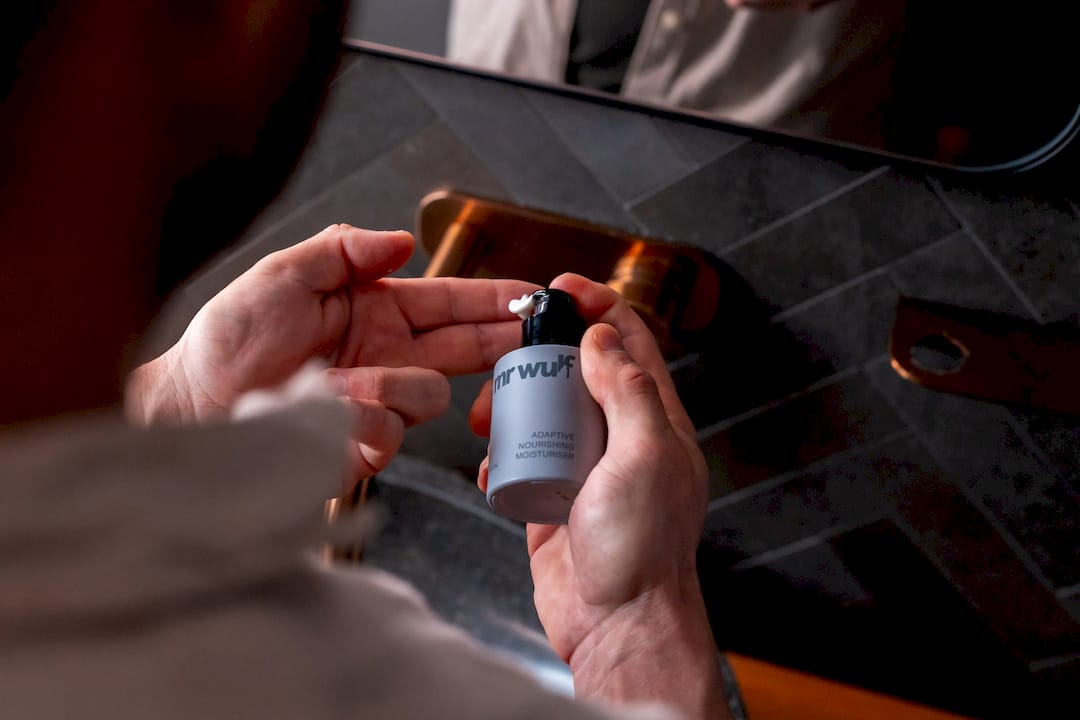
Men's skin health: evidence-based steps for over 30s