


The Testosterone-Sleep Loop Nobody in the Supplement Industry Is Talking About
By Jeff — Head Formulator, Mr Wulf Men
Jeff has spent over 20 years in clinical supplement formulation. He was part of the team behind ATP Science, a two-time BRW Fast 100 company, and leads all formulation development for Mr Wulf Men.
In twenty years of formulating supplements, I have watched the sleep category and the testosterone category operate as completely separate industries — separate marketing strategies, separate retail shelves, separate customer avatars — as though the two have nothing to do with each other.
They have everything to do with each other.
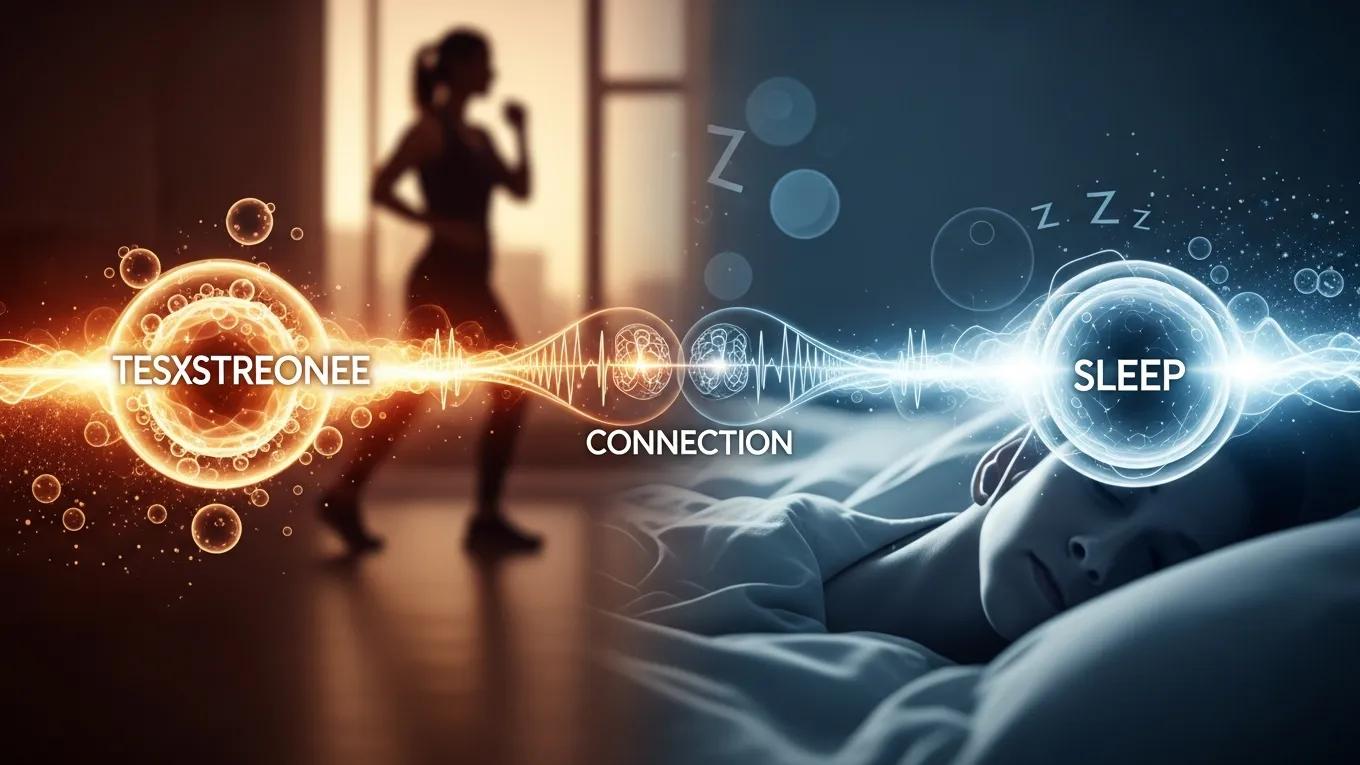
The relationship between testosterone and sleep is bidirectional, clinically documented, and mechanistically precise. Poor sleep directly suppresses testosterone production. Low testosterone directly impairs sleep quality. The loop runs continuously, worsens incrementally, and — this is the part that should concern every man over 30 — is almost entirely ignored by a supplement industry that profits from selling you a sleep product and a testosterone product as though they are solving two separate problems.
They are solving one problem from two angles, badly, in isolation. This is why so many men see partial results from each category and conclude that neither really works. The loop keeps running because nobody is applying pressure to both ends at the same time.
This article explains the mechanism and what to do about it.
Where Testosterone Is Actually Made
Most men know that testosterone is produced primarily in the testes. Fewer know that the timing of that production is almost entirely sleep-dependent.
During deep sleep — specifically Stage N3 slow wave sleep — there is a surge in growth hormone, testosterone, and IGF-1 secretion. These are the hormones crucial for tissue repair, protein synthesis, and muscle growth. Testosterone levels rise with sleep onset, spike at the first REM episode, and continue rising until morning awakening. The morning testosterone peak that most men take for granted is the product of a full night of properly sequenced sleep.
Disrupt the sleep and you disrupt the production. It is not complicated. It is physiology.
Testosterone levels decrease when REM latency is longer — such as in old age and in sleep disorders. Sleep fragmentation disrupts the testosterone rhythm entirely. A man who is waking at 3am, cycling through shallow sleep, or failing to reach adequate slow wave depth is not just sleeping poorly. He is running a testosterone deficit every single night, compounding silently over months and years.
What the Clinical Evidence Shows
The research on sleep restriction and testosterone is not ambiguous.
Even a single night without sleep can reduce testosterone levels by nearly one quarter, while chronic sleep deprivation promotes catabolic dominance. That is not a small effect. That is a hormonal shift significant enough to affect mood, physical performance, recovery, libido, and body composition — from one bad night.
The landmark study that established this mechanistically was conducted at the University of Chicago by Leproult and Van Cauter, published in JAMA in 2011. They restricted sleep to five hours per night for one week in healthy young men — not elderly men, not men with pre-existing conditions, healthy young men — and measured testosterone levels. The result: a 10 to 15% reduction in serum testosterone after seven days of five-hour sleep.
Five hours. One week. Ten to fifteen percent.
A 2023 study published in the Journal of Applied Physiology (Saner et al.) took this further, measuring muscle protein synthesis directly rather than just hormones. Thirteen healthy men were randomised to either five nights of four-hour sleep or five nights of eight-hour sleep, with muscle protein synthesis measured via deuterated water. The four-hour sleep group showed a 27% drop in myofibrillar muscle protein synthesis — the pathway specifically responsible for building contractile muscle proteins. This is not an indirect hormonal measurement. It is a direct measurement of the body's capacity to build and maintain muscle tissue. Sleep restriction cut it by more than a quarter.
For men over 30 who are training, managing high workloads, and wondering why their body is not responding the way it used to — this number is worth sitting with. The deficit may not be in the training. It may not be in the protein intake. It may be in the sleep.
The Cortisol-Testosterone Inverse Relationship
The testosterone-sleep connection becomes more entrenched when you add cortisol to the picture.
Cortisol and testosterone operate in inverse relationship. When cortisol is elevated — which it is chronically in men managing significant stress loads, training hard, sleeping poorly, or simply living the high-output life that characterises the men Wulf Sleep is formulated for — testosterone is suppressed. This is an evolutionary mechanism. The body prioritises stress response (cortisol) over reproductive function (testosterone) when it perceives threat.
The modern version of this trade-off is running continuously in the background. Chronic stress keeps cortisol elevated. Elevated cortisol suppresses testosterone. Low testosterone reduces stress resilience, which makes the stress response worse, which keeps cortisol higher for longer.
Poor sleep sits at the intersection of all of this. Sleep debt, circadian misalignment, and sleep disruption accumulate with modern life and are not completely resolved by recovery sleep. Each night of disrupted sleep adds to the cortisol load the next day. Each night of disrupted deep sleep reduces testosterone production. The two deficits compound each other and the combined picture — elevated cortisol, suppressed testosterone, poor sleep, degraded recovery — is what I would characterise as the wired-tired loop in its most entrenched form.
How Low Testosterone Makes Sleep Worse
The loop runs in the other direction too, which is the part the industry consistently fails to mention.
Low testosterone is directly associated with reduced slow wave sleep, increased sleep fragmentation, and elevated nocturnal cortisol. The mechanisms are multiple. Testosterone has direct effects on sleep architecture — testosterone receptors are present in the brain regions governing sleep regulation, and adequate testosterone levels are necessary for proper GABAergic signalling and the maintenance of deep sleep stages.
Men with clinically low testosterone consistently report poorer sleep quality, more frequent night-time awakenings, and reduced sleep efficiency compared to age-matched men with normal testosterone levels. Treating the low testosterone improves the sleep. Improving the sleep increases the testosterone. The directionality runs both ways.
This is why treating only one end of the loop produces limited and often temporary results. You improve your sleep and feel better for a few weeks, but the daytime testosterone deficit continues undermining the hormonal environment that sleep quality depends on. Or you address testosterone and see some daytime improvement, but the poor sleep continues suppressing the production gains your testosterone support is trying to create.
The loop does not break from one end. It breaks from both ends simultaneously.
Why the Supplement Industry Ignores This
The answer is simple and unsatisfying: it is harder to market a system than a product.
A sleep supplement has a clear value proposition. A testosterone supplement has a clear value proposition. A product that addresses both — by being honest that they are the same problem running in a loop — is a more complex sell that requires the customer to understand the mechanism before they understand the solution.
Most supplement marketing assumes the customer is not interested in mechanisms. Most supplement marketing is wrong about this, especially in a demographic of high-performing men who are used to understanding the systems they operate in.
The other reason is category structure. Sleep supplements and testosterone supplements are different retail categories, different media buys, different influencer verticals. The brands that exist within each category have no incentive to blur the line between them.
We built The Performance Stack specifically because the line needed blurring. Not as a bundle discount mechanism. As a formulation philosophy that acknowledges what the clinical literature has been saying for over a decade: sleep and testosterone are the same physiological loop and need to be addressed as one system.
What Wulf Sleep Does for the Testosterone-Sleep Loop
Wulf Sleep addresses the night side of the loop — the specific mechanisms preventing adequate deep sleep and the cortisol elevation that suppresses testosterone production overnight.
Lactium® 200mg directly reduces evening cortisol by binding to the GABA-A receptor. Lower cortisol at night means more permissive conditions for testosterone synthesis during slow wave sleep. The two mechanisms are directly connected: cortisol suppresses testosterone, Lactium suppresses cortisol.
Glycine 3000mg accelerates the core body temperature drop that must occur for sleep onset and Stage 3 slow wave access. More time in slow wave sleep means more time in the primary window of testosterone and growth hormone synthesis. Getting there faster matters.
PharmaGABA™ 130mg facilitates the brainwave transition into the relaxed alpha state that precedes sleep onset. A nervous system that cannot exit beta wave dominance is a nervous system that is spending less time in the deep sleep stages where anabolic hormone production is concentrated.
Magnesium Glycinate 1650mg directly supports HPA axis regulation and GABA-A receptor function — both required for the cortisol normalisation and sleep architecture maintenance that testosterone synthesis depends on.
The botanical layer — Tart Cherry, Chamomile, Lemon Balm, Ziziphus Spinosa — sustains GABAergic inhibitory tone and natural melatonin pathway activity through the full sleep cycle, maintaining the deep sleep architecture rather than just facilitating entry into it.
What Wulf Test Does for the Other Half
Wulf Test addresses the daytime side of the loop — the testosterone foundation that years of disrupted sleep and elevated cortisol have been eroding.
Tongkat Ali 60:1 at 5% eurycomanone 200mg is the primary testosterone support mechanism. A systematic review and meta-analysis published in Nutrients confirmed that Eurycoma longifolia supplementation significantly improves serum testosterone in men. The 5% eurycomanone standardisation is the clinically relevant marker — eurycomanone is the active compound driving the hypothalamic-pituitary-testicular axis modulation. The 60:1 extraction ratio confirms a potent, concentrated extract.
Notably, a 2024 study from Stanford University's Department of Psychiatry and Behavioral Sciences published in Sleep Advances found that Tongkat Ali supplementation enhanced sleep-wake consolidation and consolidated NREM sleep in middle-aged wild-type subjects — a finding that directly links a testosterone-supporting ingredient to improved sleep architecture. The loop benefits from both ends.
Shilajit at 54% fulvic mineral complex 300mg supports testosterone synthesis through mitochondrial energy production and fulvic acid-mediated mineral transport. Clinical evidence from a randomised, double-blind, placebo-controlled trial published in Andrologia confirmed significantly higher testosterone levels in men receiving Shilajit compared to placebo after 90 days. Shilajit also addresses the cellular energy deficit that chronic sleep deprivation and elevated cortisol produce — targeting the fatigue at its metabolic root rather than masking it with stimulants.
Rhodiola Rosea at 3% rosavins, 1% salidroside 200mg directly addresses the cortisol-testosterone axis from the stress side. A Phytomedicine RCT confirmed that Rhodiola significantly reduced cortisol response in stressed subjects. Lower daytime cortisol means a less suppressive hormonal environment for testosterone synthesis — and a more permissive one for the evening cortisol decline that sleep quality depends on.
Cistanche Tubulosa at clinical standardisations 200mg + 200mg provides echinacoside and acteoside — the active marker compounds with evidence for testosterone support, physical resilience, and neuroprotective activity. Two standardised forms included for complementary activity profiles.
The micronutrient foundation: Zinc Bisglycinate 75mg (chelated for absorption; zinc is directly required for testosterone synthesis via 5-alpha reductase activity), Boron (supports free testosterone bioavailability by reducing SHBG), Vitamin D3 20mg (Vitamin D deficiency is independently associated with low testosterone in multiple large population studies), L-Selenomethionine 120mg (selenium is required for testicular enzymatic testosterone synthesis), AstraGin® 50mg (100% plant-derived bioavailability enhancer ensuring the above are absorbed at a level commensurate with their clinical doses).
Breaking the Loop: The System Approach
The Performance Stack is not two products in a bundle. It is one physiological solution to a bilateral problem — the testosterone-sleep loop — formulated from both ends simultaneously.
Night: Wulf Sleep lowers cortisol, facilitates deep sleep architecture, and creates the overnight conditions for maximal testosterone and growth hormone synthesis.
Day: Wulf Test supports the testosterone foundation through the HPA axis, the hypothalamic-pituitary-testicular axis, the micronutrient requirements for synthesis, and the adaptogenic stress resilience that keeps cortisol from dominating the hormonal picture.
The loop runs in both directions. The solution runs in both directions. This is not a complicated idea. It is just one that requires the supplement industry to stop treating sleep and testosterone as separate categories and start treating them as what the clinical literature has always described them as: two expressions of the same system.
If you have been managing your sleep problem and your energy problem as separate issues — with separate products that each work partially — the mechanism I have just described is probably why.
The Performance Stack. Both ends. Both directions. One system.
Key Studies Referenced
- Leproult R, Van Cauter E. Effect of 1 week of sleep restriction on testosterone levels in young healthy men. JAMA. 2011;305(21):2173–2174. PubMed
- Saner NJ et al. Sleep restriction causes muscle protein synthesis impairment. Journal of Applied Physiology. 2023. PubMed
- Liu PY, Reddy RT. Sleep, testosterone and cortisol balance, and ageing men. Reviews in Endocrine and Metabolic Disorders. 2022. PMC
- Sakai N et al. Eurycoma longifolia (Tongkat Ali) supplementation enhances sleep and wake consolidation. Sleep Advances. 2024. PMC
- Wong SK et al. Eurycoma longifolia improves serum total testosterone in men: A systematic review and meta-analysis. Nutrients. 2022. PMC
- Sleep and Athletic Performance review. Journal of Clinical Medicine (MDPI). 2025;14(21):7606. Full text
This article is for informational purposes and does not constitute medical advice. Consult a qualified health professional before beginning any supplementation programme.


Why Wulf Sleep Contains No Melatonin
The 10 Best Ingredients for Sleep