


Every men’s supplement brand seems to be loading their formulas with adaptogens right now. Ashwagandha, rhodiola, ginseng — these ingredients appear on label after label, backed by bold claims about energy, performance, testosterone, and stress resilience.
The problem is that most of that marketing runs well ahead of what the research actually supports. Adaptogens are broadly described as herbs or plant materials intended to help the body resist or adapt to stress, but evidence and effect sizes vary significantly by ingredient, standardisation, dose, duration, and the specific outcome being measured. Before spending your money, this guide cuts through it.
Table of Contents
Key Takeaways
| Point | Details |
|---|---|
| Tongkat Ali has the strongest current evidence | A 2022 meta-analysis confirmed significant testosterone improvements. It is also the most relevant adaptogen for the Wulf Test formulation. |
| Rhodiola is the preferred adaptogen for stress and cortisol | Strong evidence for cortisol reduction and stress resilience without the drive-suppression profile seen with ashwagandha in some men. |
| Ashwagandha works — but not for every man | Effective in men under genuine chronic stress. In men with normal cortisol, it can suppress drive rather than support it. |
| Standardisation is everything | An unstandardised extract at a subtherapeutic dose is not the same product as a clinically validated form, regardless of what the label says. |
| Adaptogens support the foundation — they are not the foundation | Lifestyle first. Targeted supplementation second. No adaptogen compensates for poor sleep, inadequate training, and chronic unmanaged stress. |
What are adaptogens and why are they in men’s supplements?
The term “adaptogen” was coined in 1947 by Soviet pharmacologist Nikolai Lazarev to describe substances that increase the body’s non-specific resistance to stress. The concept was built largely on military research — scientists wanted to understand how certain plants helped soldiers sustain performance under extreme physical and psychological pressure. Decades later the term migrated into commercial wellness and has been there ever since.
In theory, adaptogens work by modulating the hypothalamic-pituitary-adrenal (HPA) axis, the body’s central stress regulation system. When chronic stress keeps cortisol elevated, downstream effects include fatigue, reduced testosterone output, impaired recovery, and disrupted sleep. The idea is that adaptogens buffer this cascade, helping the body return to homeostasis more efficiently.
That is an appealing story for men over 30, whose cortisol and stress loads often coincide with declining energy and performance. The problem is that not all adaptogens carry the same weight of evidence — and lumping them together as a category obscures meaningful differences in mechanism, dose, and clinical outcome.
The most commonly discussed adaptogens in men’s products include:
-
Tongkat Ali (Eurycoma longifolia): the most consistently evidenced for testosterone support in men, now confirmed by a 2022 systematic review and meta-analysis
-
Rhodiola rosea: strong evidence for cortisol reduction and stress resilience, and the preferred adaptogen for men whose cortisol is not severely elevated
-
Ashwagandha (Withania somnifera): well-researched for stressed populations specifically, with an important caveat around drive suppression in some men
-
Cistanche tubulosa: a traditional tonic herb with modern evidence for testosterone support, energy, and neuroprotection via echinacoside and acteoside content
-
Asian ginseng (Panax ginseng): widely marketed, highly variable in quality and ginsenoside content across products
-
Eleuthero (Siberian ginseng): categorised as an adaptogen but a different plant genus, with weaker clinical data in men specifically
-
Holy basil (Ocimum tenuiflorum): preliminary data, few rigorous men-specific trials
The quality of evidence behind each differs substantially. Treating them as a uniform category with equivalent clinical support is the shortcut most marketing takes and the assumption this article is designed to correct.
Key Adaptogens Studied for Men: The Evidence Ranked
Tongkat Ali — standardised to eurycomanone
Tongkat Ali is the most consistently evidenced botanical for testosterone support in men and deserves the strongest positioning in any honest review of adaptogens for this demographic.
A 2022 systematic review and meta-analysis published in Nutrients confirmed that Eurycoma longifolia supplementation significantly improved serum testosterone in men across multiple human trials. The mechanism is well described: Tongkat Ali modulates the hypothalamic-pituitary-testicular axis, reducing the inhibitory feedback that suppresses testosterone under chronic stress. This makes it directly relevant for the cortisol-testosterone suppression loop that characterises the wired-tired pattern most men over 30 deal with.
A 2024 study published in Sleep Advances found that Tongkat Ali also enhanced NREM sleep consolidation in middle-aged men, linking testosterone support directly to improved sleep architecture.
The eurycomanone standardisation percentage is the marker that confirms a potent, concentrated extract is present. A 60:1 extract standardised to 5% eurycomanone is clinically meaningful. A generic Tongkat Ali extract with no standardisation declared is not.
Rhodiola Rosea — standardised to 3% rosavins, 1% salidroside
Rhodiola is our preferred adaptogen for men in the performance context. A clinical trial published in Phytomedicine confirmed significant cortisol reduction in stressed subjects after Rhodiola supplementation. Controlled trials also support reduced mental fatigue and improved endurance in athletic contexts.
What makes Rhodiola the better default adaptogen for most men is not just what it does, but what it does not do. Unlike ashwagandha, Rhodiola does not suppress drive or motivation in men whose cortisol is in a normal range. It supports stress resilience while preserving the energy and alertness that high-performing men need to maintain throughout the day. This is a meaningful clinical distinction.
The standardisation to 3% rosavins and 1% salidroside is the quality marker. Generic rhodiola without declared standardisation is an unknown quantity.
Ashwagandha — with a critical caveat
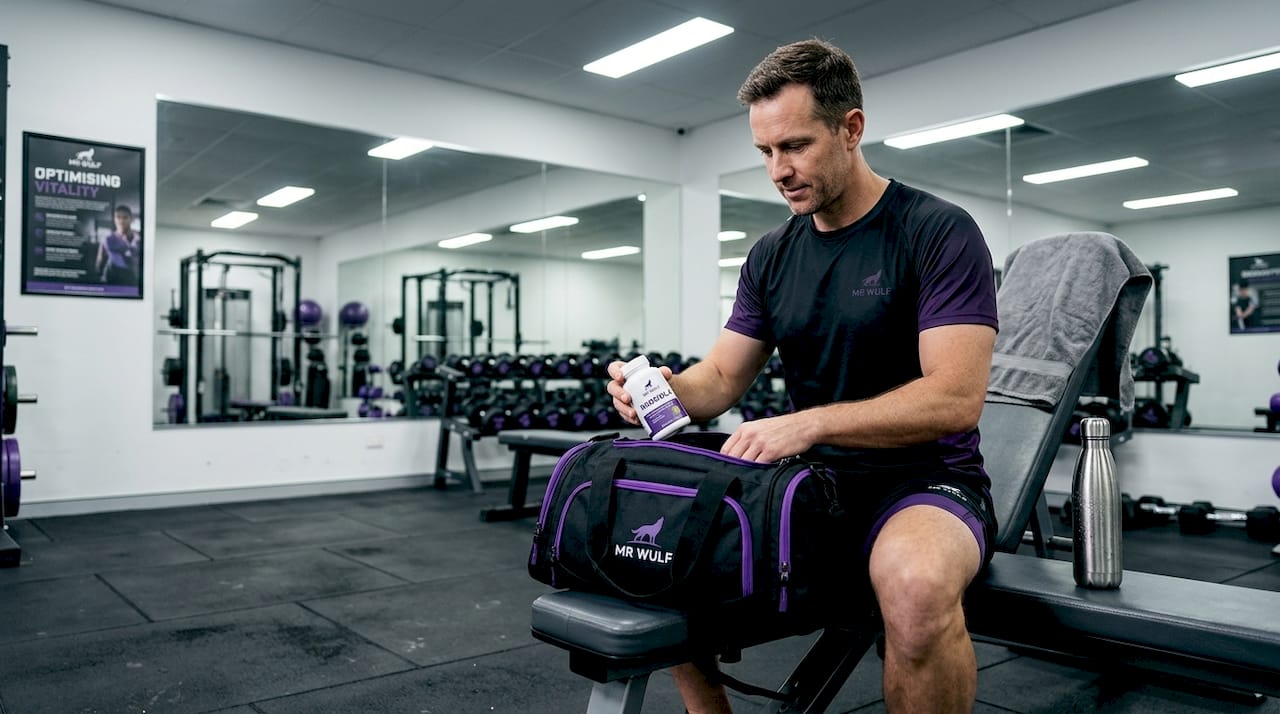
Ashwagandha carries a meaningful clinical evidence base for specific populations. Standardised extracts (KSM-66 and Sensoril are the two most validated forms) have randomised, placebo-controlled evidence for improvements in sexual health outcomes in men aged 30 to 50, and for exercise recovery and strength markers in stressed individuals.
The caveat that most articles skip: many men — particularly those whose baseline cortisol is not significantly elevated — report a noticeable drop in drive and motivation when taking ashwagandha. When cortisol is already in a reasonable range, suppressing it further can produce flatness rather than calm. It works for men under genuine chronic stress. For everyone else it can take more than it gives.
If the label does not specify whether the extract is KSM-66, Sensoril, or another standardised form with a declared withanolide percentage, the product’s clinical relevance is uncertain. “Ashwagandha 500mg” tells you very little. “KSM-66 root extract standardised to 5% withanolides at 600mg” tells you it was formulated with the research in mind.
Cistanche Tubulosa — standardised to echinacoside and acteoside
Cistanche is a traditional Chinese medicine tonic with growing modern evidence for testosterone support, physical resilience, and neuroprotective activity. The active marker compounds are echinacoside and acteoside. Standardisation to both confirms the clinically relevant compounds are present at consistent and quantified levels.
Cistanche addresses a different physiological angle to Tongkat Ali — with complementary mechanisms for supporting hormonal and physical resilience in men over 30. Both standardisations working together provide broader coverage than either alone.
Asian Ginseng (Panax ginseng)
Asian ginseng is arguably the most marketed adaptogen globally, with thousands of years of traditional use behind it. Clinical evidence does exist, but quality and consistency across trials is highly variable. Regulation differs significantly across countries, meaning the ginsenoside content — the active compounds responsible for pharmacological effects — can vary wildly between products. Without ginsenoside standardisation declared on the label, you are making a significant assumption about potency.
Adaptogen evidence comparison:
| Adaptogen | Primary evidence | Standard dose | Evidence level | Key caveat |
|---|---|---|---|---|
| Tongkat Ali (eurycomanone standardised) | Testosterone support, sleep quality | 200mg at 5% eurycomanone | Strong — 2022 meta-analysis | Requires eurycomanone standardisation |
| Rhodiola rosea | Cortisol, stress resilience, endurance | 200mg at 3% rosavins | Strong | Preferred for men with normal baseline cortisol |
| Ashwagandha | Libido, recovery, testosterone in stressed men | 300 to 600mg (KSM-66 or Sensoril) | Moderate to good | Can suppress drive in men with normal cortisol |
| Cistanche tubulosa | Testosterone support, physical resilience | 200 to 400mg standardised | Moderate | Requires echinacoside/acteoside standardisation |
| Asian ginseng | Energy, cognitive function | 200 to 400mg | Variable | Significant product quality variation |
| Eleuthero | Stress, stamina | 300 to 1200mg | Limited | Weak men-specific clinical data |
| Holy basil | Stress, anxiety | 300 to 600mg | Preliminary | Few rigorous men-specific trials |
How Adaptogens Fit Into a Men’s Wellness Routine
The biggest mistake men make with adaptogens is expecting them to compensate for a broken foundation. No adaptogen offsets the performance cost of poor sleep, sedentary behaviour, a poor diet, or chronic unmanaged stress. The hierarchy matters and it is non-negotiable.
Before considering adaptogen supplementation, address these foundations in order:
-
Sleep quality and duration. Seven to nine hours of consolidated sleep drives testosterone production, cortisol regulation, and recovery. Fixing sleep before adding any adaptogen will often deliver greater results than the adaptogen alone — and at no additional cost.
-
Resistance training. Progressive overload three to four times per week is one of the most potent drivers of hormonal health and metabolic function for men over 30. Adaptogens amplify a training stimulus. They do not create one.
-
Nutritional adequacy. Adequate protein, micronutrient density, and caloric appropriateness are non-negotiable foundations. Deficiencies in zinc, magnesium, or vitamin D will blunt any adaptogen’s potential effect.
-
Stress management. Structured recovery, deliberate downtime, and workload management are more directly effective than any supplement for HPA axis regulation. Adaptogens support this process — they do not replace it.
-
Regular health screening. Blood panels for testosterone, cortisol, thyroid function, and metabolic markers give you actual data to work with rather than guesswork.
Once these are in place, adaptogens earn their position as precision tools — fine-tuning on top of a working system. When introducing a new adaptogen, introduce one at a time and allow a minimum of six to eight weeks before evaluating any effect. Stacking multiple new supplements simultaneously makes it impossible to attribute outcomes to any individual ingredient.
Risks, Safety, and Who Should Be Cautious
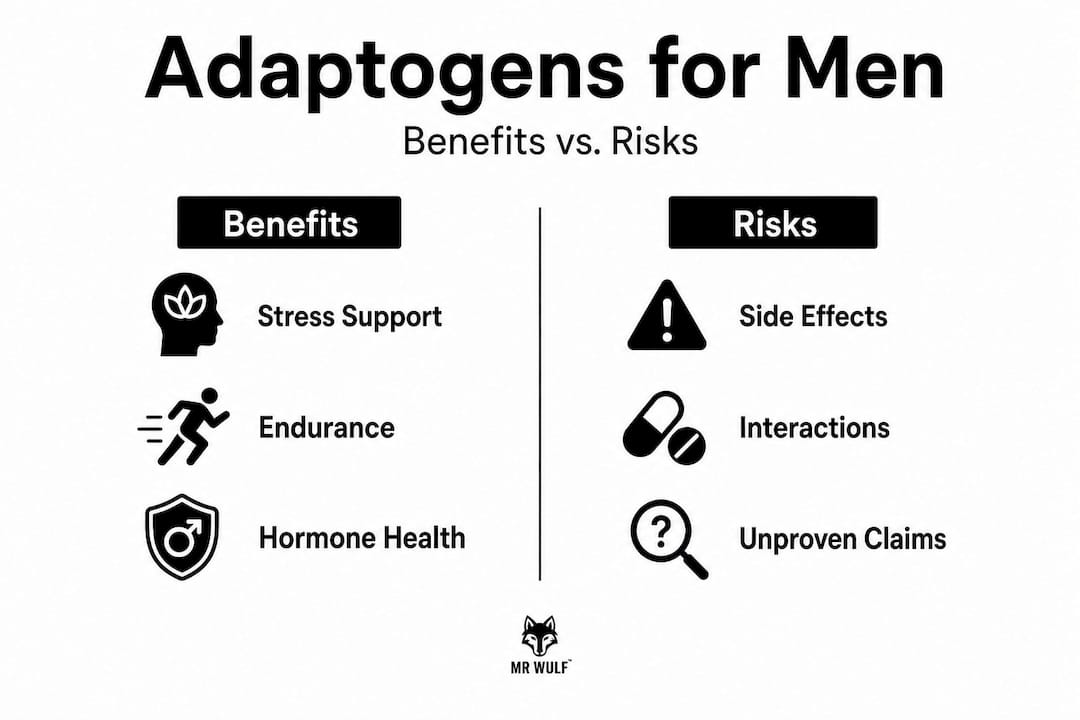
Most well-researched adaptogens carry a reasonable short-term safety profile at standard doses. But several specific concerns are worth naming directly.
Short-term oral use of Asian ginseng appears safe for most people for up to approximately six months, though side effects including insomnia, headaches, and digestive upset have been reported, with documented interaction risks involving blood clotting pathways and autoimmune conditions.
Ashwagandha has a decent safety profile for most healthy men at standard doses, but there are documented cases of hepatotoxicity at high doses or with prolonged use. This is not common, but it is real, and it reinforces why dose and duration discipline matters — which requires knowing what is in the product and at what dose.
Because adaptogens can interact with medications and affect hormone-related pathways, men with relevant medical conditions or using prescription therapies should consult a clinician before starting.
| Adaptogen | Common side effects | Key interaction risks | Higher-risk groups |
|---|---|---|---|
| Ashwagandha | GI upset, drowsiness | Thyroid medications, sedatives | Thyroid conditions, liver conditions |
| Rhodiola rosea | Dizziness, dry mouth | MAOIs, stimulants | Bipolar disorder, anxiety disorders |
| Asian ginseng | Insomnia, headache | Blood thinners, stimulants | Autoimmune disorders, blood clotting conditions |
| Holy basil | Nausea at high doses | Anticoagulants | Pregnancy, hormone-sensitive conditions |
Key safety considerations:
-
Autoimmune conditions: Several adaptogens stimulate immune activity, which may aggravate autoimmune disorders
-
Blood-thinning medications: Ginseng can potentiate the effect of anticoagulants including warfarin
-
Thyroid medications: Ashwagandha may affect thyroid hormone levels, potentially requiring dosage adjustments to existing thyroid therapy
-
Hormone-sensitive conditions: Men with prostate conditions or hormone-sensitive conditions should consult a specialist before using adaptogens with androgenic activity
-
Product quality: Products manufactured under GMP conditions with third-party batch testing and Certificates of Analysis are the minimum standard worth applying
Why Adaptogens Work for Some Men and Not Others
Adaptogens are context-dependent tools. Their effectiveness is shaped by individual physiology, current stress load, the quality of foundational habits, and whether the product contains a clinically validated extract at a meaningful dose.
Many men who report feeling nothing from ashwagandha were using a product pixie-dusted with a sub-therapeutic dose of an unstandardised powder. The ingredient name on the label and the ingredient at a working dose are two different things.
At the same time, men who expect performance surges comparable to established ergogenics like creatine are going to be disappointed. Adaptogen benefits are real but modest in magnitude. They require calibrated expectations.
Where adaptogens genuinely earn their place is in the context of stress-impaired performance. A man over 30 carrying real psychological and physiological stress loads, running on poor sleep, and feeling the cumulative drag on his training and recovery may experience a tangible and measurable shift from a well-formulated Rhodiola or Tongkat Ali extract. Not a transformation. A specific, meaningful improvement in a defined domain, on top of a working foundation.
The practical standard worth applying: demand standardised extracts with declared active compound percentages. Insist on individual dose transparency — no proprietary blends hiding the amounts. Prioritise lifestyle foundations first. If managing a medical condition or taking prescription medication, get clinical advice before adding anything. The interactions are real and the stakes are higher than most marketing copy acknowledges.
Further Support
The Mr Wulf Men blog covers the clinical evidence behind individual ingredients, the testosterone-sleep connection, and the formulation standards applied to every Mr Wulf product — with the same approach applied throughout: mechanism first, marketing never.
Explore Mr Wulf Men Performance Supplements
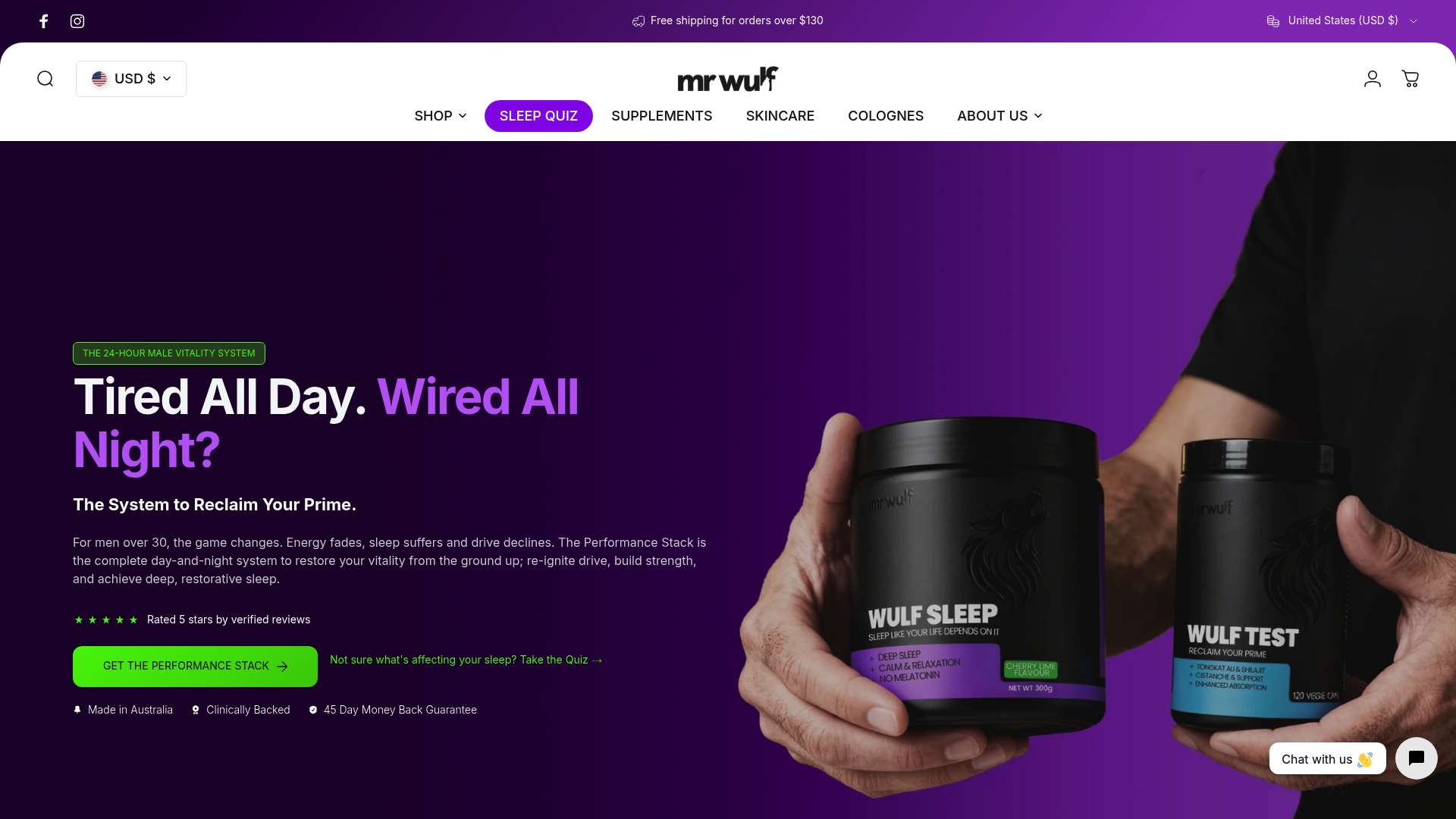
WULF Test — Daily Men’s Formula for Drive, Output and Resilience Tongkat Ali standardised to 5% eurycomanone, Shilajit at 54% fulvic mineral complex, Rhodiola Rosea standardised to 3% rosavins, Cistanche at clinical standardisations, Zinc Bisglycinate, Boron, Vitamin D3, L-Selenomethionine, and AstraGin. Every adaptogen and micronutrient at a clinically relevant dose. Transparent individual dosing. No proprietary blends. View Wulf Test
The Performance Stack — Day and Night Coverage Wulf Test and Wulf Sleep together, for men who want to support both daytime drive and stress resilience alongside overnight recovery and cortisol management. View The Performance Stack
Frequently Asked Questions
Do adaptogen supplements boost testosterone or muscle mass in men?
Tongkat Ali standardised to eurycomanone has a 2022 systematic review and meta-analysis confirming significant testosterone improvements in men. Ashwagandha has placebo-controlled evidence for sexual health outcomes in stressed men aged 30 to 50. Muscle mass gains from adaptogens specifically are modest and context-dependent — adaptogens support the hormonal and recovery environment; creatine and progressive training do the heavy lifting for muscle.
Are adaptogens safe for long-term use?
Short-term use at standard doses is reasonably well-tolerated for most healthy men across the best-studied adaptogens. Long-term safety data is more limited, and dose discipline matters. Ashwagandha has documented hepatotoxicity cases at high doses. Any man with a medical condition or on prescription medication should consult a clinician before starting.
Are adaptogens better than traditional sports supplements for performance?
For direct physical performance outcomes — strength, power, lean mass — creatine and omega-3s have broader and more consistent evidence. Adaptogens are more specifically relevant for cortisol management, stress resilience, and the testosterone-cortisol relationship. They are complementary tools, not replacements.
Who should avoid adaptogen supplements?
Men with autoimmune conditions, thyroid disorders, blood clotting conditions, or hormone-sensitive conditions, and those on prescription medications, should consult a clinician before use. The interaction risks are real and specific to individual health profiles.
Is it worth stacking multiple adaptogens?
Using one well-researched, properly standardised adaptogen at a therapeutic dose produces more interpretable and usually more effective outcomes than stacking several. When multiple adaptogens are included in a single formulation at clinical doses — as in Wulf Test — the formulator has made specific decisions about complementary mechanisms. Randomly stacking products without that coordination is less predictable.

Male vitality explained: science-backed strategies for men over 30
Men's physical performance: science-backed optimisation