


After 30, many men notice the shift. Energy dips, recovery slows, and the body that once felt reliable starts asking more of you. The role of nutrition in men’s vitality is not a peripheral factor you can sort out later. It sits at the centre of hormonal health, physical performance, and how well you age. Yet most men are still eating as they did at 22 and wondering why the results stopped matching the effort. This article delivers recent evidence, practical strategies, and an honest look at what your diet is actually doing to your biology.
Table of Contents
Key Takeaways
| Point | Details |
|---|---|
| Nutrition drives hormonal health | What you eat directly influences testosterone production, inflammation, and reproductive function. |
| Ultra-processed foods are a specific threat | Diets high in processed foods disrupt testosterone via metabolic and inflammatory pathways, not just excess calories. |
| Muscles and bones need targeted fuel | Protein, calcium, and vitamin D are non-negotiable for maintaining strength and bone density after 30. |
| Lifestyle factors work together | Sleep, exercise, and diet interact. Fixing one without the others delivers limited results. |
| Changes happen faster than expected | Consistent dietary improvements can produce measurable changes in hormonal markers within weeks to months. |
Understanding Men’s Vitality After 30
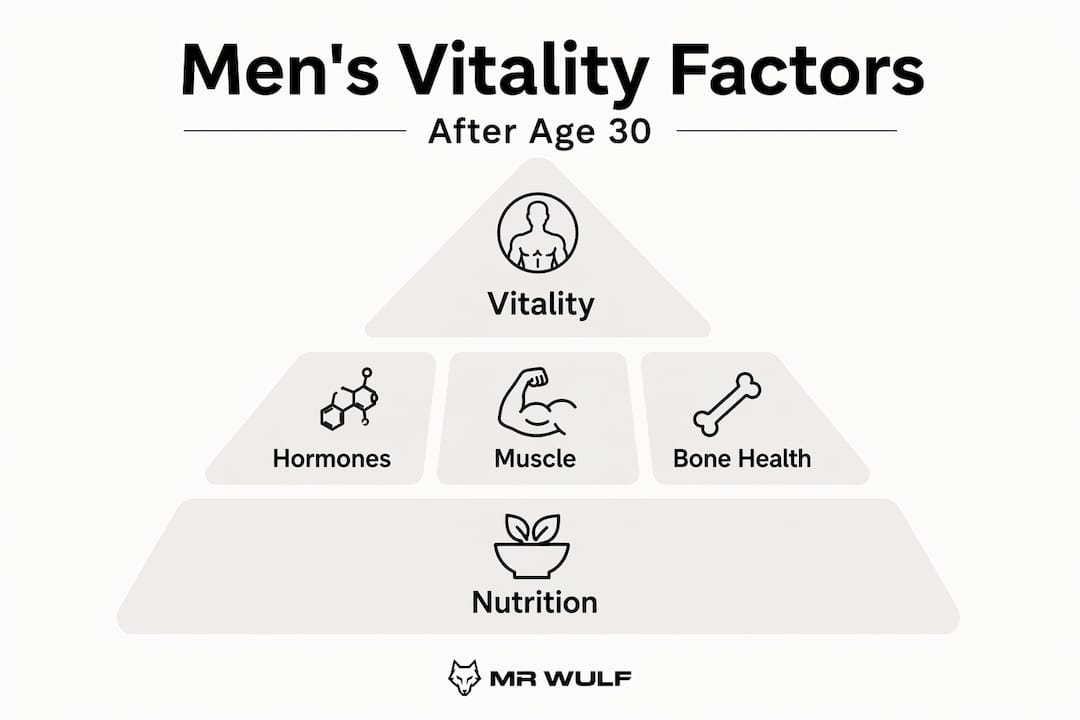
Vitality in men is more than energy levels or gym performance. It encompasses hormonal balance, metabolic function, reproductive health, cognitive sharpness, and the capacity to recover from physical and psychological stress. All of these systems begin to shift as men move through their thirties.
Testosterone decline is the most cited biological change, but it rarely happens in isolation. Lifestyle factors including poor sleep and ultra-processed food intake interact to disrupt the testosterone regulatory network. This is a network, not a single dial. Cortisol from chronic stress suppresses testosterone. Poor sleep reduces luteinising hormone pulses. Excess visceral fat converts testosterone to oestrogen via aromatase. These mechanisms compound each other.
The role of lifestyle in men’s health is frequently underestimated, partly because the symptoms are gradual and easy to normalise. Fatigue becomes the default. Libido drops quietly. Body composition shifts. Men attribute these changes to ageing rather than to correctable inputs.
What typically contributes to vitality decline in men over 30:
-
Poor dietary quality — excess ultra-processed food and insufficient micronutrients
-
Inadequate sleep, both in duration and quality
-
Sedentary work patterns with limited structured exercise
-
Chronic psychological stress with no recovery strategy
-
Alcohol intake that exceeds the liver’s hormonal clearance capacity
Each of these is addressable. Nutrition is one of the most accessible levers available.
How Nutrition Shapes Hormonal Health
The role of nutrition in male vitality is direct, mechanistic, and well-supported by research. It is not simply a matter of eating clean. The specific nutrients you consume — and the ones you consistently lack — alter the hormonal environment your body operates in every day.
Zinc is foundational. It is required for testosterone synthesis and sperm production, yet routinely under-consumed in Western diets. Vitamin D functions more like a steroid hormone than a conventional vitamin, and deficiency is strongly associated with low testosterone. Antioxidants from vegetables, berries, and whole grains reduce oxidative stress in testicular tissue, directly supporting spermatogenesis. Healthy fats — particularly monounsaturated and omega-3 fatty acids — provide the cholesterol-derived substrate that all steroid hormones are built from.
The negative side is equally compelling. Ultra-processed foods disrupt testosterone through multiple mechanisms including chronic inflammation, insulin resistance, and direct interference with hypothalamic-pituitary-gonadal signalling. This goes well beyond macronutrient imbalance. These foods carry synthetic emulsifiers, preservatives, and seed oils that generate systemic inflammatory load — and that load has direct endocrine consequences.
The Mediterranean dietary pattern has attracted significant research attention in this context. Studies link adherence to this eating pattern with improved semen parameters and reduced male fertility decline. The pattern emphasises whole grains, legumes, vegetables, fatty fish, olive oil, and nuts while limiting red meat and refined sugars. It is not exotic or expensive. It is consistent and nutrient-dense.
How to prioritise nutrition for hormonal health in a practical sequence:
-
Remove the biggest disruptors first. Limit alcohol to no more than two standard drinks per day and reduce ultra-processed snack foods from daily habit to occasional consumption.
-
Build meals around whole protein sources. Eggs, fish, legumes, and lean meats provide zinc, amino acids, and healthy fats simultaneously.
-
Add a vitamin D source. Whether through 15 to 20 minutes of midday sun exposure or a quality supplement at 3,000 to 5,000 IU daily, this is one of the most impactful single interventions for men with low levels. Test serum 25-OH vitamin D before supplementing to confirm deficiency.
-
Increase dietary antioxidants. Practical targets: two to three cups of leafy greens daily, a handful of mixed berries, and regular inclusion of tomatoes, cruciferous vegetables, and nuts.
-
Prioritise omega-3 fats. Fatty fish — salmon, mackerel, or sardines — two to three times per week is the most bioavailable route.
If uncertain about micronutrient status, request a 25-hydroxyvitamin D test and a serum zinc level from your GP. Supplementing without baseline data is guesswork.
Physical Performance, Muscle, and Bone Health
The role of diet in men’s health becomes especially tangible when you look at what happens to muscle mass and bone density after 30. Both begin to decline if dietary inputs do not actively support them. This is not inevitable. It is a consequence of insufficient protein intake, inadequate calcium and vitamin D, and declining anabolic hormones that nutrition can partly offset.
Protein is the input most men underestimate. Research consistently shows that men over 30 benefit from protein intakes of 1.6 to 2.2 grams per kilogram of bodyweight per day to maintain lean mass, particularly when combined with resistance training. Most men eating a typical Western diet fall significantly short of this range.

Calcium and vitamin D combined reduce fracture risk, which is significant given that bone loss in men often goes undetected until a fracture occurs. Magnesium and vitamin K2 further support bone mineral density by directing calcium to skeletal tissue rather than vascular walls.
The hormonal connection matters here too. Low testosterone correlates directly with accelerated bone density loss, which means any dietary strategy supporting testosterone also supports skeletal integrity. These systems are not separate.
| Nutrient | Function | Key food sources |
|---|---|---|
| Protein | Muscle protein synthesis and repair | Eggs, fish, legumes, lean meat |
| Calcium | Bone mineral density maintenance | Dairy, sardines, leafy greens |
| Vitamin D | Calcium absorption, testosterone support | Fatty fish, fortified foods, sunlight |
| Magnesium | Bone and cardiovascular support, sleep quality | Nuts, seeds, dark chocolate, whole grains |
| Zinc | Testosterone synthesis, immune function | Oysters, red meat, pumpkin seeds |
| Omega-3 fats | Inflammation reduction, joint health | Salmon, mackerel, walnuts, flaxseed |
The dietary impact on vitality and physical performance is not abstract. It shows up in recovery time, grip strength, morning energy, and the capacity to sustain effort in training. Men who address these inputs consistently notice a measurable difference within eight to twelve weeks.
Nutrition, Lifestyle, and the Complete Picture
Nutrition does not operate in a vacuum. Lifestyle provides the conditions in which good nutrition can actually work. You can eat well and still undermine vitality through poor sleep, sedentary habits, or unmanaged stress. The research makes this very clear.
Sleep deprivation directly impairs testosterone through disrupted nocturnal luteinising hormone secretion. When combined with a diet high in ultra-processed foods, the endocrine disruption is additive — both variables hit the same regulatory systems from different angles. Men who routinely sleep six hours or less and eat poorly are running two deficits against the same hormonal target simultaneously.
Regular physical activity adds substantially to the equation. Thirty minutes of moderate exercise daily produces measurable improvements in cardiovascular and metabolic function, reduces systemic inflammation, and supports testosterone via reduced visceral adiposity. Accumulated across the day through walking, cycling, or bodyweight training, the cardiovascular benefit is real and well-documented.
Research from Harvard Medical School confirms that lifestyle counselling including dietary guidance reduces diabetes risk significantly in high-risk men — underscoring that nutrition interventions are not marginal. They produce clinically meaningful outcomes.
Practical strategies to integrate nutrition and lifestyle effectively:
-
Eat your last meal two to three hours before sleep to avoid glycaemic disruption to nocturnal hormone cycles
-
Prioritise sleep as seriously as training or diet — poor recovery erases the benefit of good nutrition
-
Use resistance training two to three times per week as the primary hormonal stimulus, with nutrition supporting that signal through adequate protein and micronutrients
-
Manage cortisol through deliberate stress recovery: structured time off screens, adequate rest days, and social connection
A combined sleep optimisation and dietary strategy will produce faster hormonal improvements than either approach alone. The synergy is real and the compounding effect is one of the most underutilised advantages available to men over 30.
Practical Dietary Habits to Build Vitality
Knowing the science is one thing. Translating it into a daily routine is another. The changes do not require culinary expertise or expensive ingredients. They require consistency.
-
Build breakfast around protein. Eggs, Greek yoghurt, or smoked salmon on wholegrain bread stabilises blood glucose, supports morning cortisol regulation, and sets the anabolic tone for the day.
-
Replace snack foods with nutrient-dense alternatives. Swap biscuits and chips for mixed nuts, boiled eggs, hummus with vegetable sticks, or whole fruit. The caloric difference is often negligible. The micronutrient difference is significant.
-
Hydrate adequately and consistently. Even mild dehydration impairs cognitive performance and physical output. Two to three litres of water daily is a reasonable target for most men.
-
Shift red meat to two or three times per week and increase fish and legume intake on other days. This pattern mirrors the Mediterranean approach and reduces inflammatory dietary load without eliminating protein.
-
Cook at home more often than not. Restaurant and takeaway meals are almost universally higher in refined seed oils, sodium, and sugar than equivalent home-cooked versions. Meal prepping twice a week removes the friction that drives men towards convenience food by default.
Sperm quality and hormonal markers can show measurable improvement in approximately 72 days with consistent dietary and lifestyle changes — roughly the duration of a full spermatogenic cycle. For most men, the decision to start eating differently today produces data-backed results well before the end of the quarter. The timeline is genuinely motivating once you understand the biology.
What I Have Observed About Nutrition and Men’s Vitality
Many men assume that feeling flat, slow, or diminished in their thirties is simply what getting older looks like. That assumption is frustrating to encounter, because it stops men from making changes that would genuinely work.
The biggest missed opportunity is almost never exotic supplementation or complicated protocols. It is the foundational stuff: poor protein intake, chronic zinc deficiency, vitamin D that has never been tested, and a daily diet anchored in ultra-processed convenience foods. Fix those, and the improvement in energy, focus, and physical output is often striking within weeks.
Men who combine dietary changes with lifestyle improvements — specifically sleep and moderate exercise — see compounding returns. One change amplifies the next. A better night’s sleep improves insulin sensitivity, which makes dietary choices easier to sustain, which reduces inflammation, which supports testosterone, which improves sleep quality. These systems communicate with each other.
The evidence also makes clear that male hormonal disturbances arise from overlapping factors. No single fix does it. But the overlap is also the opportunity — one integrated shift touches multiple systems at once.
Further Support
The Mr Wulf Men blog covers the full nutritional, hormonal, and performance picture — with evidence standards applied throughout.
Explore Mr Wulf Men Supplements
WULF Test — Daily Men’s Formula for Drive, Output and Resilience For men who have the dietary and lifestyle foundation in place and want targeted daily support. Tongkat Ali, Shilajit, Rhodiola, Cistanche, Zinc Bisglycinate, Vitamin D3. Every nutrient and botanical at a clinically relevant dose. View Wulf Test
Wulf Sleep — Natural Sleep Support Formula Sleep is where nutrition pays off. Hormones are synthesised, tissue is repaired, and recovery happens overnight. Ten clinically dosed ingredients supporting the sleep quality that makes everything else work. View Wulf Sleep
The Performance Stack — Day and Night Coverage Wulf Test and Wulf Sleep together — addressing the full hormonal and recovery system for men who are serious about their vitality after 30. View The Performance Stack
Frequently Asked Questions
How does nutrition affect testosterone in men over 30?
Nutrition directly influences testosterone by supplying the raw materials for hormone synthesis — including zinc, healthy fats, and vitamin D — while diets high in ultra-processed foods drive inflammation and insulin resistance that suppress production.
Which foods most support men’s energy and vitality?
Fatty fish, eggs, leafy greens, nuts, legumes, and whole grains consistently appear in research as the most beneficial for male hormonal health and sustained energy. The Mediterranean dietary pattern, which emphasises these foods, has the strongest evidence base.
How quickly can dietary changes improve vitality?
Consistent dietary and lifestyle improvements can produce measurable changes in hormonal and reproductive markers in approximately 72 days — the duration of a spermatogenic cycle. Most men notice energy and recovery improvements within four to eight weeks, well before the full hormonal picture shifts.
Can poor sleep cancel out a good diet?
Yes. Sleep deprivation and ultra-processed foods have additive disruptive effects on testosterone and reproductive health. Poor sleep significantly undermines the benefits of good nutrition because both variables hit the same hormonal regulatory systems.
Do men over 30 need more protein than younger men?
Men over 30 benefit from higher protein intakes — typically 1.6 to 2.2 grams per kilogram of bodyweight daily — to counteract the age-related decline in muscle protein synthesis efficiency. This is substantially higher than general population guidelines calibrated for sedentary individuals.



Lactium for Sleep: The Calm-First Ingredient With Real Clinical Numbers
How to improve testosterone naturally after 30