

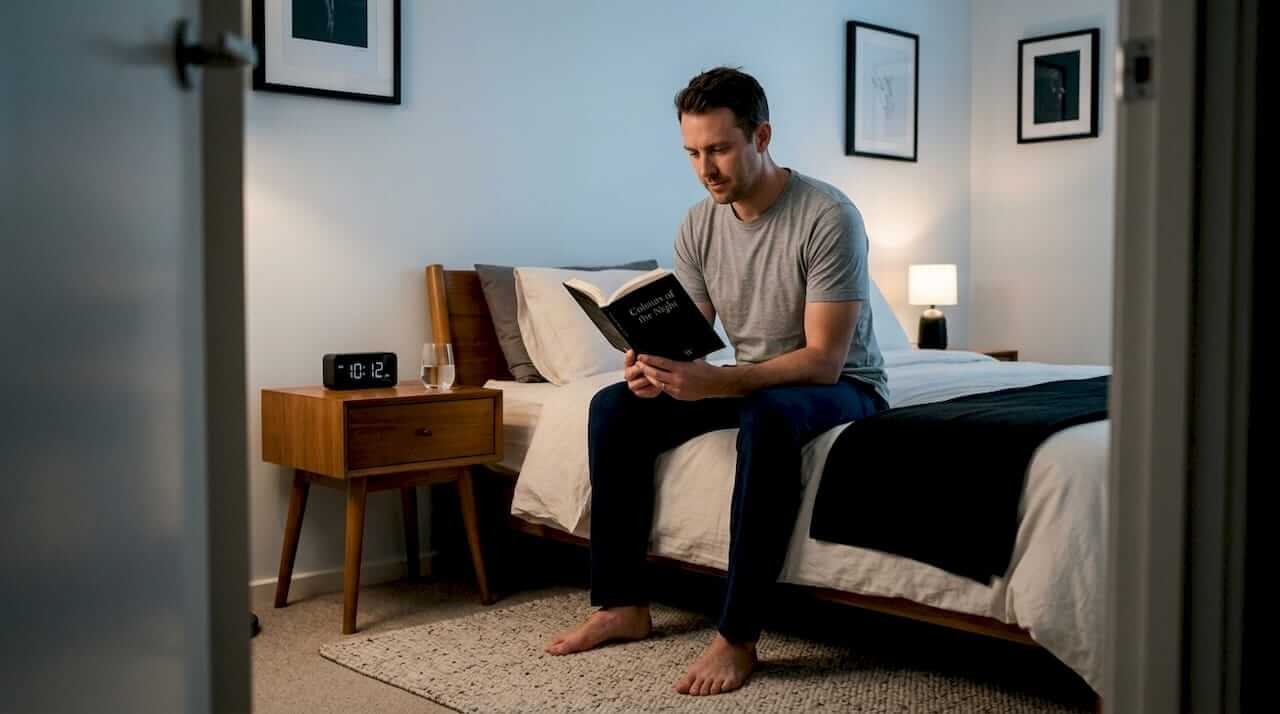
You go to bed at a reasonable hour, clock what feels like enough time, and still wake up feeling like you have been hit by a truck. For men over 30, this is one of the most common and most underestimated health problems around.
Poor sleep does not just leave you groggy. It quietly erodes testosterone, blunts physical output, and compounds with every year it goes unaddressed. The good news is that a handful of evidence-backed changes can shift your sleep quality significantly — without overhauling your entire life.
Table of Contents
Key Takeaways
| Point | Details |
|---|---|
| Sleep consistency is the highest-leverage habit | A fixed bedtime and wake time does more for sleep quality than almost anything else. |
| Stimulants and alcohol fragment sleep architecture | Caffeine after 2pm and alcohol within three hours of bed both degrade sleep quality in measurable ways. |
| Sleep and testosterone are directly linked | Even one week of restricted sleep produces a clinically significant testosterone decline. |
| Customise your approach | Track your data and build a protocol around your actual life, not an idealised version of it. |
| Persistent symptoms warrant medical assessment | Loud snoring, morning headaches, and unexplained fatigue can indicate sleep apnea — a common and frequently undiagnosed condition in men. |
Why men’s sleep matters: health, hormones, and performance
Sleep is not passive recovery. It is the period when the body does its most important hormonal and cellular repair work. Miss it consistently and you are not just tired — you are physiologically compromised in ways that accumulate silently over time.
The testosterone connection is well documented. Poor sleep lowers testosterone by 10 to 15% after just one week of sleeping five hours per night, with each hour of lost sleep corresponding to roughly a 6 ng/dL drop in serum testosterone. That is a measurable hormonal deficit that affects drive, mood, body composition, and libido. The relationship is also bidirectional — low testosterone worsens sleep quality, which then further suppresses testosterone. It is a cycle that compounds quietly over years if neither end is addressed.
The performance data is equally clear. Sleeping fewer than seven hours reduces strength output by 5 to 10% and slows reaction time measurably. You do not need to be a professional athlete for this to matter. Whether training in the gym, managing a demanding professional load, or staying sharp in high-stakes decisions, sleep deprivation works against you in all of those contexts simultaneously.
Longer-term health risks are also worth naming. Chronic poor sleep is associated with elevated cortisol, increased cardiovascular risk, impaired glucose metabolism, and reduced immune function. For men navigating the hormonal shifts that come with ageing, understanding how sleep fits into the broader men’s hormonal health picture provides essential context.
Key impacts of poor sleep on men’s health:
-
Hormonal output: Testosterone drops measurably within days of sleep restriction
-
Physical performance: Strength, speed, and reaction time all decline below seven hours
-
Cognitive function: Decision-making, focus, and emotional regulation deteriorate
-
Metabolic health: Insulin sensitivity worsens, increasing fat storage and energy crashes
-
Recovery: Muscle repair and tissue regeneration require adequate deep sleep stages
Proven Habits and Routines for Quality Sleep
Most men approach sleep the same way they approach everything else — reactively. They fall into bed when they are exhausted and hope for the best. That approach works in your twenties. After 30 it stops being reliable, and a more deliberate approach produces better returns.
Stimulant management. Caffeine has a half-life of five to six hours, meaning a 3pm coffee still has half its stimulant load in your system at 9pm. The practical guideline is to cut caffeine after 2pm (and for some people even as early as 10am). Alcohol is equally disruptive — it may accelerate sleep onset but it fragments sleep architecture, suppressing REM sleep and causing more frequent awakenings in the second half of the night. Stop drinking at least three to four hours before bed. Nicotine, regardless of the delivery mechanism, acts as a stimulant and disrupts sleep cycles in ways most men underestimate.
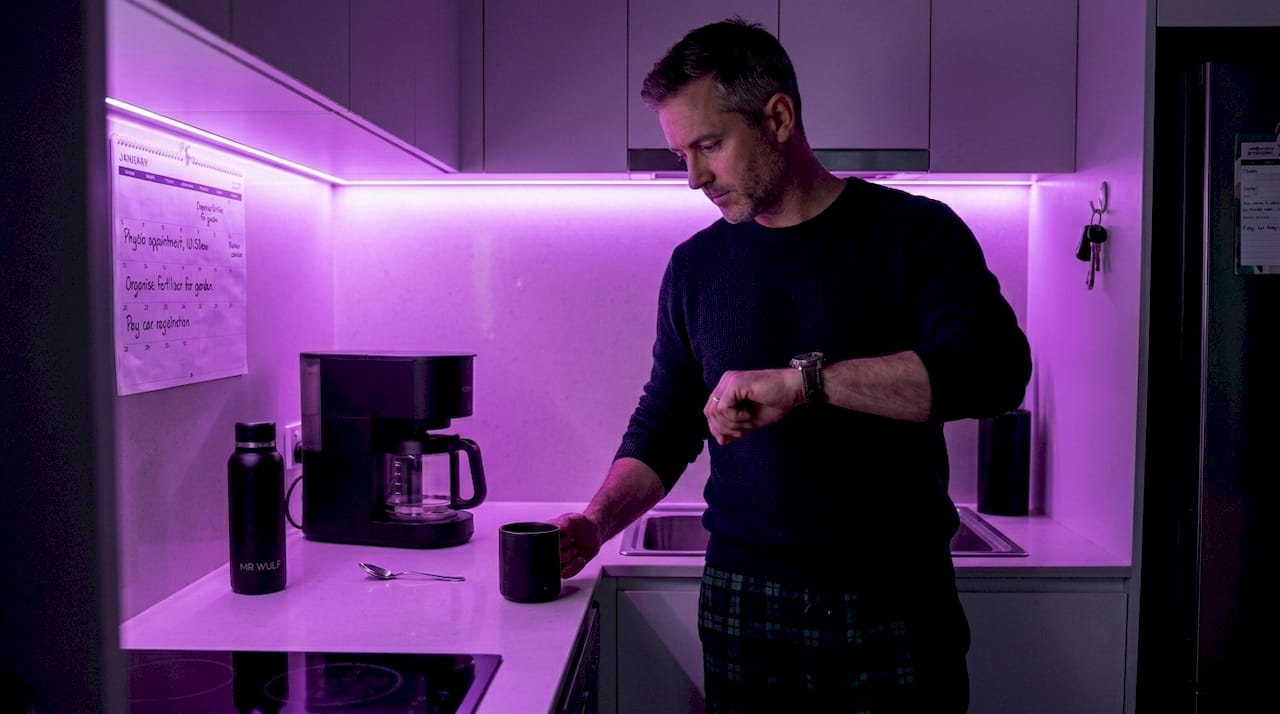
Meal timing. Finish heavy meals at least three hours before bed. Digestive activity raises core body temperature and delays the temperature drop that sleep onset requires. If genuinely hungry late, a small protein and carbohydrate snack — Greek yoghurt, a small bowl of oats — is a better option than either a full meal or going to bed hungry.
Common pre-bed habits and their impact on sleep:
| Habit | Timing | Sleep impact |
|---|---|---|
| Caffeine consumption | After 2pm | Delays sleep onset, reduces deep sleep |
| Alcohol | Within 3 hours of bed | Fragments architecture, suppresses REM |
| Heavy meals | Within 2 hours of bed | Raises core temperature, causes discomfort |
| Screen exposure | Within 1 hour of bed | Suppresses melatonin production |
| Light movement or stretching | 60 to 90 minutes before bed | Promotes relaxation and sleep onset |
| Consistent wind-down routine | 30 to 60 minutes before bed | Signals the nervous system to downshift |
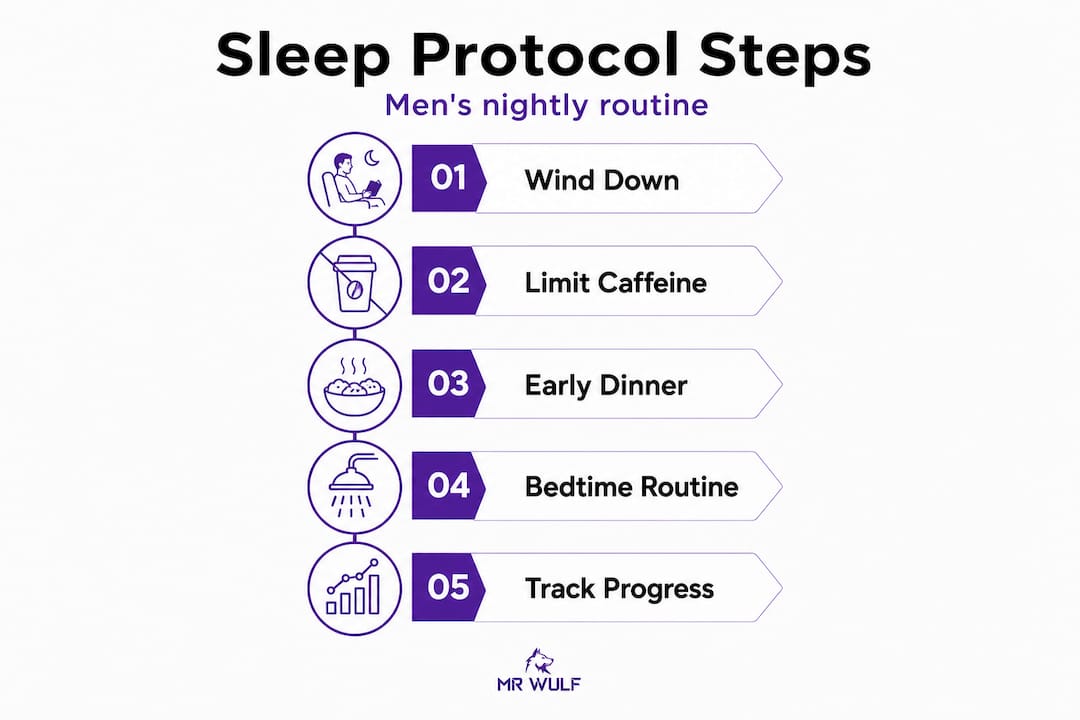
Building a wind-down routine. A consistent pre-bed routine is one of the most underrated sleep interventions available. Your nervous system responds to cues. When you repeat the same sequence of behaviours each night — a shower, light reading, a specific supplement protocol — the brain begins to associate those cues with sleep onset. This is basic conditioning and it works reliably.
The most practical approach is to attach your wind-down routine to an existing habit. If you already brush your teeth at a consistent time, make that the trigger for the full sequence. Removing the cognitive friction of starting a new routine from scratch dramatically improves follow-through.
Building Your Personal Sleep Protocol
A sleep protocol does not need to be complicated. It needs to be intentional and specific to how you actually live.
-
Set your target wake time first. Decide what time you need to be functional and work backwards seven to nine hours to find your target bedtime. Your wake time anchors your circadian rhythm. Fix it first.
-
Establish a consistent bedtime. A fixed bedtime and wake time — including weekends — is the single most effective intervention for sleep maintenance. Sleeping in on weekends creates social jet lag that makes Monday mornings genuinely harder to manage.
-
Begin your wind-down 60 minutes before bed. Dim lights, remove screens, shift to low-stimulation activity. This is when melatonin production ramps up. Support it rather than fight it.
-
Optimise your sleep environment. Aim for a room temperature between 18 and 20 degrees Celsius. Darkness should be near-total. Noise should be minimised or masked with white noise if your environment requires it.
-
Track your sleep stages. Use a wearable or sleep app to monitor total sleep time, sleep efficiency, REM percentage, and deep sleep percentage. The empirical benchmarks worth targeting are: total sleep time of seven to nine hours, sleep efficiency above 85%, REM sleep around 25% of total, and deep sleep around 20%.
Review your sleep data weekly rather than nightly. Night-to-night variation is normal and expected. What matters is your weekly average and the trend over four to six weeks. Analysing a single bad night in isolation creates anxiety that makes the following night harder — which is the wrong direction.
Troubleshooting Common Sleep Problems in Men
Even with a solid protocol in place, some men hit a wall. The cause is often something they have not considered — or something they have been quietly ignoring.
Sleep apnea is the most common and most underdiagnosed sleep disorder in men. Men face two to three times higher risk of obstructive sleep apnea than women, with approximately 24% of middle-aged men affected. The condition causes repeated partial or full airway obstruction during sleep, fragmenting architecture and preventing adequate deep and REM sleep. The consequences accumulate directly on top of the hormonal and performance issues already described. Treatment options include CPAP therapy and, where relevant, weight loss and positional changes.
Warning signs that warrant a conversation with your GP:
-
Loud or frequent snoring, particularly if others have noticed gasping or choking sounds
-
Persistent daytime fatigue despite what should be adequate sleep time
-
Morning headaches, which can indicate overnight oxygen desaturation
-
Erectile dysfunction, which has a well-documented association with sleep apnea and poor sleep quality generally
-
Difficulty concentrating or mood changes that feel disproportionate to your circumstances
If you recognise these signs, do not leave them. Untreated sleep apnea compounds hormonal and cardiovascular risk over time. A sleep tracking device that monitors blood oxygen saturation overnight can flag potential apnea events as an early indicator — not a substitute for clinical assessment, but a useful prompt to have the conversation.
Tracking Progress and Maintaining Results
Building a sleep protocol is the start. Maintaining it and adjusting it as your life changes is the work that produces long-term results.
-
Track core metrics weekly. Monitor total sleep time, sleep efficiency, REM percentage, deep sleep percentage, and consistency of bedtime and wake time.
-
Set a monthly review. Once a month, look at your average data. Are you hitting seven to nine hours, efficiency above 85%, REM at 25%, and deep sleep at 20%? If not, identify what shifted.
-
Adjust for life events. Travel, shift changes, family demands, and training blocks all affect sleep. Build contingency plans in advance rather than scrambling reactively when they arrive.
-
Quarterly protocol review. Every three months, reassess the full protocol. What is working? What has slipped? What new stressors have entered your life that need to be accounted for?
-
Measure consistency, not perfection. A man who hits his sleep targets 65% of nights over six months will see meaningful health improvements. Perfection is not the goal and pursuing it creates its own cortisol response.
What Most Sleep Advice Gets Wrong
Standard sleep advice assumes a controlled, predictable life. It assumes you can go to bed at 10pm every night, avoid all alcohol socially, and never travel for work. For most men over 30, that is not reality.
The men who struggle most with sleep are rarely the ones making catastrophic choices. They are the ones applying rigid rules to chaotic lives and then experiencing failure when those rules break down. That frustration creates its own cortisol response, which makes sleep worse. The rigidity is the problem, not the person.
The more useful frame is consistency over perfection and experimentation over compliance. A sleep protocol should be built around your actual life. If young kids make a 10pm bedtime impossible three nights a week, the protocol needs to account for that honestly. If you travel internationally several times a year, you need a specific jet lag strategy rather than pretending that disruption will not happen.
The science-backed foundations are real and worth applying. The application has to be personal. Experiment with your wind-down timing. Test how you feel with and without magnesium glycinate before bed. Notice whether your sleep quality shifts when you move your last meal earlier. This kind of self-directed, data-informed adjustment is what produces sustainable results over time.
Redefine what success looks like. A man who previously averaged 5.5 hours and now consistently gets 6.5 to 7 hours has made a meaningful improvement, even if 8 hours remains a goal. Build from where you are.
Further Support
The Mr Wulf Men blog covers sleep science, hormonal health, and performance nutrition with the same standard applied in this article: mechanism first, marketing never.

Explore Mr Wulf Men Sleep and Performance Supplements
Wulf Sleep — Natural Sleep Support Formula Ten clinically dosed ingredients formulated for men dealing with sleep onset, evening cortisol, and disrupted sleep architecture. Transparent dosing, standardised botanical extracts, no melatonin. View Wulf Sleep
The Performance Stack — Day and Night Coverage Wulf Sleep and Wulf Test together, for men who want to support overnight recovery and daytime output as a coordinated system. View The Performance Stack
Frequently Asked Questions
How many hours of sleep do men actually need?
Most men need seven to nine hours per night. Athletes and men under high training loads may need toward the upper end of that range. Consistently sleeping fewer than seven hours produces measurable declines in physical performance, cognitive function, and hormonal output.
What is the link between sleep and testosterone in men?
Even one week of restricted sleep — five hours per night — lowers testosterone by 10 to 15% in healthy men. The relationship is bidirectional: low testosterone also impairs sleep quality, which creates a compounding cycle if neither issue is addressed.
When should a man get assessed for sleep apnea?
If you snore loudly, feel persistently fatigued despite adequate time in bed, experience morning headaches, or have been told you stop breathing during sleep, discuss a sleep study with your GP. Sleep apnea is significantly more common in men than women and is frequently undiagnosed.
Does meal timing actually affect sleep quality?
Yes. Heavy meals before bed disrupt sleep by raising core body temperature and increasing digestive activity during the window when body temperature should be falling. Finish substantial meals at least three hours before bed.
Should I take melatonin for sleep?
Melatonin signals sleep onset but does not address the underlying mechanisms that govern sleep quality — cortisol management, brainwave transition, GABAergic tone, or deep sleep architecture. In Australia, melatonin is also a Schedule 4 prescription-only medicine for adults under 55 and cannot be purchased over the counter without a prescription.



Men's health guide: science-backed habits and supplements
Virility supplements: what works and what to avoid