


The virility supplement market is flooded with bold promises and very little accountability. If you are a man over 30 looking to support your drive, hormonal health, or sexual function, you have likely encountered everything from “instant testosterone boost” capsules to exotic botanical blends that read more like a rainforest inventory than a clinical formulation.
The challenge is not finding options. It is knowing which ones deliver measurable results, which ones are overpriced noise, and which ones could genuinely cause harm. This article cuts through that with evidence, not enthusiasm.
Table of Contents
Key Takeaways
| Point | Details |
|---|---|
| Evidence matters | Focus on ingredients with human RCT data for your specific outcome, not broad marketing claims. |
| Tongkat Ali has the strongest modern evidence | A 2022 systematic review confirmed significant testosterone improvements in men. It is also the most directly relevant ingredient for the Mr Wulf Test formulation. |
| Ashwagandha works for some men but not all | Effective in men under genuine chronic stress. In men whose cortisol is not significantly elevated, it can blunt drive rather than support it. |
| Rhodiola is the better default adaptogen | Cortisol support and stress resilience without the drive suppression profile seen with ashwagandha in some men. |
| Safety comes first | Drug interactions, contamination, and undisclosed pharmaceutical agents are documented risks. Always verify third-party batch testing. |
| Supplements support — they do not replace — lifestyle | No formulation compensates for poor sleep, inadequate training, and elevated chronic stress. |
How to assess the benefits of virility supplements
“Virility supplement” is a marketing category, not a clinical one. That means the burden of proof sits with you as the consumer to demand more than a compelling label. Real benefits are measurable, and the sexual health research literature is clear about how those measurements are taken.
The benchmarks for genuine benefit are typically measured as questionnaire-based sexual function indices, semen parameters, and hormone biomarkers including total and free testosterone. If a supplement cannot point to improvements in at least one of these outcomes in a human trial at the dose it contains, it does not have a clinical brief.
When evaluating any product, focus on:
-
Libido and desire scores: Measured via validated tools like the International Index of Erectile Function (IIEF) or similar instruments in peer-reviewed trials
-
Erectile function: Captured through validated questionnaires in randomised controlled trials
-
Semen quality: Including sperm motility, morphology, and concentration where relevant
-
Hormone markers: Total testosterone, free testosterone, and luteinising hormone (LH) as a proxy for testicular signalling
Evidence quality varies enormously depending on the ingredient, the dose used in the trial, and the population studied. A study conducted in infertile men with clinically low testosterone does not automatically apply to a healthy 38-year-old with moderate fatigue and declining drive. This is the nuance the industry almost never communicates honestly.
The most useful question to ask before purchasing any virility supplement is: what outcome did the trial actually measure, and does that outcome match your specific goal? If you cannot find a human RCT with a relevant endpoint and dose matching what is on the label, what you are buying is largely guesswork.
Supplements with the strongest clinical support
Tongkat Ali (Eurycoma longifolia) — standardised to eurycomanone
Tongkat Ali has progressed significantly beyond “emerging” status in the clinical literature and deserves the strongest positioning in any honest review of virility supplement ingredients.
A 2022 systematic review and meta-analysis published in Nutrients confirmed that Eurycoma longifolia supplementation significantly improved serum testosterone in men across multiple trials. The active compound is eurycomanone — the standardisation percentage on the label is the marker that confirms a potent, concentrated extract is actually present. A generic extract without eurycomanone standardisation is not clinically equivalent.
The mechanism is well described: Tongkat Ali modulates the hypothalamic-pituitary-testicular axis, reducing the inhibitory feedback that holds testosterone production in check under stress. This makes it particularly relevant for men dealing with the cortisol-testosterone suppression loop that characterises the wired-tired pattern most men over 30 experience.
A 2024 study published in Sleep Advances also found that Tongkat Ali supplementation enhanced NREM sleep consolidation in middle-aged men — directly linking testosterone support to improved sleep architecture, which matters for the bidirectional testosterone-sleep relationship.
Fenugreek
The evidence here is strongest in men with lower baseline testosterone, particularly those over 40, where supplementation has shown statistically significant increases in free testosterone. Fenugreek appears to work partly by inhibiting the enzymes that convert testosterone to estrogen — particularly relevant as men age and aromatase activity increases with body fat accumulation.
Ashwagandha (Withania somnifera) — with an important caveat
Ashwagandha has multiple RCTs behind it confirming improvements in testosterone, sperm quality, and libido in specific populations. The mechanism involves cortisol reduction and downstream support for the HPG axis.
The caveat that most articles skip: many men — particularly those whose baseline stress levels are not significantly elevated — report a noticeable drop in drive and motivation when taking ashwagandha. When cortisol is already sitting in a reasonable range, pushing it further down can leave you feeling flat rather than energised. It works for men under genuine chronic stress. For everyone else it can take more than it gives, and that is a meaningful clinical distinction.

Rhodiola Rosea (standardised to 3% rosavins, 1% salidroside) — our preferred adaptogen
Rhodiola is the more broadly applicable choice for cortisol and stress management in the men’s performance context. A clinical trial published in Phytomedicine confirmed that Rhodiola significantly reduced the cortisol stress response without the drive suppression profile associated with ashwagandha in some men. It supports resilience and stress management while maintaining the energy and motivation that high-performing men need to preserve.
For most men over 30 looking for adaptogenic support without the risk of blunting drive, Rhodiola is the better default.
Zinc and Vitamin D3
Not exciting, but foundational. Zinc deficiency directly suppresses testosterone via 5-alpha reductase activity, and zinc bisglycinate — the chelated form — is significantly more bioavailable than zinc oxide. In deficient men, correction produces meaningful hormonal improvement. In men who are not deficient, additional zinc does not raise testosterone further and at chronic high doses competes with copper absorption.
Vitamin D3 functions more like a hormone than a vitamin and deficiency is extremely common in men who spend most of their time indoors. A randomised controlled trial found significant testosterone improvements in deficient men who supplemented. Vitamin D3 at 3,000 to 5,000 IU daily is a meaningful dose for the Australian market — 1,000 IU produces minimal impact on serum levels in deficient individuals.
Tribulus terrestris
Popular, heavily marketed, weakly evidenced. Most rigorous trials in healthy men show minimal testosterone effects. Not recommended as a primary ingredient.
| Ingredient | Evidence level | Best use case | Standard dose |
|---|---|---|---|
| Tongkat Ali (eurycomanone standardised) | Strong — 2022 meta-analysis | Testosterone support, stressed/ageing men | 200mg at 5% eurycomanone |
| Rhodiola Rosea | Strong | Stress resilience, cortisol management, drive support | 200mg at 3% rosavins |
| Fenugreek | Moderate | Free testosterone in older men | 500 to 600mg daily |
| Ashwagandha | Moderate — population specific | Libido and testosterone in chronically stressed men | 300 to 600mg daily |
| Zinc bisglycinate | Strong (if deficient) | Testosterone support via deficiency correction | 25 to 30mg elemental |
| Vitamin D3 | Moderate to strong (if deficient) | Testosterone in deficient men | 3,000 to 5,000 IU daily |
| Tribulus terrestris | Weak | Not recommended as primary ingredient |
Safety and Regulation Concerns
Even promising ingredients carry caveats, and not everything sold online is without risk.
Australia has stricter TGA oversight than many markets, but that does not mean every product reaching consumers has been thoroughly tested before purchase. The dominant safety concerns are:
-
Drug interactions: Many botanicals affect cytochrome P450 enzymes that metabolise prescription medications. Ashwagandha may amplify sedative medications. Fenugreek can interact with blood thinners including warfarin.
-
Undisclosed pharmaceutical agents: Some products marketed for sexual performance — particularly those making dramatic potency claims — have been found to contain undisclosed sildenafil analogues. This is a documented and serious problem in the category.
-
Contamination: Heavy metals, pesticide residues, and microbial contamination are real risks in supplements without third-party batch testing and Certificates of Analysis.
-
Hormonal side effects: High doses of certain botanicals can disrupt hormonal balance, particularly in men with pre-existing endocrine conditions. Test before you supplement.
Yohimbe and yohimbine deserve direct treatment because they are still widely marketed as libido boosters. The evidence for efficacy is mixed at best. More critically, yohimbine can cause serious cardiovascular and psychological side effects including rapid heart rate, anxiety, and blood pressure spikes. The Cleveland Clinic identifies these risks explicitly. Unless a medical professional has specifically advised yohimbine for a defined clinical reason, the risk profile does not justify inclusion in a general performance supplement.
The category distinction worth understanding is that non-toxic and natural are not the same thing. Yohimbine is naturally derived. It is also capable of triggering a hypertensive crisis in susceptible individuals. The non-toxic standard, applied at every ingredient level, is the correct filter — not natural origin.
Side-by-Side Evidence for Key Ingredients
| Ingredient | Evidence level | Best use case | Key risk or red flag |
|---|---|---|---|
| Tongkat Ali (eurycomanone standardised) | Strong | Testosterone and libido in stressed or ageing men | Requires eurycomanone standardisation to be clinically relevant |
| Rhodiola Rosea | Strong | Stress resilience, cortisol, drive | Minimal — preferred adaptogen profile |
| Ashwagandha | Moderate | Libido and testosterone in chronically stressed men | Can suppress drive in men with normal cortisol levels |
| Fenugreek | Moderate | Free testosterone in older men | Interacts with blood thinners |
| Yohimbine | Mixed | Not recommended for general use | Cardiovascular and psychiatric side effects |
| Zinc bisglycinate | Strong (if deficient) | Correcting testosterone suppression | Excess at high doses competes with copper absorption |
| Vitamin D3 | Moderate to strong (if deficient) | Testosterone in deficient men | Toxicity at very high doses over extended periods |
| Tribulus terrestris | Weak | Not recommended as a primary ingredient | Frequently pixie dusted in proprietary blends |
When reviewing any product, apply these steps in order:
-
Identify every active ingredient and its dose per serving. If doses are hidden behind a proprietary blend, move on.
-
Search for each ingredient in the peer-reviewed literature using your specific outcome as the search term.
-
Check whether the dose in the product matches the effective dose used in positive trials.
-
Confirm third-party batch testing documentation is available — Certificates of Analysis from independent laboratories, not just label claims.
-
Cross-reference any ingredients against current medications with your pharmacist or GP.
How to Choose the Right Supplement for Your Goals
One of the most persistent myths in this space is that a single formula serves every man equally. It does not. A 32-year-old with high stress and normal testosterone has a different clinical picture from a 52-year-old with declining free testosterone and fatigue. The supplement that makes sense for one man may be irrelevant or counterproductive for another.
Define your primary goal before purchasing anything. Is it libido? Testosterone levels? Semen quality? Drive and vitality? Each has different evidence pathways and different ingredient priorities.
Practical steps for making the right decision:
-
Define your primary goal. Libido, testosterone, semen quality, and energy have different evidence pathways. Identify which is the primary target.
-
Prioritise transparent formulations. Clear ingredient lists with individual doses are the minimum standard. Proprietary blends that hide individual amounts are almost always a signal that something is being obscured.
-
Verify third-party batch testing. Certificates of Analysis from independent labs confirm the product contains what the label states and has been tested for contaminants.
-
Consult your GP or specialist. Non-negotiable if you have cardiovascular disease, diabetes, thyroid conditions, or take prescription medication.
-
Set realistic expectations. Consistent, modest improvements over 8 to 12 weeks are the realistic outcome from evidence-based supplementation. Products that promise otherwise are selling marketing, not medicine.
Why Most Men Get Virility Supplements Wrong
Most men who have tried virility supplements and been disappointed did not fail because the ingredients were wrong. They failed because their expectations were calibrated to marketing language rather than clinical data.
Double-blind RCTs on Tongkat Ali and ashwagandha typically report testosterone improvements in the range of 10 to 20% in relevant populations. That is real. That is meaningful. But it is not the dramatic transformation most supplement brands imply. When the result does not match the promise on the label, the common conclusion is that supplements do not work — rather than that the marketing overclaimed and the physiology was never going to deliver what was promised.
The other failure pattern is using supplements as a substitute for foundational health behaviours. If sleep is poor, diet is inconsistent, stress is chronic, and physical activity is low, no supplement formulation compensates for that. Ashwagandha can meaningfully reduce cortisol, but it does not undo the effect of six hours of fragmented sleep every night. Zinc supports testosterone in deficient men but not in the context of severe caloric restriction or metabolic dysfunction.
What the clinical evidence actually shows is that supplements function best as precision tools on top of a solid foundation. They close specific nutritional gaps. They modestly amplify what lifestyle is already building. They are not standalone solutions. The brands that position them as such are doing men a disservice.
Further Support
The Mr Wulf Men blog covers sleep science, the testosterone-sleep loop, hormonal health, and supplement formulation in clinical depth — with the same standard applied throughout: mechanism first, marketing never.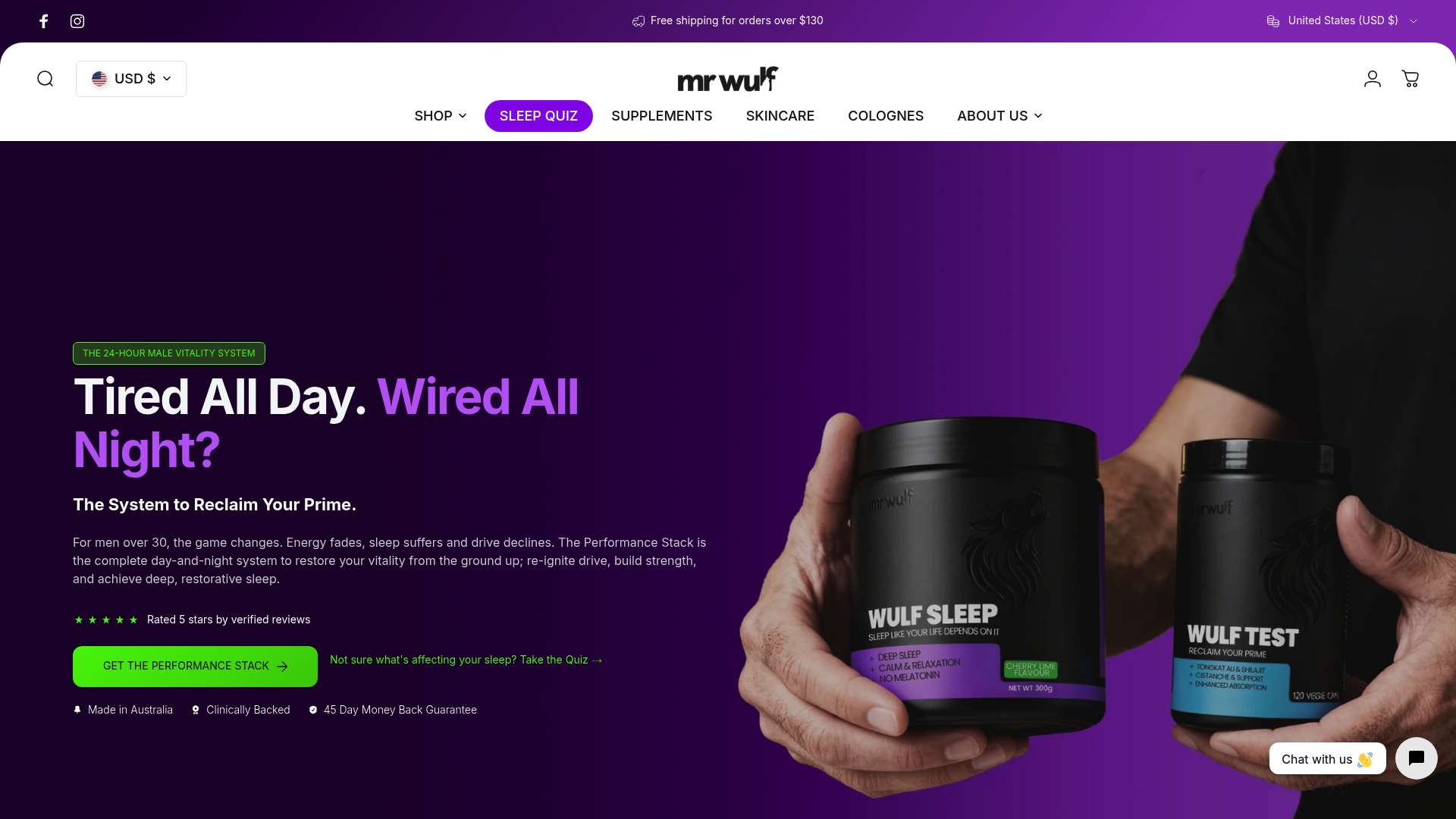
Explore Mr Wulf Men Performance Supplements
WULF Test — Daily Men’s Formula for Drive, Output and Resilience Tongkat Ali standardised to 5% eurycomanone, Shilajit at 54% fulvic mineral complex, Rhodiola Rosea, Cistanche, Zinc Bisglycinate, Boron, Vitamin D3, L-Selenomethionine, and AstraGin. Clinical doses. Transparent label. No proprietary blends. View Wulf Test
The Performance Stack — Day and Night Coverage Wulf Test and Wulf Sleep together for men who want to support both daytime drive and overnight recovery as a coordinated system. View The Performance Stack
PRIMAL — Postbiotic Nitric Oxide Booster Supports circulation and physical performance via peripheral vasodilation. A complementary mechanism to hormonal support for men focused on output and cardiovascular health. View PRIMAL
Frequently Asked Questions
Do virility supplements increase testosterone in all men?
Most show meaningful effects primarily in men with lower baseline testosterone or identified deficiencies. In men with already-normal testosterone levels, the gains are more modest. The strongest evidence is in men dealing with chronic stress, ageing-related hormonal decline, or nutritional deficiencies in zinc and vitamin D.
Which ingredients have the strongest evidence for libido and testosterone?
Tongkat Ali standardised to eurycomanone content has the strongest current evidence confirmed by a 2022 systematic review and meta-analysis. Fenugreek has solid evidence for free testosterone in older men. Ashwagandha has good evidence in chronically stressed populations specifically. Zinc and vitamin D3 are highly effective in deficient men.
Are virility supplements safe to take with prescription medication?
Not universally. Many botanical ingredients interact with cytochrome P450 enzymes that metabolise prescription drugs. Fenugreek interacts with blood thinners. Ashwagandha may amplify sedatives. Always consult your GP or pharmacist before combining supplements with prescription treatment.
What should I look for to know if a supplement’s claims are legitimate?
Human trial data with clearly defined endpoints, transparent individual ingredient dosing, standardised botanical extracts with confirmed active compound percentages, and third-party batch testing documentation. If any of these are missing or hidden behind a proprietary blend, treat the product with scepticism.
Is yohimbe a safe option for virility?
No — not for general use. Yohimbine carries documented cardiovascular and psychological risks including rapid heart rate, blood pressure spikes, and anxiety. Unless specifically advised by a medical professional for a defined clinical reason, the risk profile does not justify inclusion in a general virility supplement.



How to improve men's sleep for better health and recovery
Male vitality explained: science-backed strategies for men over 30